
Munich Practical Notes
What to Pack for Munich: Three Mistakes to Avoid
For a Munich summer trip, focus on comfortable shoes, rain protection, and one light layer for cooler evenings.
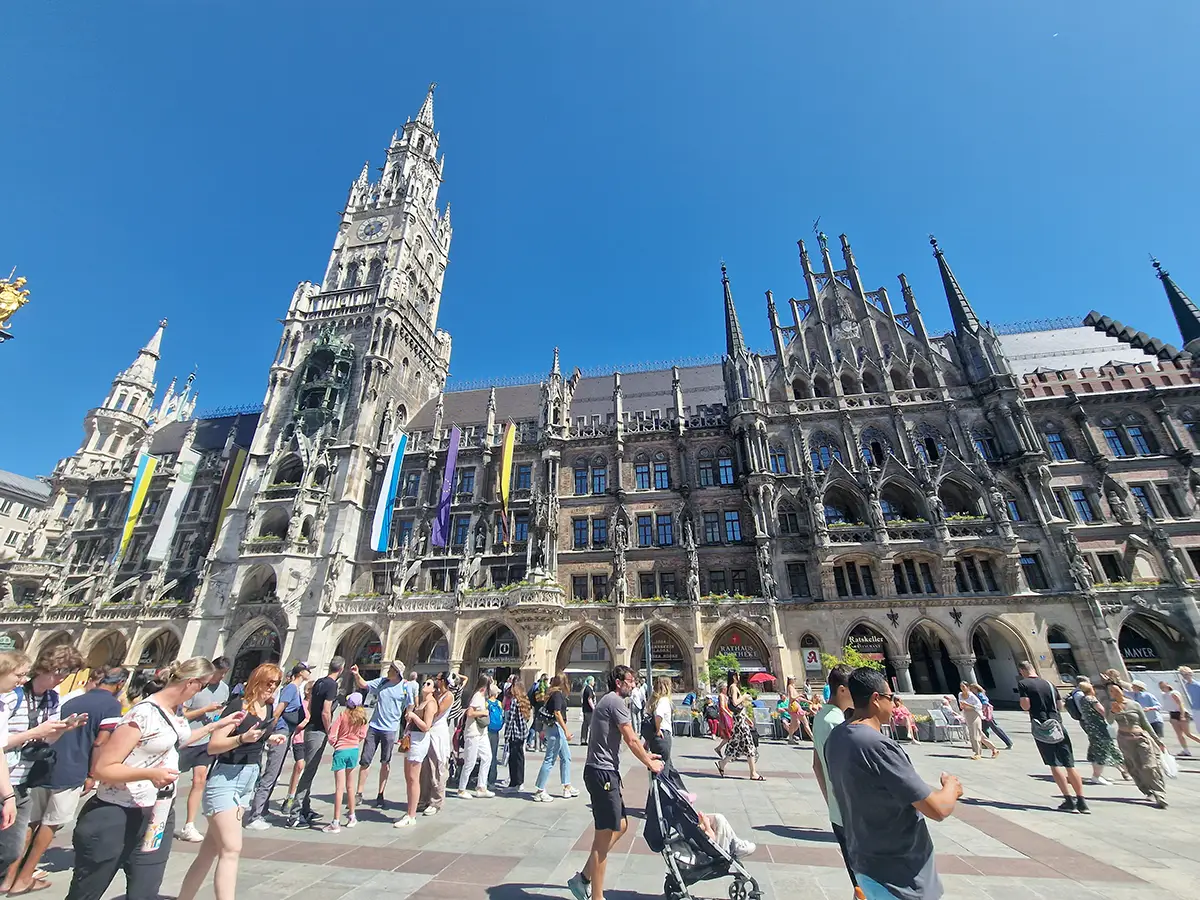
A bright summer day near Marienplatz. The weather can look very different a few hours later.
If you are deciding what to pack for Munich, start with three things: comfortable shoes, rain protection, and a light layer for the evening.
These are common travel problems. New shoes can hurt by the afternoon. An umbrella may not be enough in a windy shower. A warm afternoon can also turn into a cool evening at a beer garden.
A little planning before the trip helps with all three.
01Munich summer weather
Munich can have warm, sunny summer days, but the weather is not always steady. June, July, and August are also among the wetter months of the year. Showers and thunderstorms can bring a lot of rain in a short time.
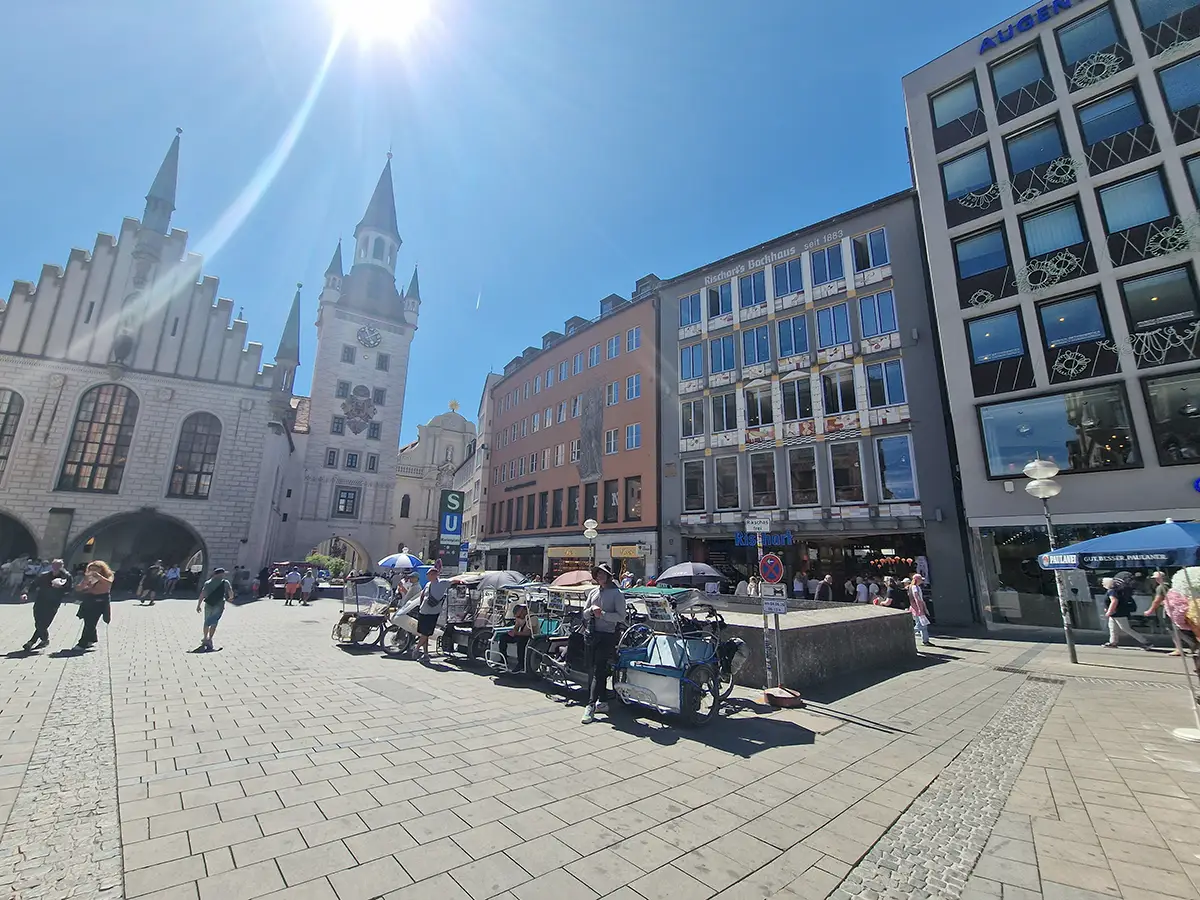
Strong summer sun near Marienplatz. Sunglasses and sunscreen are still useful on a day when rain is possible later.
Plan for a warm afternoon, possible rain, and a cooler evening on the same day.
Munich is around 520 m above sea level and not far from the Alps. You do not need special clothing because of the altitude. For a city trip, changing weather matters much more.
Summer rain often comes as a short shower or thunderstorm. A small umbrella helps, but it should not be your only rain protection.
A warm week can be followed by much cooler weather. Check the forecast shortly before you travel and again each morning if you will spend most of the day outside.
If you are visiting during a busy summer month, outdoor events can also keep you outside longer than expected. For the main June dates, see Munich in June 2026: Local Events Worth Planning Around.
02Mistake one: bringing the wrong shoes
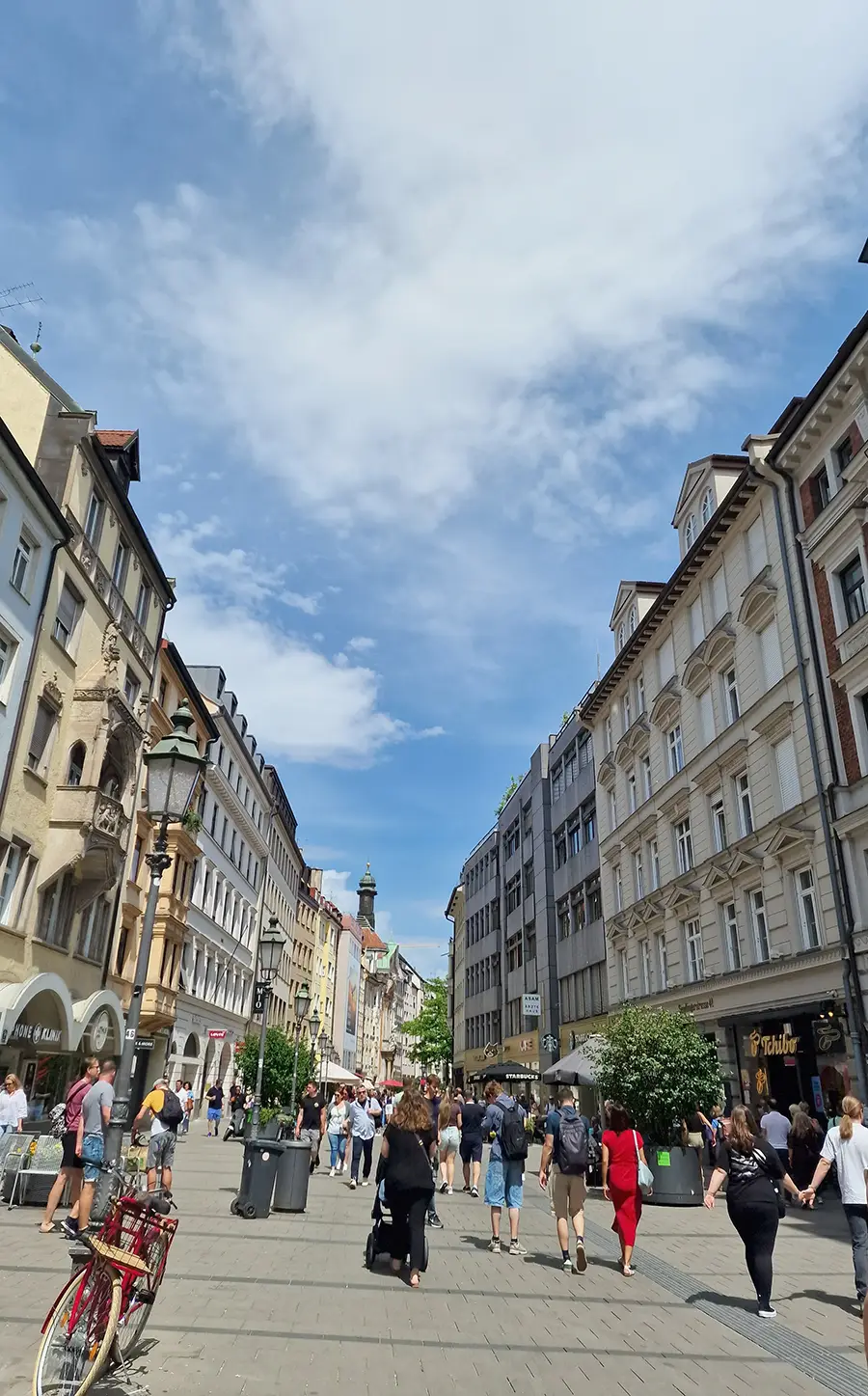
Munich old town is easy to walk, but a sightseeing day can keep you on your feet for hours.
Munich’s old town is compact, and places such as Marienplatz, Viktualienmarkt, the Residenz, and Hofgarten are close together. Because walking is easy, you may stay on your feet much longer than you planned.
You do not need hiking shoes for central Munich. But you may spend several hours walking and standing, sometimes on wet paving after rain.
New shoes, very thin soles, or sandals used as the only pair can become uncomfortable by the afternoon.
Bring one pair of shoes you have already worn for a full day. A comfortable walking shoe or a well-cushioned everyday sneaker is enough for most city sightseeing.
Sandals are fine for a short walk or a warm evening. I would not use them as my only pair for a full old town day with museums, rain, and an evening outside.
If you are going to Allianz Arena, there is still a long walk after you leave the U6 at Fröttmaning, plus more standing and walking before and after the event.
If this is your first day in Munich, the walking route in Munich for First Time Visitors: Start with the Old Town Walk gives a good idea of how much of the centre you can cover on foot.
03Mistake two: packing only an umbrella for rain
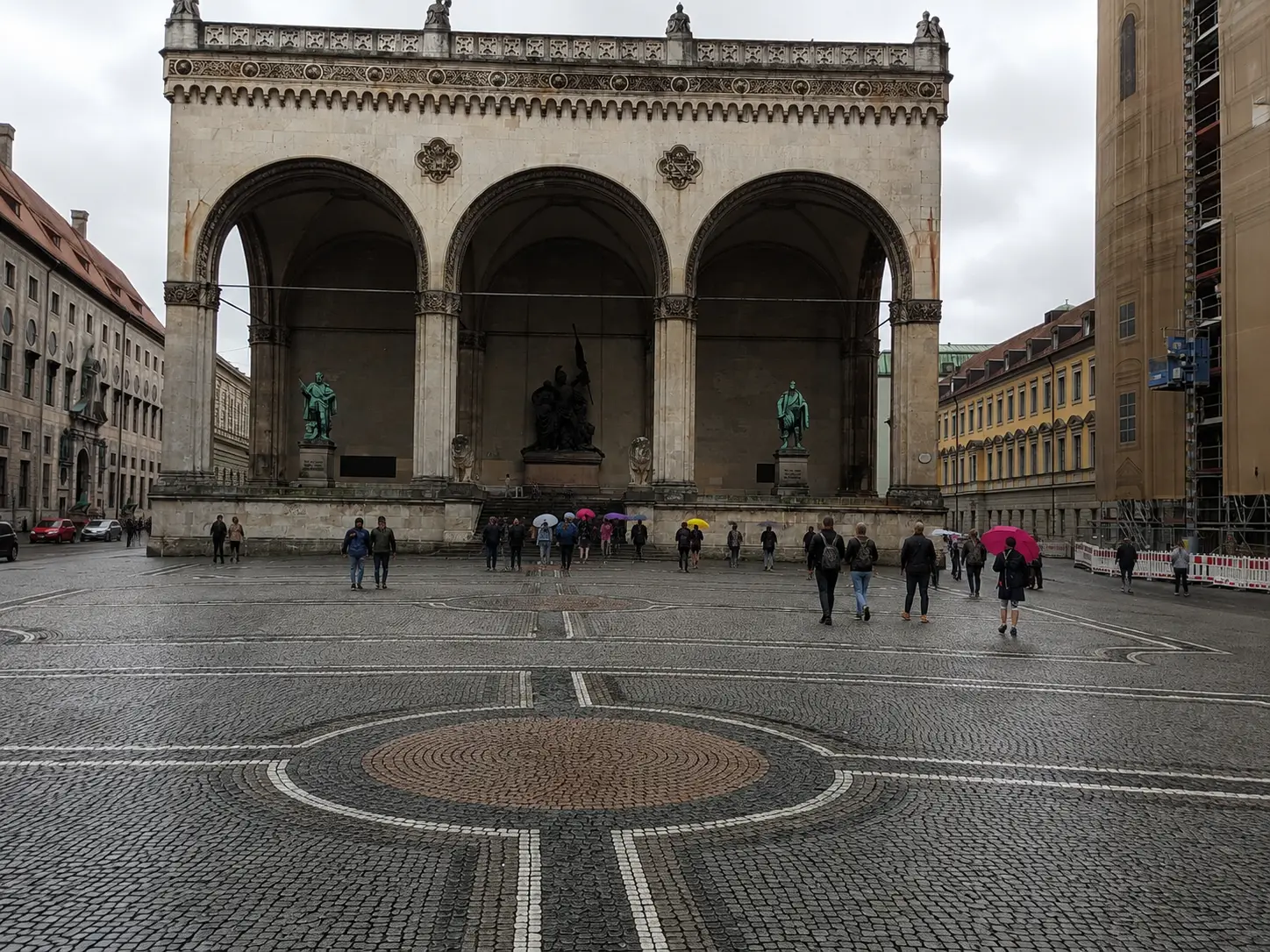
Rain near Odeonsplatz. A summer shower can arrive quickly and make the city feel cooler.
A small umbrella is useful. I carry one too. But in windy rain, your shoes, lower legs, backpack, or shoulders can still get wet.
If you are close to a café, museum, beer hall, restaurant, or station entrance, the easiest choice is usually to go inside and wait. Many summer showers pass quickly.
This matters more in open places such as the Englischer Garten, along the Isar, or on a large square with little shelter nearby.
Keep the umbrella, but add one light rain shell with a hood. It does not need to be heavy or expensive. Choose one that fits easily in your day bag.
If an official thunderstorm warning is active, change the plan and go indoors. Better clothing is not a reason to stay in an exposed park or riverside area during a storm.
If the weather changes the whole day rather than just your jacket choice, Munich Summer 2026: How to Spend a Free Day has several flexible alternatives.
04Mistake three: no layer for the evening
A warm afternoon can make another layer seem unnecessary. After rain or after sitting outside for a while, the evening can feel much cooler.
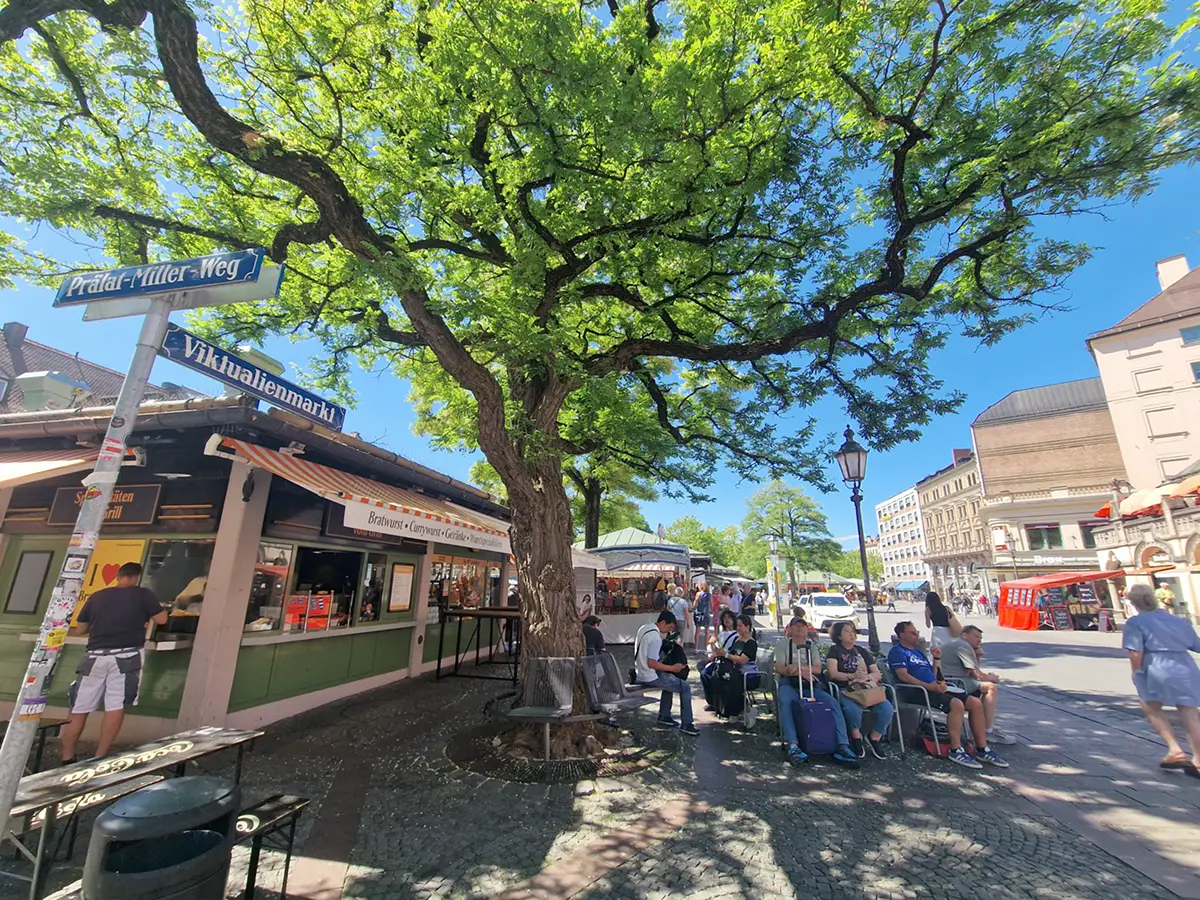
Outdoor seating near Viktualienmarkt. A light layer can be useful later even after a warm afternoon.
This matters most when you stay outside in the evening: at a beer garden, on an Isar walk, at an outdoor restaurant or festival, or on the way back from a concert. Once you stop moving, the air can feel much cooler.
You do not need a winter jacket for a normal Munich summer trip. A light softshell, a thin cardigan, a compact fleece, or the rain shell from the previous section is usually more useful.
In June and early July, it stays light until late in the evening. That can make it easy to forget that the air may cool down before you are ready to go back to the hotel.
If I know I will sit outside in the evening, I put one light layer in the bag even when the afternoon is warm. It takes little space and can save a trip back to the hotel.
A heavy cotton hoodie can work, but it is bulky and stays wet for a long time if it catches rain. A lighter layer is easier to carry all day.
05If you have seasonal allergies
This section is for travelers who already have pollen allergies or who notice typical allergy symptoms during the trip.
The German Weather Service, DWD, publishes a daily pollen forecast for several important pollen types, including grasses, birch, mugwort, and ragweed.
Grass pollen can be important during the summer months. If you are sensitive, check the forecast before spending a long day in parks or other green areas.
You can find the official forecast at dwd.de/pollenflug. The page is mainly in German, but the regional map is easy to use.
- Bring the medication or other products you normally use
- Check the DWD pollen forecast before a park-heavy day
- If you need help after arrival, ask at an Apotheke, the German word for pharmacy
This is a travel packing note, not medical advice.
In late May and early June 2026, grass pollen around the Englischer Garten and the Isar felt strong to me on some days. That was only my own observation, so use the DWD forecast for current conditions.
06Keep your day bag light
You may carry the bag for hours, so leave some empty space.
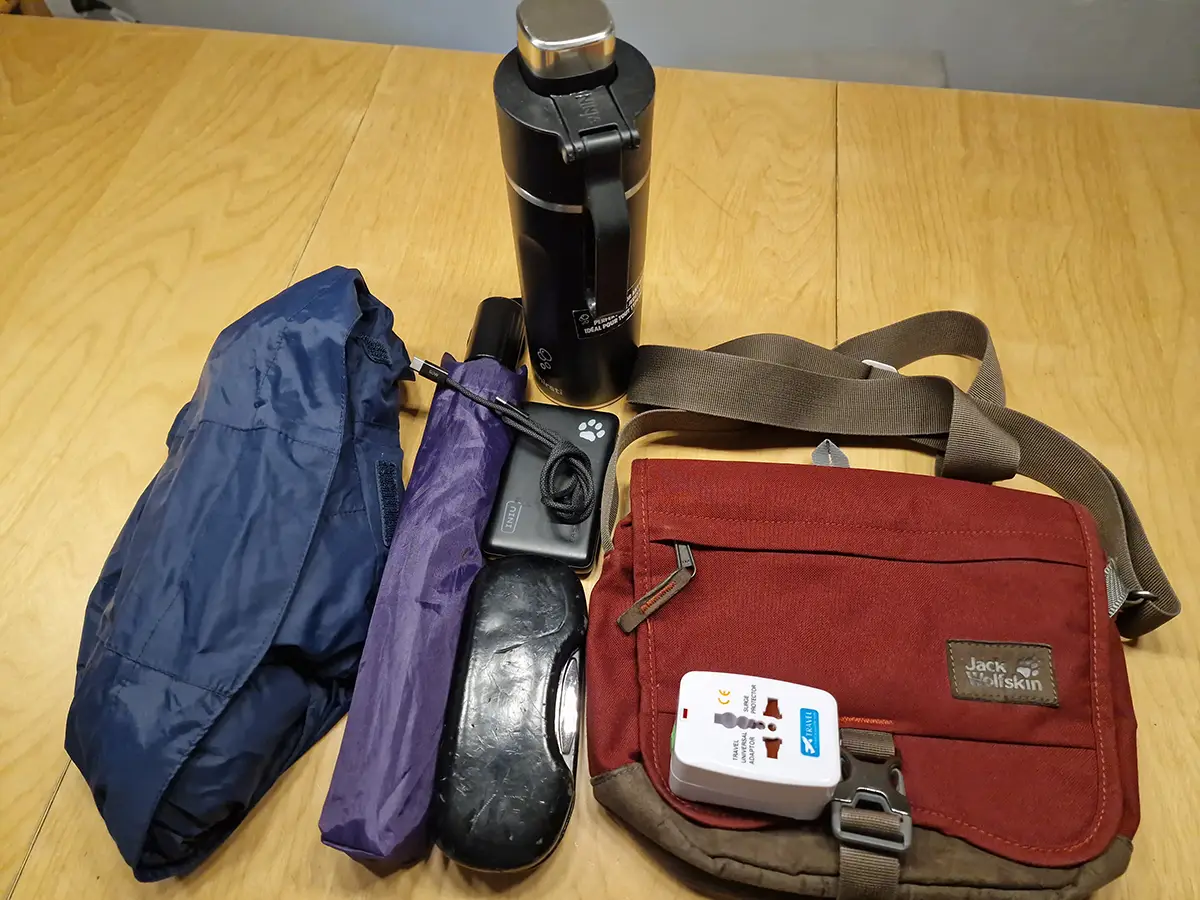
An umbrella and sunglasses in the same bag is a normal Munich summer combination.
A small backpack or comfortable crossbody bag is enough for most city days. I would leave room for a compact rain shell, a small umbrella, a water bottle, sunscreen, sunglasses, a small power bank, and the light layer from the previous section.
A large backpack can feel heavy by lunchtime, while a very small bag may not fit the rain shell. Choose something you can carry comfortably for a full day.
Do not fill the bag just because there is space. Pack only what you are comfortable carrying for the whole day.
Large luggage is a separate problem. Station lockers, luggage apps, and airport storage can all be useful, but they serve a different purpose from a normal day bag. For those options, see Luggage Storage in Munich.
07Check your power adapter
Germany uses Type C and Type F sockets and a 230 V, 50 Hz power supply. If the plugs you use at home do not fit these sockets, bring a small travel adapter.
Also check the input label on the charger. Many modern phone, laptop, camera, and USB-C chargers accept a wide voltage range, often shown as 100–240 V. A plug adapter only changes the shape of the plug. It does not change the voltage.
If you forget an adapter, you can usually buy one after arrival at electronics stores and some travel shops. Buying it before departure is easier.
Travelers from South Korea may find that many plugs already fit German sockets, but it is still worth checking the device and charger before leaving home.
08Final packing check
For most Munich summer trips, check three things first: shoes you can walk in all day, rain protection that fits in the bag, and one light layer for the evening.
Then add the small things that fit your trip: sunglasses, sunscreen, a water bottle, a power bank, an adapter if needed, and your usual allergy products if pollen is a problem.
Most forgotten items can be bought in Munich. Comfortable shoes, dry clothes, and a useful evening layer are better to have from the start.
Continue planning
For current weather and warnings, check the official Munich weather page and the German Weather Service (DWD). For current pollen conditions, use the DWD pollen forecast.