
Munich Things to Do
Residenz or Nymphenburg First?
Which palace to visit first, when both are worth doing, and how weather, timed tickets, and walking time affect the order.
If you want to see both the Residenz and Nymphenburg Palace in one day, I would usually choose the order by weather and energy.
On a good-weather day, start with Nymphenburg. If the morning is rainy or unstable, start with the Residenz.
The two places show different parts of Munich’s royal history. The Residenz is tied to the old town, court life, ceremony, collections, and political power. Nymphenburg adds a summer palace, canal, park, and long garden walks.
The order matters because Nymphenburg depends more on daylight, dry weather, and enough energy for the park. The Residenz is mostly indoors and leaves you in the centre when the visit is over.
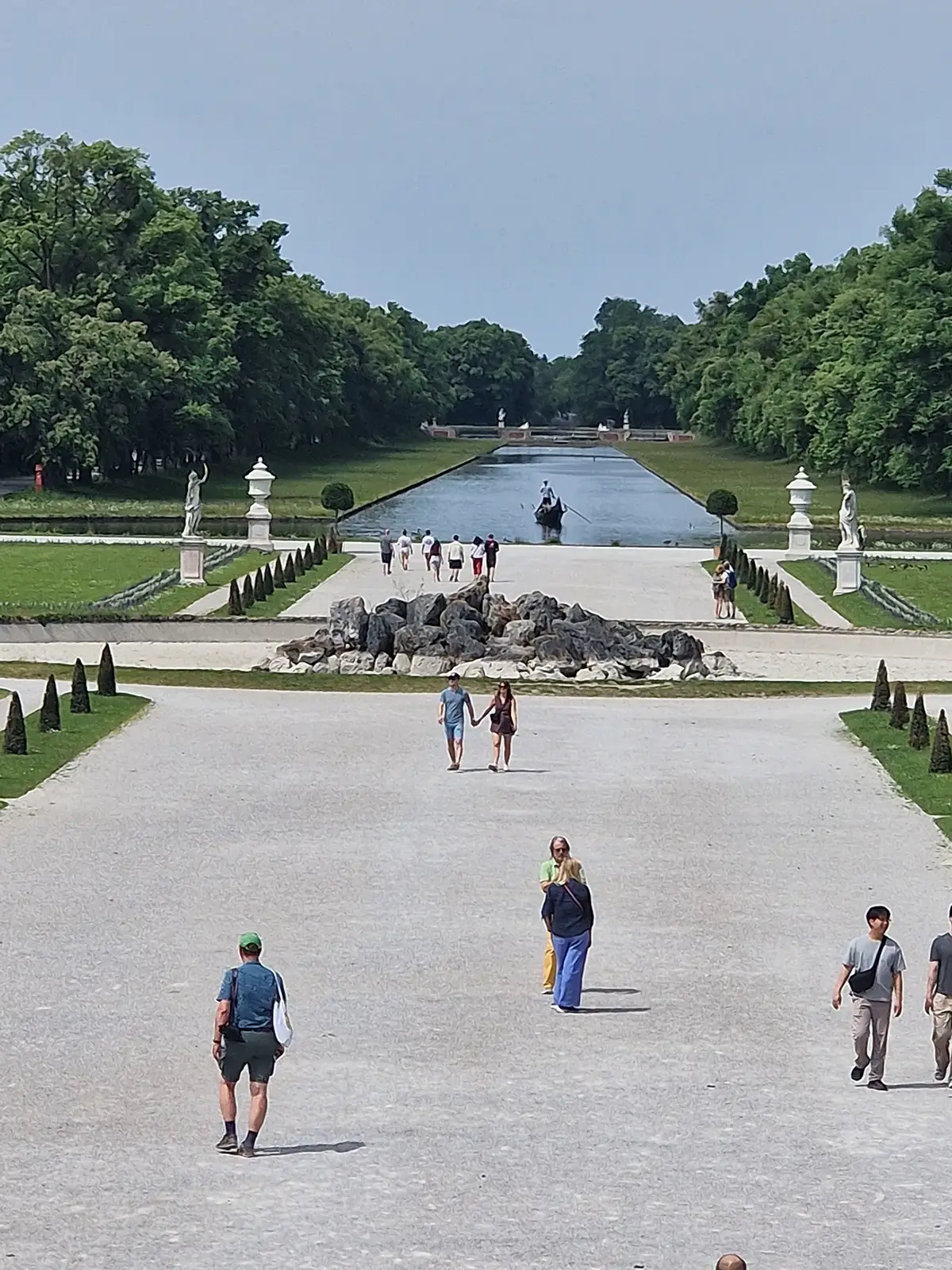
The garden and open space are an important part of a Nymphenburg visit, especially in good weather.
01Which palace should come first?
On a good-weather day, especially in summer, I would book a morning slot at Nymphenburg, spend time in the park, and return to the centre for lunch and the Residenz.
If the morning is wet or unstable, reverse the order: start indoors at the Residenz and use Nymphenburg for the better weather window later in the day.
Nymphenburg Palace: palace entry now uses a timed ticket. Limited same-day tickets are available, but busy slots can sell out. Online booking is useful if you are doing both palaces in one day.
Nymphenburg in summer: the palace, Marstallmuseum, and park palaces are open daily 09:00–18:00 through October 15. The park stays open much longer; from May through September the main gate is open 06:00–21:30.
2026 restoration: the Lacquer Cabinet is closed until autumn, while the other state rooms remain open. The major fountains are also out of service in 2026 because of repair and water-level problems.
Residenz in summer: the Residence Museum and Treasury are open daily 09:00–18:00 through October 19, with last entry at 17:00. Cuvilliés Theatre has its own seasonal hours.
Ending in the centre also makes dinner and the rest of the evening easier. If Munich transport is still unfamiliar, the public transport guide covers the basics.
02The Residenz: court life in the old town
For centuries, the Residenz was a main seat of Bavarian rulers. Its rooms and collections were used for ceremony, rank, religion, diplomacy, and royal display.
The Residenz can feel overwhelming because it is a long sequence of rooms, galleries, courtyards, chapels, and collections. If you move too quickly, the rooms can start to blur together. If you stop at every detail, the visit becomes very long.
It also helps explain the northern side of the old town. Around the Residenz, Hofgarten, Odeonsplatz, Max-Joseph-Platz, and the opera, you see more of Munich’s court and state history than around the civic centre at Marienplatz.
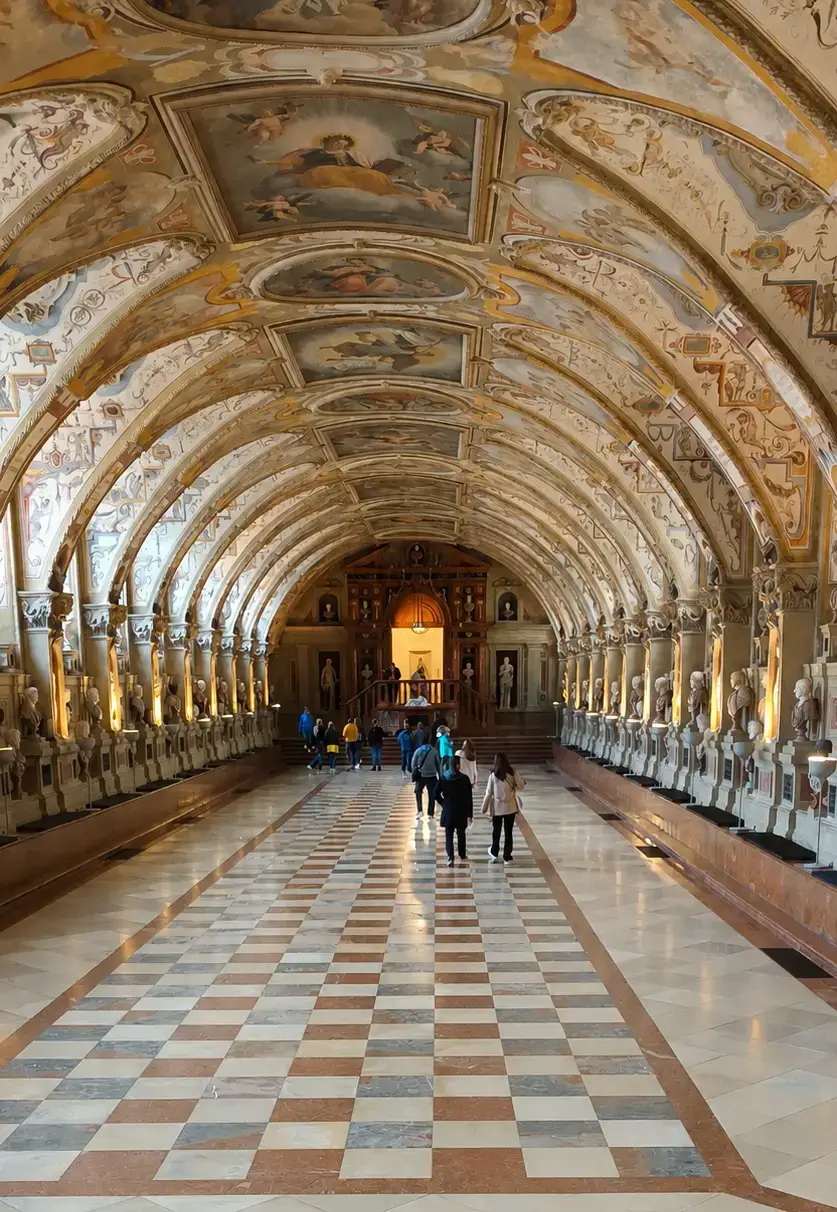
Inside the Residenz: court rooms, collections, and ceremonial spaces.
The Residenz works well later in the day because it is indoors and directly in the centre. When you come out, Hofgarten, Odeonsplatz, Marienplatz, dinner, or a short old town walk are all close.
The Residenz is easier to shorten than Nymphenburg. Use the Residence Museum as the main visit, then add the Treasury or Cuvilliés Theatre only if you still have time and interest. If you are tired, stop after the main museum; you will still be in the centre when you come out.
03Nymphenburg: palace, canal, and park
Nymphenburg shows another part of the same royal history through a summer palace, canal, and large park.
It began as a summer palace away from the old town. The visit is therefore not only about rooms and decoration; the palace and park belong together.
The canal leads toward the palace, and the park stretches behind it. The small park palaces, garden paths, water, and long walks are all part of the visit.
Include some park time when you visit Nymphenburg. The palace interior matters, but so do the canal, garden paths, small park palaces, and the grounds behind the main building.
That is why I prefer it in the morning on a good day. You are more likely to have energy for the grounds, and in warm weather you avoid turning the park into the hottest part of the afternoon.
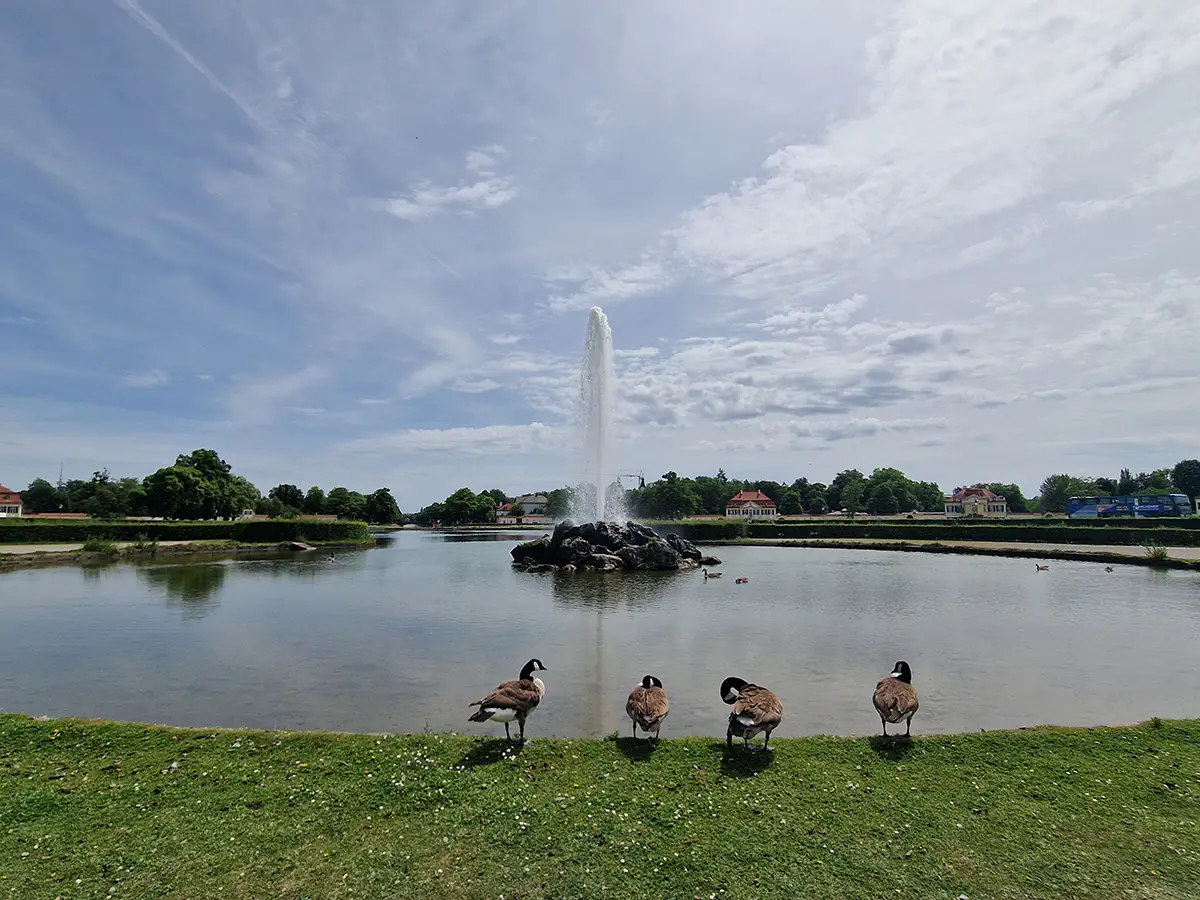
Water, garden paths, and open space are a major part of a Nymphenburg visit.
One small reality check: the geese are very much part of the Nymphenburg landscape. They look charming by the water, but the lawns can be full of droppings. Look down before you sit down.
Nearby Hirschgarten is worth keeping in mind, but it does not need to become another required stop. This western side of Munich has more park space and a more residential feel, with the palace grounds, public green space, and beer garden close together.
What I like about Nymphenburg is that the park is also used by local residents. Alongside visitors, you see cyclists, joggers, families, dog walkers, and people simply spending time outside.
If you have time after the palace, Hirschgarten is about a 20-minute walk away. It can be an easy place for a beer or a longer break instead of adding another museum.
04Good weather: start at Nymphenburg
Start with your Nymphenburg time slot in the morning. See the main palace, then spend time outside around the palace front, canal, garden side, and at least part of the park. Add the Marstallmuseum or a park palace only if you genuinely want more.
Return to the centre for lunch before the Residenz.
This is especially useful on a Sunday. Normal shops and supermarkets are mostly closed, although restaurants, cafés, beer halls, and tourist sights still operate. Plan lunch in advance rather than assuming you can solve it with normal shopping. I explain the wider Sunday situation in Sunday in Munich.
After lunch, use the Residence Museum as the core. Add the Treasury or Cuvilliés Theatre only if you still have interest and time.
When you finish, Hofgarten, Odeonsplatz, Marienplatz, cafés, and dinner are close. You do not need another long trip across the city at the end of the day.
Morning: Nymphenburg palace + park
Midday: return to the centre + lunch
Afternoon: Residenz
Evening: Hofgarten, old town, café, or dinner
05Rainy morning: start at the Residenz
If the morning is rainy, cold, or unstable, start at the Residenz. It is indoors, central, and much less dependent on light or dry paths.
If the weather improves later, use an afternoon Nymphenburg time slot and accept a shorter park visit. There is no reason to spend a wet morning in the grounds just to follow the original schedule.
06Should you really do both?
If you are interested in palaces, royal history, interiors, gardens, or architecture, visiting both can make sense. If you mainly want to see one famous Munich palace, one is probably enough.
Choose by what you actually want from the visit:
- If you want one palace interior, choose the Residenz.
- If you want a palace plus a park, choose Nymphenburg.
- If you do both, do not try to see every room, every museum, and every park building.
If you do both, keep at least one visit selective. Trying to add every room, museum, park palace, and collection makes the day very long.
For me, the two visits work well together because they feel different. The Residenz shows court life inside the old town, while Nymphenburg adds the summer palace, canal, and park.
On a bright morning I would start at Nymphenburg and finish in the centre. On a wet morning I would start at the Residenz and wait for better weather. If the day already feels full after the first palace, stopping at one is completely fine.
Related Munich Notes
Opening hours, timed-ticket availability, restoration work, park access, and individual room closures can change. Check the official Residenz München and Schloss Nymphenburg pages before a tightly scheduled visit.