
Munich Things to Do
After the Old Town Walk: What Else Is Worth Your Time in Munich?
Choose what to add after the old town: BMW and Olympiapark, Allianz Arena, museums, a church walk, Maxvorstadt, or Schwabing.
If this is your first trip to Munich, use the old town walk for the city center first. After that, choose one part of Munich that matches your group rather than adding several unrelated attractions.
BMW and Olympiapark work well together. Allianz Arena makes sense for football fans or a stadium visit. Art museums and Deutsches Museum need their own time. A church walk adds historical depth without leaving the center. Maxvorstadt and Schwabing are better when you want cafés, university streets, and a more everyday side of the city.
This guide helps you choose between those options without trying to fit all of them into the same day.
01Choose one plan for the next half day
After the old town, choose one area or theme for the next half day. Use your interests, the weather, and your group to decide.
Car fans can go north toward BMW Welt, BMW Museum, and Olympiapark. Football fans can give Allianz Arena its own block of time. Rain makes an indoor museum day more attractive. If you want more history without another large museum, use the church route. With tired children or parents, shorten the plan and leave more time for food, a park, or a café.
| Situation | Better Munich choice |
|---|---|
| Car fan or teenager in the group | BMW Welt, BMW Museum, Olympiapark |
| Football fan | Allianz Arena, FC Bayern Museum, or match day |
| Rainy day | Alte Pinakothek, Pinakothek der Moderne, Lenbachhaus, or Deutsches Museum |
| Science minded family | Deutsches Museum, with a plan |
| More meaning in the old town | Church walk from Sendlinger Tor toward Odeonsplatz |
| Less touristy Munich | Maxvorstadt, Schwabing, university streets, cafés |
| Family fatigue | Shorter route, food break, park, early return |
02BMW Welt, BMW Museum, and Olympiapark
For visitors interested in cars, design, or engineering, BMW Welt, BMW Museum, and Olympiapark can fill a half day because they sit close together.
BMW Welt is a free showroom and visitor space. You can walk in, see current models, look around the building, and leave whenever you are ready.
BMW Museum is the slower, paid visit: the history of the brand, older models, design changes, and the story behind BMW. The museum is currently open Tuesday to Sunday from 10:00 to 18:00, with last admission at 17:30. Check the BMW Welt official site and BMW ticket shop before going.
Olympiapark gives the area breathing room. BMW Welt alone can be a short visit. Add BMW Museum and Olympiapark for a fuller half day: BMW Welt → BMW Museum → Olympiapark.
If the weather is good, continue into Olympiapark after BMW. Walk toward the lake, Olympiaberg, or one of the open viewpoints. The park also gives children room to move after an indoor museum visit.
In warm weather, the beer garden inside Olympiapark works well as a rest point if you are already in the area. Carry a little cash even when card payment is possible. Sea Life München is also nearby, useful for families with small children on a rainy day, but not the main reason to come here for most visitors.
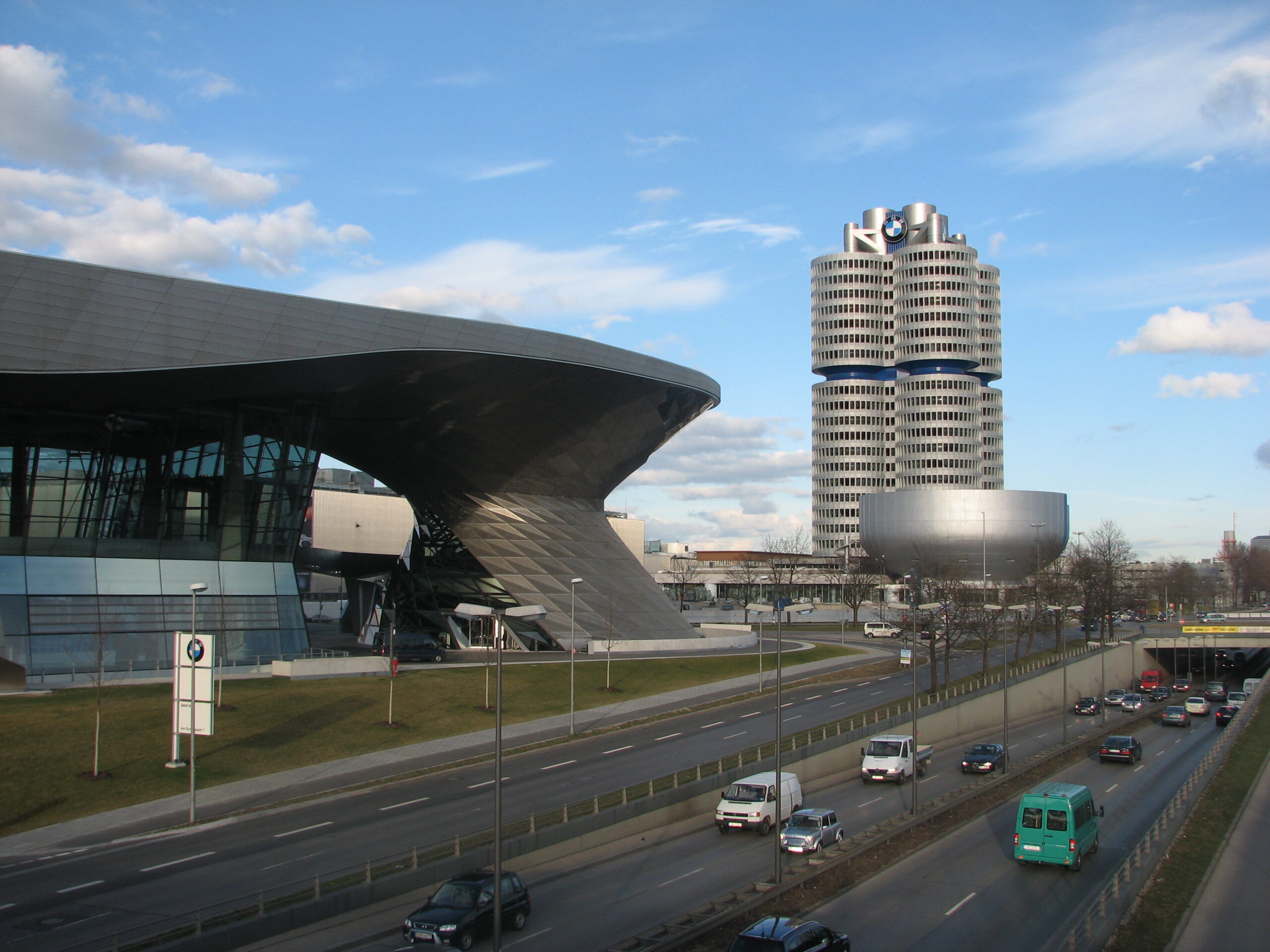
BMW Welt and BMW Museum around Olympiapark. Topfklao / Wikimedia Commons.
03Allianz Arena: football, tours, and event days
For football fans, Allianz Arena can justify a separate trip north of the center. If nobody in the group is interested in football and there is no event or tour planned, the travel time may be better used elsewhere.
If you have a Bayern match ticket or another major event at the arena, let that be the main plan for the day. Travel to Fröttmaning, crowd movement, entry checks, food, the event itself, and the return all take more time than the U6 ride alone suggests.
On a non-event day, the FC Bayern Museum and Arena Tour give you a clear reason to make the trip. The official combined visit currently takes about 2.5 hours, so allow time for the journey to and from Fröttmaning as well. For the U6 route and current construction, see Getting Around Munich by Public Transport.
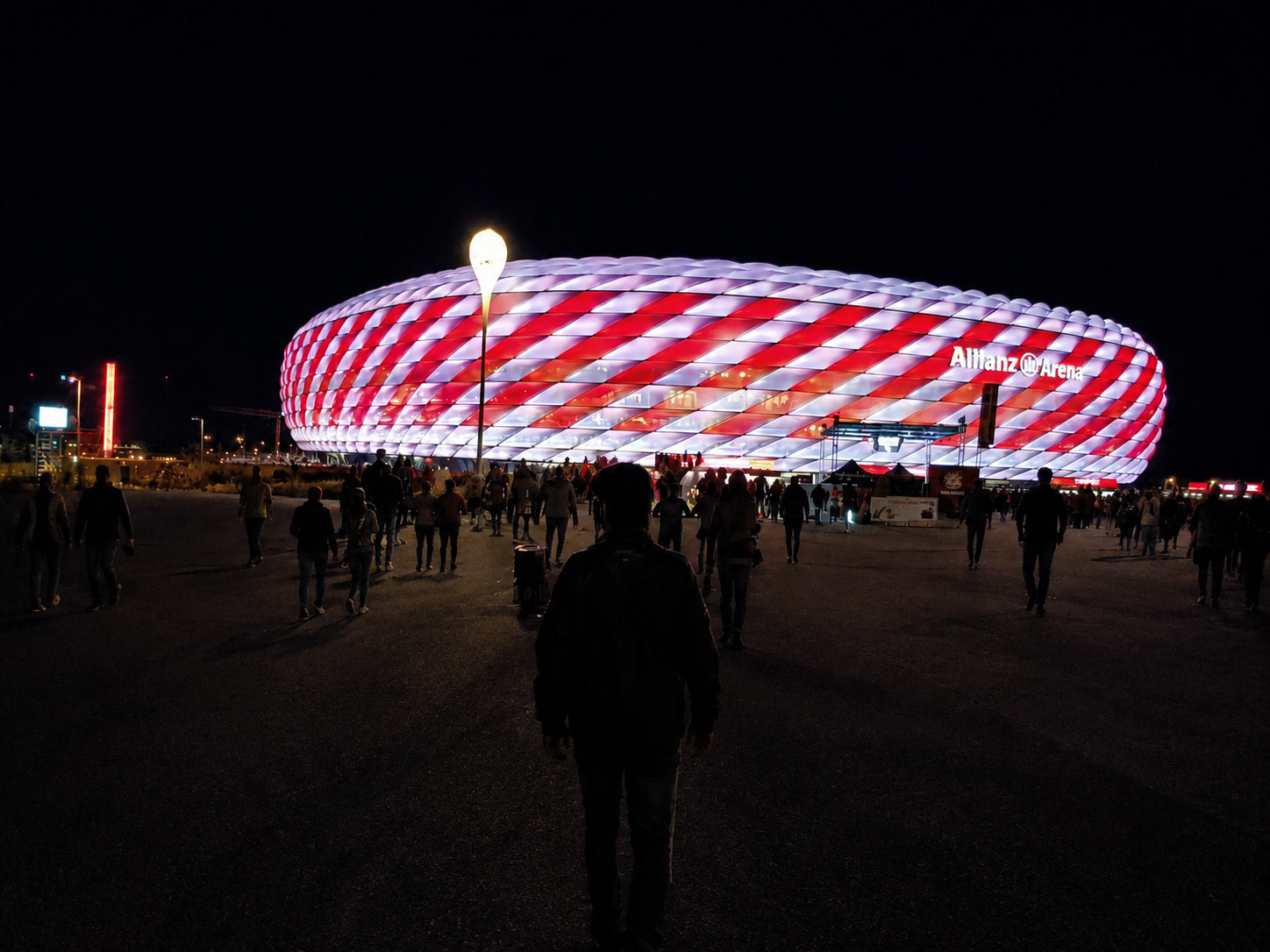
Allianz Arena at night.
For football tickets, start with the official FC Bayern ticket page. Be careful with unofficial resale sites, especially for popular matches and major events. If a match ticket is not realistic, a stadium tour and FC Bayern Museum can still be worthwhile. Check Allianz Arena tours and museum and the FC Bayern Museum for current access and ticket conditions.
04Museums: choose one that matches your group
Munich has excellent museums, but several large museums in one day can become tiring. The Kunstareal museum district is especially useful on rainy days and can also be the main plan for art lovers.
Alte Pinakothek
Alte Pinakothek is a straightforward first choice for visitors who want classic European art: Dürer, Rubens, Rembrandt, Raphael, Leonardo da Vinci. Choose a few rooms or artists, allow about 60 to 90 minutes, and stop when you have had enough.
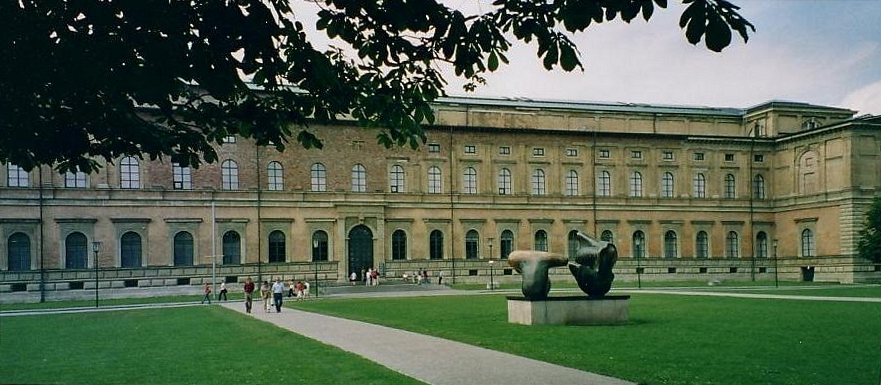
Alte Pinakothek exterior. Markus Würfel / Wikimedia Commons.
Pinakothek der Moderne, Museum Brandhorst, and Lenbachhaus
Pinakothek der Moderne is the choice for modern art, design, and architecture. Museum Brandhorst is stronger for contemporary art, Warhol, Twombly, and others. Lenbachhaus is excellent for Der Blaue Reiter and Munich’s own modern art story: Kandinsky, Franz Marc, Gabriele Münter.
For Sunday admission rules and opening times, check the Pinakothek visitor information before going. It is fine to visit one museum for a shorter time instead of trying to see several.
Deutsches Museum
Deutsches Museum is the science and technology option, with exhibitions across fields such as aviation, physics, energy, and musical instruments. The main Museumsinsel site is currently open daily from 09:00 to 17:00, apart from listed closure days. Choose a few areas before you go rather than trying to cover the whole museum.
05Churches: walking through Munich’s historical layers
Munich’s churches are easy to treat as quick photo stops. But if you like history, architecture, or the feeling of walking through different layers of a city, they can add another historical layer to the old town.
A practical route starts at Sendlinger Tor and moves north:
If time allows, continue toward Residenz and Theatinerkirche near Odeonsplatz.
| Time layer | Church | What to notice |
|---|---|---|
| Older parish Munich 12th-century roots | St. Peter / Alter Peter | Munich’s older church core and the classic view back over the old town. |
| Civic Gothic Munich 1468 to 1488 | Frauenkirche | The twin towers as Munich’s visual compass and the landmark that anchors the city. |
| Jesuit / Counter-Reformation 1583 to 1597 | St. Michael | Renaissance scale and Jesuit confidence in the heart of the pedestrian zone. |
| Courtly Baroque Munich 1663 to 1688 | Theatinerkirche | Wittelsbach patronage and the move toward the royal quarter at Odeonsplatz. |
| Private late-baroque 1733 to 1746 | Asamkirche | Baroque theatre compressed into a narrow street, intensity in an unexpected space. |
Asamkirche: private baroque theatre in a narrow street
Walking along Sendlinger Straße, the space suddenly tightens. Asamkirche, built by the Asam brothers between 1733 and 1746, feels almost theatrical inside: dark and bright, crowded and vertical, intimate and dramatic at the same time. Its scale is surprising because the church is compressed into a narrow stretch of Sendlinger Straße.
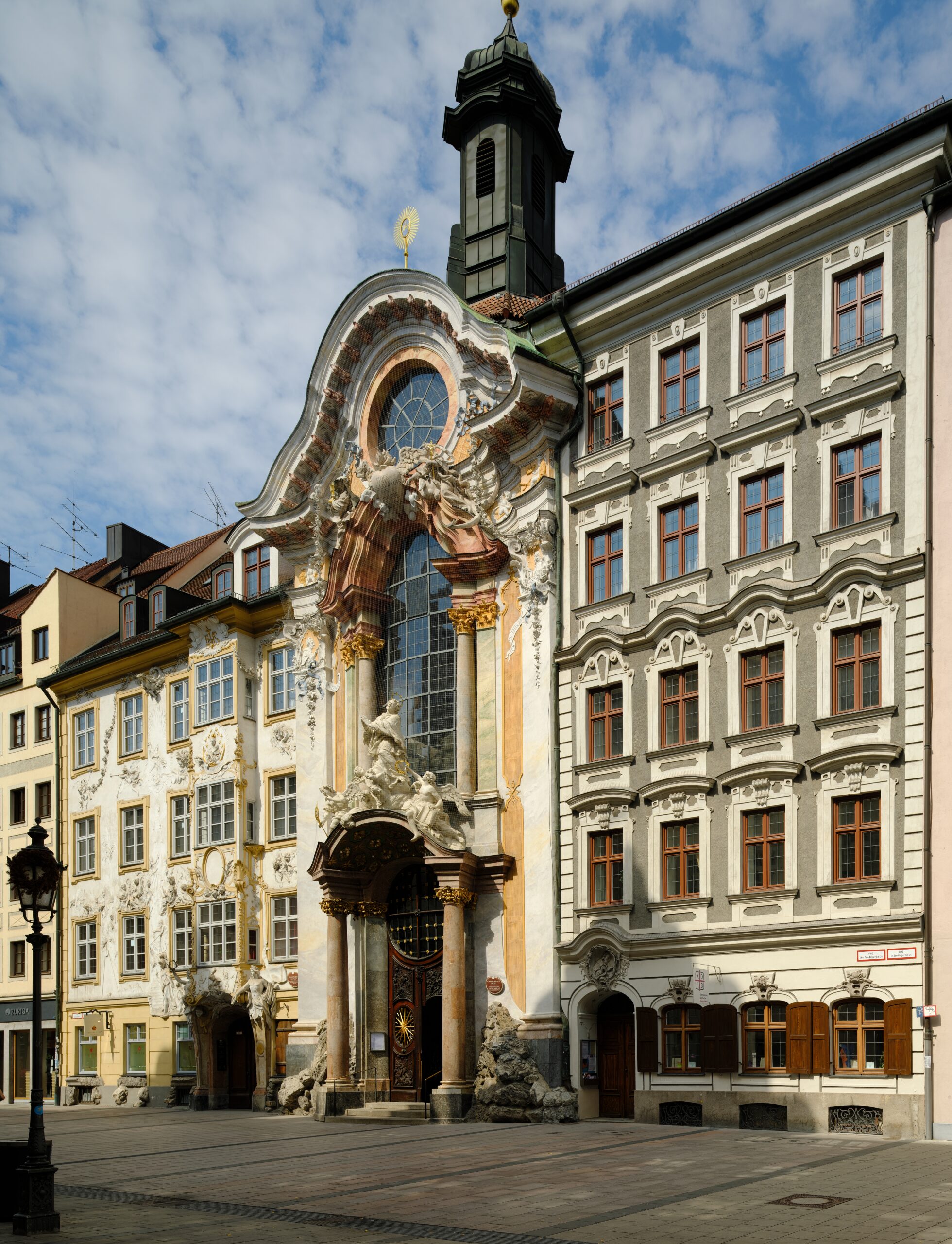
Asamkirche exterior. Fentriss / Wikimedia Commons.
St. Michael: Jesuit scale and Counter-Reformation Munich
From Asamkirche, the rhythm changes. St. Michael, built between 1583 and 1597, is not about compression. It is about scale. Asamkirche pulls you inward; St. Michael expands the room and changes the tone.
Frauenkirche: Munich’s visual compass
Frauenkirche, built mainly between 1468 and 1488, is Munich’s visual compass. The twin towers help you understand where you are throughout the old town. After the theatrical narrowness of Asamkirche and the institutional scale of St. Michael, Frauenkirche gives the walk a centre.
St. Peter: the older parish core
St. Peter / Alter Peter brings the walk back to Munich’s older parish core. The tower gives one of the classic views over the old town. The climb is not mandatory. If your group is tired, the street level is enough.
Theatinerkirche: courtly Munich and the royal quarter
If you still have energy, continue toward Theatinerkirche near Odeonsplatz. Built mainly between 1663 and 1688, the yellow baroque façade belongs to courtly Munich and Wittelsbach patronage. This is a good place to end the church walk, because the city opens up into Hofgarten and the wider royal quarter.
06Maxvorstadt and Schwabing beyond the old town
Maxvorstadt and Schwabing make more sense after you have already seen the central old town. They are useful when you want museums, cafés, university streets, and a more residential city atmosphere.
Maxvorstadt and Schwabing are home to Munich’s universities, museums, cafés, bookshops, students, older apartment streets, and a more residential atmosphere. LMU, TUM, Kunstareal, small restaurants, and residential streets make this area feel different from Marienplatz and Hofbräuhaus.
German universities often do not look like a closed campus behind a gate. In many cities, including Munich, university buildings, libraries, cafés, bookshops, student life, and ordinary residential streets are mixed into the same urban fabric. For families curious about studying abroad, or for children who may one day think about university in Europe, Maxvorstadt gives a quiet first impression of how academic life can sit inside a city.
If you visit the Pinakothek museums, you are already in Maxvorstadt. Add a café, a short walk, or dinner rather than rushing straight back to Marienplatz. Schwabing also works well for a slower late afternoon or evening. For café ideas across the city, see Cafés in Munich.
After the old town, choose one direction that fits the group: BMW and Olympiapark, Allianz Arena, a museum, the church route, or Maxvorstadt and Schwabing.
Each option can fill a useful half day on its own. Leaving the others for another day usually makes the trip easier to enjoy.
More from Munich Ajussi
Museum hours, ticket conditions, transport routes, and event schedules can change. Check the official venue before making a special trip.