BTS Munich 2026 · Allianz Arena · July 11 & 12 Concert Day Notes →
Updated May 28, 2026

Evenings · Beer · Food · Bars

Munich Evenings: Beer Halls, Bars, Korean Food, and Sunday Reality

A practical evening note for first time Munich visitors: how to choose between opera, beer halls, beer gardens, late night bars, Korean food, and the quiet shock of Sunday.

Munich Ajussi · May 18, 2026 · about 14 minutes

Munich looks different after the old town walk.

During the day, the city is often about landmarks: Marienplatz, Viktualienmarkt, Residenz, churches, museums, and walking routes. In the evening, the question changes. You are no longer only asking what to see. You are asking how to finish the day without making the next morning worse.

A Munich evening can be wonderful, but it can also become heavy very quickly: a one litre beer too early, a late cocktail after a full walking day, a restaurant that fills before you arrive, a Sunday evening with no supermarket open, or a family that has simply had enough.

This note is written from a Korean point of view, but not only for Korean travellers. It is for anyone who wants the evening to feel like Munich without turning the night into a survival exercise.

And yes, if you are visiting for BTS Munich 2026, this matters. Concert trips are emotional, tiring, and often international. A familiar meal, a realistic evening plan, or simply knowing what closes on Sunday can make the trip much easier.

Companion article This note covers Munich evenings, food, drink, and Sunday reality. For daytime choices after the old town walk, including BMW, Allianz Arena, museums, church walks, and Maxvorstadt, read After the Old Town Walk: What Else Is Worth Your Time in Munich?

01Do not treat the evening as leftover time

The most common mistake is using the evening as a dumping ground for everything that did not fit into the day.

A good Munich evening usually needs one clear role.

Evening role Better choice
A special cultural night Nationaltheater or Bayerische Staatsoper
Classic Munich atmosphere Hofbräuhaus, Augustiner, or another traditional beer hall
Beer itself matters Schneider Bräuhaus im Tal
Warm weather local rhythm Beer garden, simple food, slower conversation
Adult late night finish Pusser’s Bar or Schumann’s
Recovery after a long trip Korean food, Asian groceries, early return
Sunday survival Plan food and supermarket needs before Sunday evening
A Munich evening is not the time to prove that you can still do three more things. Pick the mood: culture, beer, bar, food recovery, or rest. The evening gets better when it has one job.

02Nationaltheater and Bayerische Staatsoper: make it the centre of the night

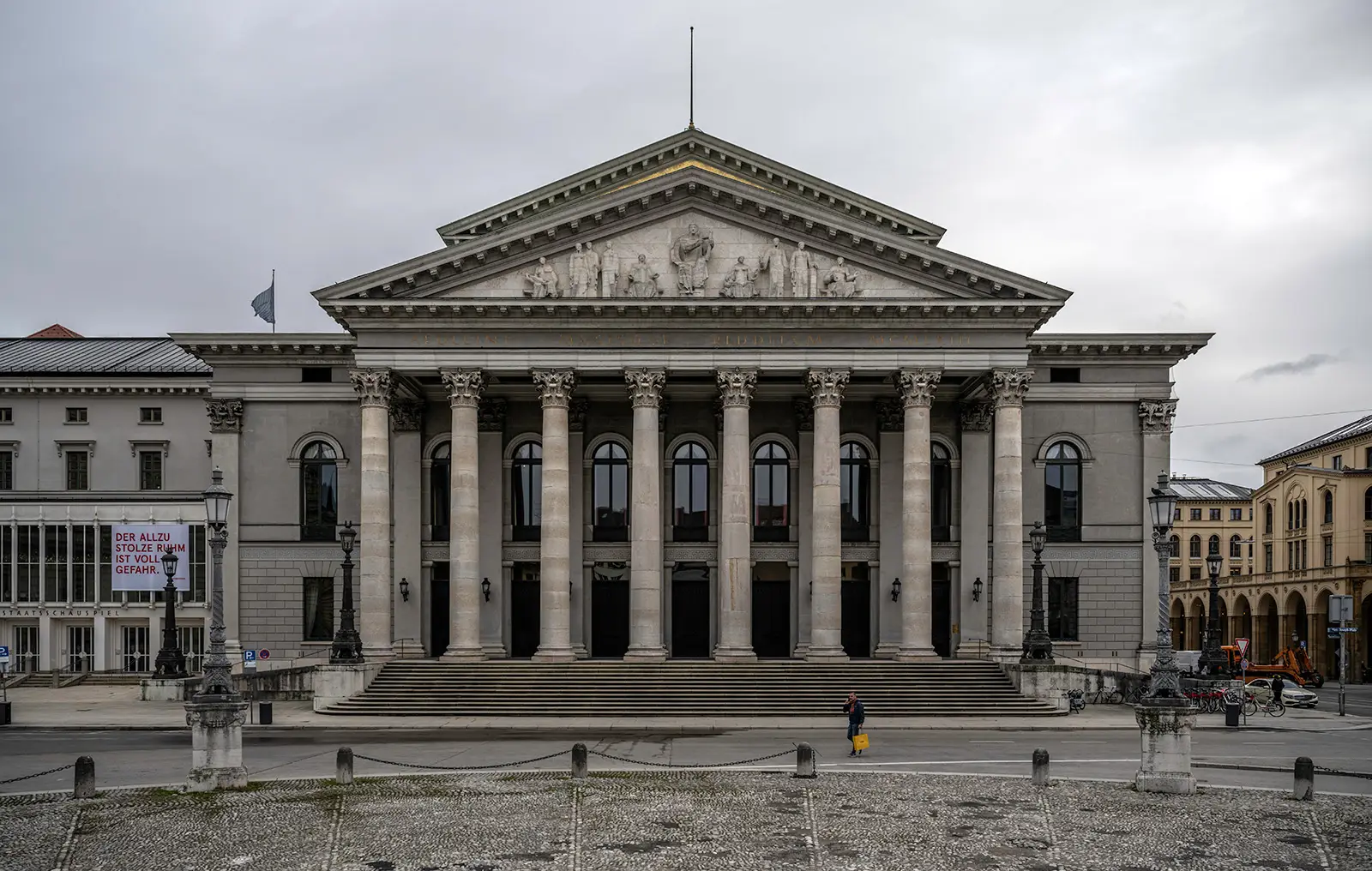
If you walk through the old town during the day, you may naturally pass Max-Joseph-Platz, Residenz, and the Nationaltheater. Many travellers take a photo and move on. That is fine. But if you are interested in opera, ballet, or a more formal cultural evening, Bayerische Staatsoper can become the centre of the night.

The important point is simple: do not treat a performance as one more item after a heavy day. If you have tickets, keep the afternoon lighter, eat earlier, and give yourself enough time to arrive without rushing.

You do not need to dress like you are attending a royal ceremony. But clean, respectful evening clothes make the experience feel better. The bigger issue is not dress code. It is fatigue. If you walk 25,000 steps before the performance, even the best seat can become a nap trap.

Nationaltheater and Bayerische Staatsoper in Munich

Nationaltheater and Bayerische Staatsoper at Max-Joseph-Platz. Wilfredor / Wikimedia Commons.

Check the Bayerische Staatsoper schedule and ticket information before building your evening around it.

If you choose the opera, let it be the evening. Munich feels different when the day ends with a performance instead of another crowded beer hall.

03Munich beer culture: why the Big Six are not just a list of names

Beer is part of Munich, but it is easy to make beer too complicated or too careless. Before choosing where to drink, it helps to understand what makes Munich beer different from German beer in general, and what makes the Big Six different from other Munich breweries.

The Big Six: Oktoberfest, history, and Munich’s brewing identity

The traditional Munich Big Six breweries are Augustiner, Hacker-Pschorr, Hofbräu, Löwenbräu, Paulaner, and Spaten. These are the six Munich breweries with the right to serve beer in the official Oktoberfest tents.

That distinction is not just marketing. To hold an Oktoberfest tent licence, a brewery must meet specific conditions: it must be based within Munich city limits, must have a long established presence in the city, and must meet production and quality standards set by the city. There are excellent German breweries from Bavaria, Franconia, and elsewhere, but they cannot serve beer in an Oktoberfest tent. The Big Six have that right because of where they are, how long they have been there, and what they represent in Munich’s brewing history.

For many Munich residents, this matters quietly. When someone says “I want a proper Munich beer,” they usually mean one of these six. Not because other German beers are bad, but because drinking a Big Six beer in Munich is, in a small way, an act of local identity.

Among the six, Augustiner holds a particular place. Many Munich residents consider it the least tourist facing of the group, the most quietly trusted, and the one they would choose if they were not trying to impress anyone. That reputation is part of what makes it interesting.

Wheat beer: not only a Big Six story

All six Big Six breweries now produce wheat beer (Weißbier). But wheat beer in Bavaria has a separate and older story that is worth understanding.

Under the Reinheitsgebot, the Bavarian beer purity law of 1516, wheat was not an approved ingredient for beer. Only barley, hops, and water were allowed. Wheat was considered a food grain, too important for bread to be used in beer. The result was that Bavarian lager and ale culture developed around barley.

Wheat beer survived in Bavaria because the Wittelsbach royal family held an exclusive monopoly on wheat beer production. It was a privilege of the court, not a product of the general brewing trade. In 1872, that royal monopoly was sold to a private brewer: Georg Schneider. That is how Schneider Bräuhaus became the first private wheat beer brewery in Bavaria, and why Schneider carries a specific weight in the wheat beer story that the Big Six, even though they also make wheat beer today, do not share in the same way.

Bavarian wheat beer is also stylistically different from wheat beers made elsewhere. Belgian wheat beer, Witbier, as in Hoegaarden, uses coriander and orange peel and is lighter and more citrus forward. American wheat beers borrow from both styles and vary widely. Bavarian wheat beer gets its characteristic banana and clove aromas from the yeast strain used in fermentation, not from added ingredients. It is unfiltered, cloudy, and recognisably its own style from the first sip.

So when someone asks why Schneider matters: it is not that the Big Six make bad wheat beer. It is that Schneider built its entire identity around wheat beer at a time when nobody else in Bavaria was allowed to. That history shows in the depth of the range.

Beer timing matters A full litre of beer is not a small travel refreshment. Strong beers and late cocktails can change the rest of the night and the next morning. For most travellers, beer works better as the end of the day, not the middle of the itinerary.

04Hofbräuhaus, Schneider Bräuhaus, and Löwenbräukeller: three different beer choices

Hofbräuhaus: symbolic, loud, touristy, still worth seeing

Hofbräuhaus is the postcard version of Munich beer hall culture: long tables, music, noise, tourists, regulars, waiters moving fast, and a room that feels like a stage. If you go expecting a quiet dinner, you may dislike it. If you go expecting theatre, it makes more sense. For a first visit, understanding what kind of place it is makes it easier to enjoy. Go for the atmosphere, not for a calm private meal. Check the Hofbräuhaus official site for current information before going.

Hofbräuhaus interior with live music and long tables in Munich

Inside Hofbräuhaus: music, long tables, and the theatre of Munich beer hall culture.

Schneider Bräuhaus im Tal: wheat beer as identity

Schneider Bräuhaus im Tal is where the wheat beer story from section 03 becomes a real drink choice. The location between Marienplatz, Viktualienmarkt, Tal, and Isartor fits the old town route naturally.

One beer here deserves special mention: Aventinus Eisbock. Eisbock is made by partially freezing the beer and removing the ice, which concentrates the alcohol and flavour. The result is around 12% ABV: strong, rich, and dark. It comes in a small 0.33 L bottle, which can make it look manageable. It is not. Treat it as the final note of the evening, not a casual mid session drink. If you are curious about Bavarian wheat beer at its most intense, this is the one to try, carefully. Check Schneider Bräuhaus before going for current hours and reservation options.

Exterior of Schneider Bräuhaus im Tal in Munich

Schneider Bräuhaus im Tal. Strubbl / Wikimedia Commons / CC BY-SA 4.0, cropped.

Löwenbräukeller: large traditional hall outside the tight old town core

Löwenbräukeller is useful when you want a large, traditional beer hall setting but do not want to stay inside the tight old town flow. It is not a replacement for Hofbräuhaus. It is a different evening choice with more room and a slightly different atmosphere. Check the Löwenbräukeller official site before going.

If it is your first Munich trip, Hofbräuhaus is worth seeing once as theatre. If you want the beer itself to be the point, especially wheat beer, Schneider Bräuhaus is the better choice. If you want a large traditional hall outside the old town tourist flow, consider Löwenbräukeller.

05Beer gardens: simple, seasonal, and better when you do not over plan

A beer garden is not just an outdoor beer hall. It has a different rhythm. You sit outside, order simply, and let the evening slow down. In warm months, this can be one of the easiest ways to make Munich feel relaxed rather than scheduled.

Beer gardens work especially well when your group is mixed: some people want beer, some want food, some just want to sit. Children often do better in an outdoor setting than inside a loud beer hall. The classics include the Chinese Tower area in the English Garden, Augustiner-Keller, Hirschgarten, and smaller neighbourhood options. The best one is not always the most famous. It is the one that fits your location, weather, and energy level that evening.

Practical beer garden note Carry a little cash. Card payment is more common than it used to be, but smaller stands, deposits, and busy self service situations can still be easier with cash. Also check the weather. A beer garden is not charming in cold rain.

06Pusser’s Bar and Schumann’s: weekend reality matters

After beer halls, Munich still has another evening layer: classic bars. But this is where opening days and timing matter more than a simple list of names.

Pusser’s Bar: New York feeling, Painkiller, and the mug

Pusser’s Bar is not Bavarian. That is exactly why it can be useful. After churches, museums, beer halls, and tourist crowds, Pusser’s changes the mood: a darker room, old school cocktail bar atmosphere, and one drink many people remember: the Painkiller.

According to the reservation page, the main bar is open until 02:00 on Thursday, Friday, and Saturday, and the Piano Bar runs Thursday to Saturday, 20:30–02:00. That makes it a realistic late night weekend option after dinner or after a beer hall evening. Check the official site or reservation page before going, because hours can change.

The Painkiller is a rum based cocktail associated with Pusser’s Rum and the British Virgin Islands. It is creamy, tropical, sweet, and friendly on the first sip. That friendliness is the danger. Do not treat it like juice. If you have had a long travel day and a beer hall dinner, remember that cocktails have their own logic. They arrive smaller than a Maß, but they can still decide how your night ends.

The Pusser’s enamel mug is part of the bar’s identity and charm. For some visitors, it becomes a more memorable Munich souvenir than another magnet or keychain. Whether mugs are available for purchase depends on the day, so ask at the bar.

Pusser’s is not the most Bavarian night in Munich. That is the point. If you want one evening that feels different from everything else on the trip, this is it.

Schumann’s Bar: classic, quieter, and not open on Saturdays

Schumann’s Bar belongs to Munich’s grown up bar culture. The official page lists Monday to Friday, 09:00–02:00, Saturday closed, and Sunday, 17:00–02:00. That means it can be excellent for a weekday, Friday, or Sunday evening, but it is not a Saturday night option. Check the official Schumann’s page before planning around it, as hours can change.

Pusser’s solves a real weekend problem: a proper late night cocktail bar after the beer hall part of Munich is done. Schumann’s is more classic and composed, but the Saturday closure changes the decision for many visitors.

07Korean food in Munich: a recovery choice, not a detour for everyone

As a Korean living in Munich, I look at Korean food differently from a normal restaurant list. For some travellers, it is not necessary at all. But for Korean families, Asian travellers, children who are tired, parents who want something warm and familiar, or international visitors coming for a Korean cultural event, Korean food can be a practical recovery stop.

That is especially true during a long trip or concert weekend. If you are in Munich for BTS Munich 2026, knowing where familiar food exists can be comforting. Sometimes a bowl, a spicy soup, rice, or familiar side dishes can reset the evening better than one more heavy Bavarian meal.

Munich has more Korean restaurants than these two. The reason I mention Pocha and Zum Koreaner here is simple: both sit within or close to routes most visitors are already using: the old town area and the museum district around Maxvorstadt. They are not detours. If your evening already takes you near those areas, they can fit without extra transport.

Pocha

Pocha works well for a small group and can accommodate around ten people. But it is not the place to treat as a casual walk in for a large group on a busy weekend. If you are travelling with a bigger party, contact the restaurant in advance. For current updates, check Pocha’s Instagram before going.
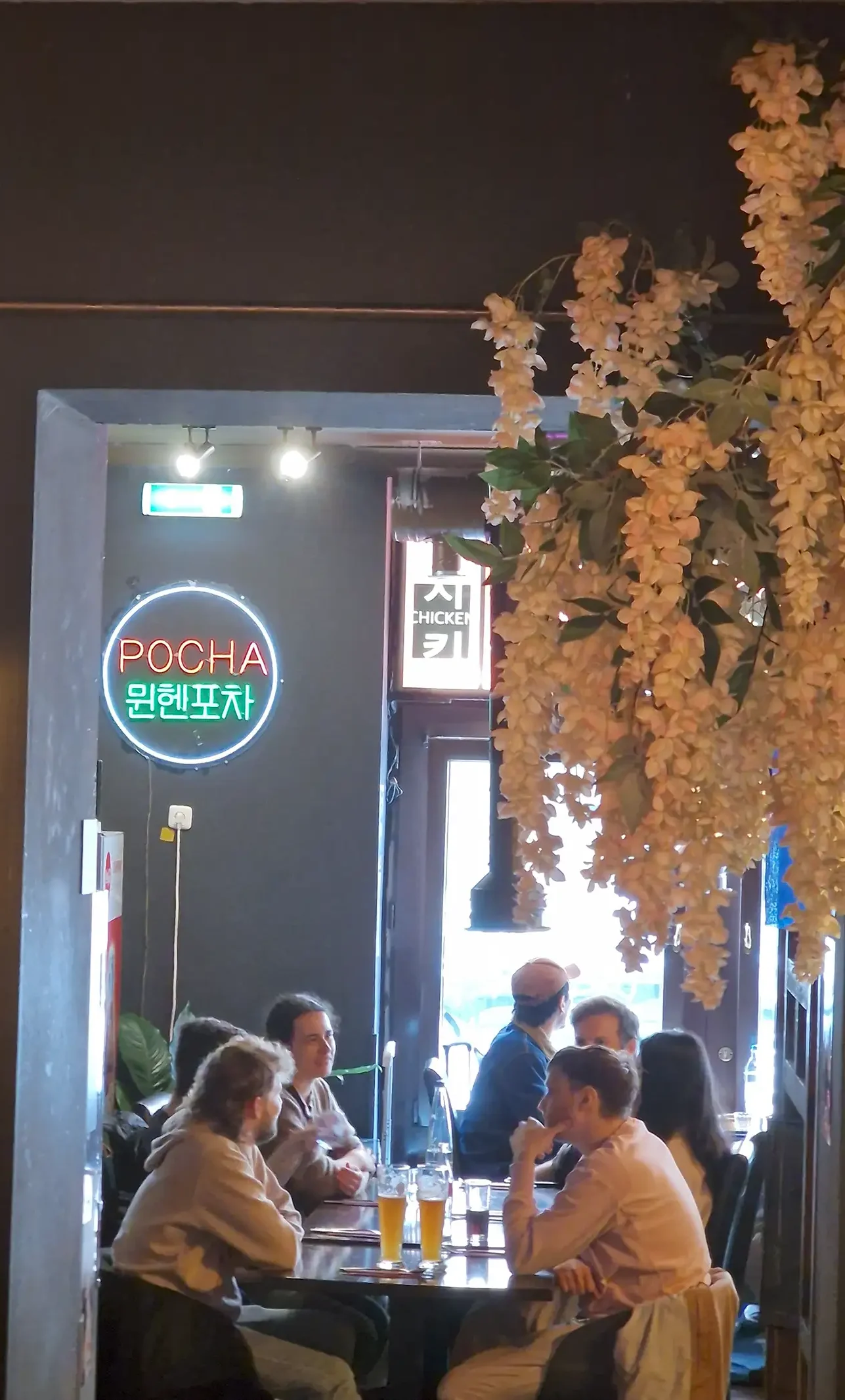
Pocha Korean restaurant interior in Munich

Pocha in Munich. Sometimes a warm Korean meal helps the evening recover.

Zum Koreaner

Zum Koreaner near Amalienstraße is relatively easy to reach from Maxvorstadt and the Pinakothek area. It sits closer to a Korean casual diner than a formal restaurant. Most dishes are around 10 €, with some items such as a Korean spicy squid rice bowl reaching 13 to 14 €. For Munich prices, it is practical.

Cash only: pay before you eat Zum Koreaner operates on a cash payment system and payment is expected upfront. Bring cash before you go in.

Korean supermarkets and Asian groceries

Koreanischer Asia Shop and goAsia branches can be useful for Korean groceries, snacks, drinks, or simple hotel room supplies. For BTS Munich 2026 visitors, a few familiar items in your hotel room can help more than expected after a late return when everything else is closed.

Sunday closures apply here too Most Korean shops and Asian supermarkets in Munich are closed on Sundays. If you need familiar food, snacks, or hotel room supplies, buy them before Sunday.
Korean food on a Munich trip is not about pride. It is about condition. If one familiar meal helps your group recover, that meal has done its job.

08Simple gifts before the shops close

Munich shopping does not have to become a separate mission. For most first time visitors, simple gifts work better than heavy shopping plans.

Aldi and Lidl are useful for chocolate, biscuits, seasonal sweets, coffee, tea, mustard, and small packaged food gifts. dm and Rossmann work well for hand cream, lip balm, bath products, kids’ items, travel size toiletries, and simple German drugstore finds. Food halls, department stores, tea and chocolate shops, museum shops, and supermarket shelves can also work well.

Think in practical categories: chocolate, tea, mustard, small beer related items, branded glasses or coasters from places you actually visited, postcards, museum shop stationery, and small local food gifts that will survive the suitcase. Beer themed items make more sense as souvenirs when they come from a place you actually sat in. And as mentioned, the Pusser’s enamel mug is worth asking about if you end up there.

Gift shopping logic Buy small, easy gifts when you naturally pass Aldi, Lidl, dm, Rossmann, or a supermarket. Do not sacrifice your Munich evening just to chase a vague shopping idea.

09Sunday reality: Munich becomes quieter than many visitors expect

Sunday in Munich can surprise visitors. Many regular shops and supermarkets are closed. Tourist areas still have restaurants, cafés, museums, and some station or airport options, but the normal shopping rhythm changes completely.

This matters even more for families, concert visitors, and anyone staying in an apartment. Water, snacks, breakfast items, simple medicine, baby supplies, and phone charging essentials should not be left to chance.

Sunday is not a bad day in Munich. It can be good for walking, museums, churches, a slow meal, or a park. It is just not the day for shopping based problem solving.

Before Sunday evening Buy basic supplies before shops close on Saturday, especially if you are staying outside the old town or travelling with children. Do not build your Sunday plan around normal supermarket access.

Final take

A Munich evening should not be treated as leftover time. It works best when it has one clear role.

Beer halls, opera, beer gardens, cocktail bars, Korean food, and a quiet Sunday evening can all make sense. They do not all belong in the same night.

Choose the mood that fits your group, protect the next morning, and let the evening end before it becomes a problem to solve.

Welcome to Munich.

This note is based on information checked for 2026 travel planning. Opening hours, reservation rules, Sunday access, menu availability, payment conditions, and event schedules can change. Always verify current details with official websites, Google Maps, MVGO / MVV, and the venue directly before travel.

This note includes references to beer, cocktails, and nightlife. Alcohol is for adults only.

Korean version: 구시가지 다음, 뮌헨에서 무엇을 더할까

Leave a Comment

Your email address will not be published. Required fields are marked *

Scroll to Top