
Oktoberfest Munich 2026: How to Visit Without Wasting Your Day
A good Wiesn day starts with a simple plan for your bag, timing, group, and way home.
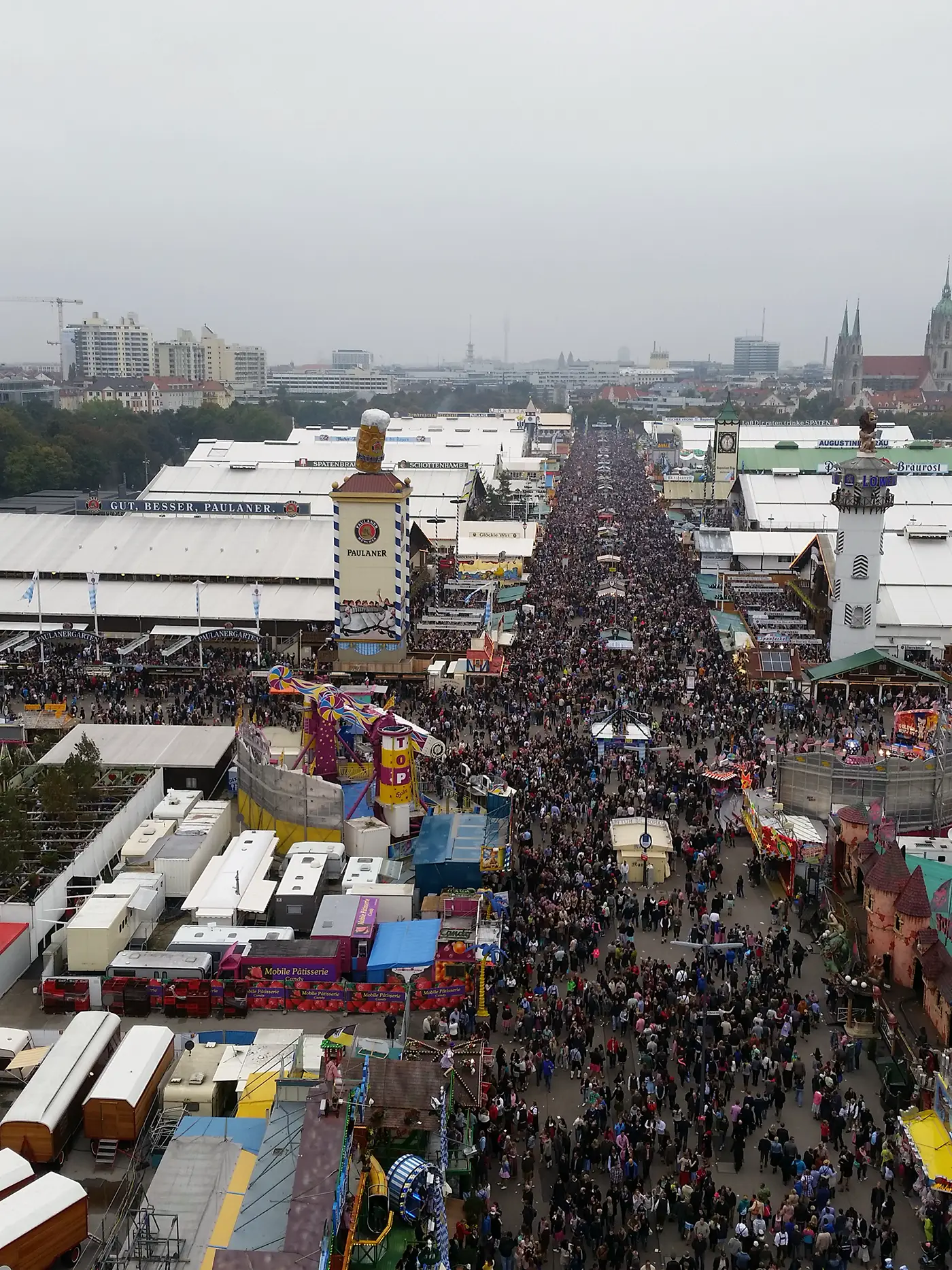
For most visitors, timing, route, and the way home matter as much as the tent choice.
Oktoberfest Munich 2026 is easier when you sort out the basic details before you arrive.
Most Oktoberfest guides begin with tent rankings. For a day visitor, family, or small group without a reservation, problems often start earlier: with luggage, the wrong station, the 4 to 6 p.m. reservation change, or the journey home.
Readers still deciding whether Oktoberfest belongs in the trip will find that question in the companion planning guide. This guide is for readers who already know what kind of visit they want.
You can lose a lot of time because of the wrong bag, insisting on one famous tent, arriving during the reservation change, or planning the way home only after everyone is tired. Rides and food are usually not the problem.
01. Sort out your bag and luggage first
The official bag limit is a maximum volume of 3 liters or dimensions of 20 x 15 x 10 cm. That means a small handbag or mini backpack, not a daypack, shopping bag, or suitcase.
Drinks may enter the festival grounds, but not the beer tents or their beer gardens. Glass bottles are prohibited, while umbrellas are allowed. For anyone hoping to enter a tent, an empty reusable bottle is easier to manage because free drinking-water fountains are available inside the grounds.
Large luggage must be left at the official storage points at entrances P1, P5, P8, and P10. The current official fee is €5, and capacity is not guaranteed. Storage opens at 7 a.m. on Saturdays, 8 a.m. on Sundays and public holidays, and 10 a.m. on other weekdays, with regular collection available until around 1 a.m.
If you reach the gate with a suitcase, the day will probably become harder than it needs to be.
Munich Central Station can be simpler when the train already passes through it, but locker availability is never guaranteed during Oktoberfest. Have a second storage option and leave enough time to collect your luggage before a train or flight.
A small zipped bag is usually enough for a phone, wallet, keys, transit ticket, and power bank. Shoes matter more than style here: long walks, wet floors, and spilled beer make Oktoberfest a poor first outing for a new pair or anything difficult to clean.
The Munich luggage storage guide covers the wider city options.
02. Plan your arrival and return together
Theresienwiese on the U4 and U5 is the most obvious station. Other stations can work better depending on where you want to enter and how you plan to leave later.
The most direct route to the northern side, and most comfortable outside the heaviest arrival and departure periods.
Useful for western access and a practical alternative when Theresienwiese is heavily controlled.
A useful southern approach for families, Oide Wiesn, and visitors avoiding the main northern flow.
Another southern approach, depending on your route and the live service situation.
Natural for travelers already using the central S-Bahn line, but pedestrian access can be restricted during crowd peaks.
Often easier than taking one crowded U-Bahn stop when you are already at the station.
The official visitor barometer recommends using Schaustellerstraße, Matthias-Pschorr-Straße, and side streets when Wirtsbudenstraße becomes congested. Side entrances can also be easier than following everyone toward the main gate.
I often use Goetheplatz and then walk through Mozartstraße. It has usually been calmer than joining the main flow at Theresienwiese. This route leads toward the Bavaria statue, and the cross streets make it easy to turn toward a specific large tent.
The 2026 MVV group day ticket for Zone M costs €19.70 and covers a group of two to five people until 6 a.m. the following day. For a day spent only in Munich, it is usually more useful than a Bayern-Ticket.
The closure between Sendlinger Tor and Implerstraße is scheduled to end on September 18, one day before Oktoberfest begins. The next construction phase is scheduled to start on October 5. MVG therefore plans normal U3/U6 service during the festival. Check MVGO again shortly before you travel.
Hackerbrücke can be closed to pedestrians when the crowd becomes too large. In its own review of the 2025 festival, MVG reported that Theresienwiese and Goetheplatz stations also had to close repeatedly for short periods during the evening departure crush. If that happens, follow the signs at the station and the live information in MVGO.
Bicycles, scooters, skateboards, and inline skates are not allowed on the festival grounds. Official bicycle parking is provided near the main entrance, but public transport and walking are usually simpler for the final approach.
03. Without a reservation, the 4 to 6 p.m. gap matters most
A table reservation is not an admission ticket. Entry to the grounds and tents is free, while a reservation usually requires prepaid food and drink vouchers for a full table of eight to ten people.
The large tents keep at least 25 percent of their seats unreserved. On weekends and public holidays, 40 percent remains unreserved until 3 p.m., followed by 25 percent. Those numbers do not guarantee access. A full tent can still close its doors.
During the afternoon reservation change, roughly from 4 to 6 p.m., the main entrances to large tents are usually closed. Visitors without reservations have little chance of entering, and the official advice is not to wait in line. In its own review of the 2025 festival, the organizer named overcrowding during this changeover on the middle Saturday as the source of that year’s most serious crowding problem. For walk-ins, an earlier arrival leaves more options; otherwise, the tent has to remain uncertain.
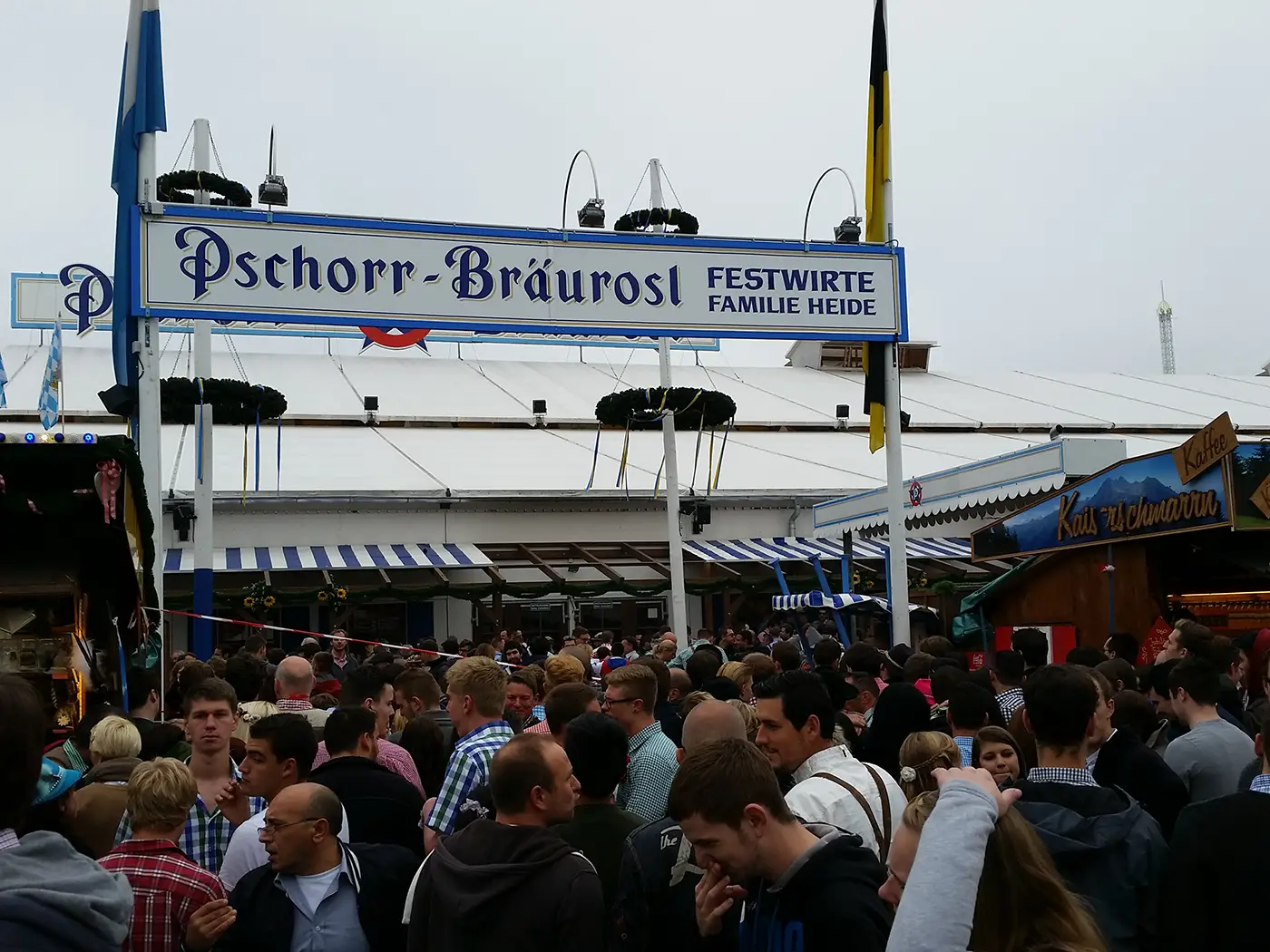
Even if unreserved seats are available, you may not get in when the entrance is too crowded.
Good odds, provided you are flexible about the tent.
Still realistic, but move on quickly when a tent is full.
Finding seats together becomes difficult even before the evening rush.
Arriving early helps, but popular tents can fill by mid-morning.
This is the weakest period around which to build a walk-in visit.
The grounds can still be enjoyable even when a large-tent seat never appears.
For a couple, the end of a shared bench may still be available. The useful phrase is “Ist hier frei?”. A quick answer usually tells you whether the space is actually free or belongs to another group.
On some weekday daytime visits, walking through several large tents and choosing one based on the atmosphere worked well for a couple or family. This only works when there is space. A full tent can stop admitting visitors even for a quick look, so try this earlier in the day rather than as a backup plan for a busy evening.
Oktoberfest has 21 small and medium-sized tents. They range from chicken roasters and cafés to lively evening venues. A small tent can be a good first choice for one meal, coffee, dessert, or a shorter sit-down break. They are not covered by the large tents’ unreserved-seat quota, so smaller does not mean guaranteed entry.
An additional Munich-resident quota covers weekend and October 3 seats in the large tents. Applicants must have their main residence in Munich and apply in person to the relevant host with identification, usually from June onward. There is no minimum consumption, although a small processing fee may apply. Dates and application locations vary by tent and can fill quickly; each tent’s own reservation page is the place to verify them.
The verified resale portal at Oktoberfest-Booking.com opens for sellers on August 14, 2026 and buyers on August 27, 2026. Released tables are limited and unpredictable. Inflated gray-market offers and links arriving through unsolicited advertisements or messages carry a real risk, since counterfeit versions of the portal and individual tent pages have appeared before.
Leaving a tent without a reservation wristband can mean losing access when the doors close for overcrowding. Take your valuables with you if you leave the tent, and check the entrance before you step outside. A reservation wristband provides access through the reservation entrances.
04. Families usually have an easier time earlier in the day
With young children, morning or early afternoon is usually easier. The grounds are simpler to cross, the rides are visible, and an earlier departure keeps a family fairground visit from turning into an evening tent problem.
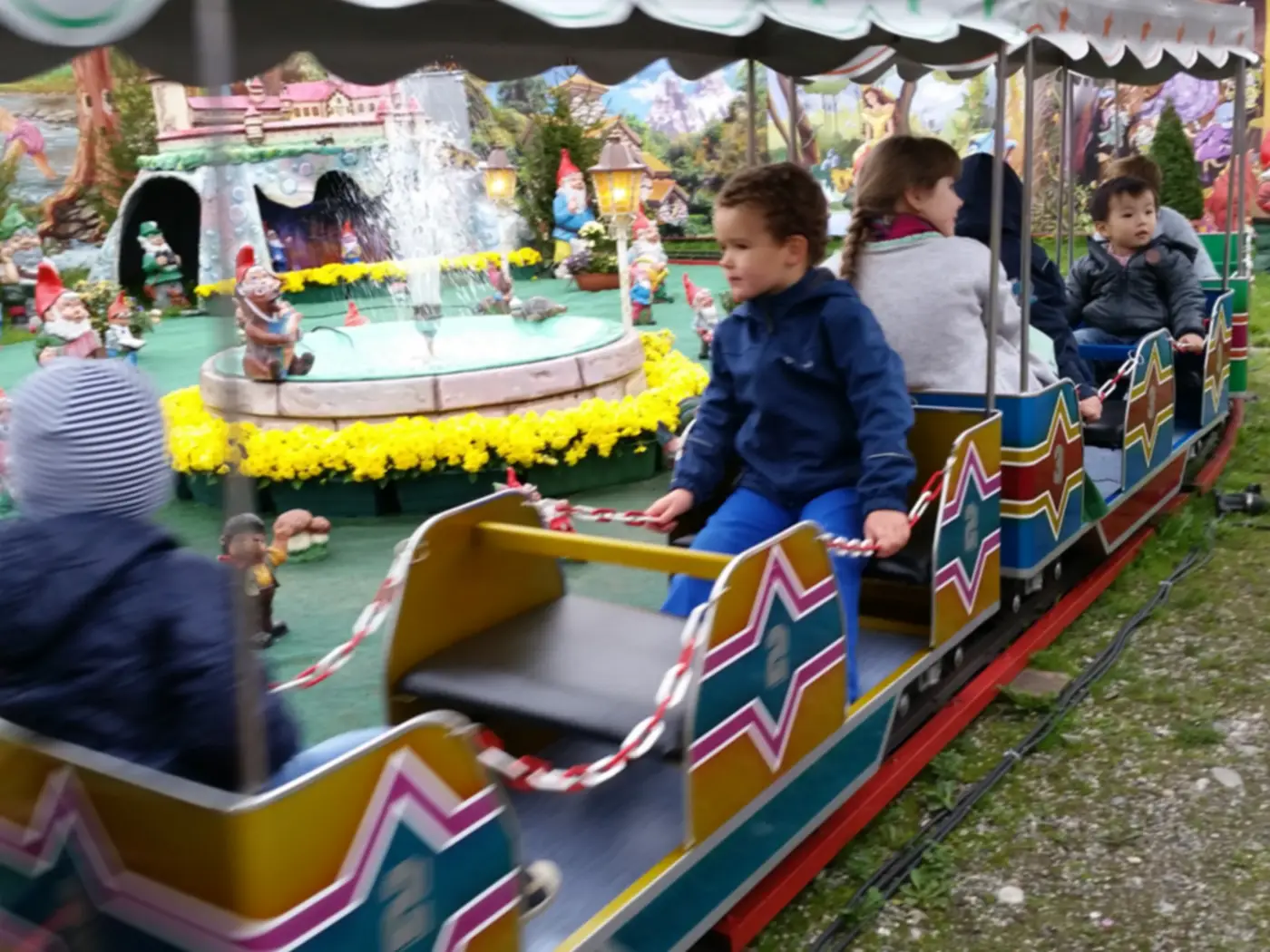
Young children usually get more from the daytime fairground than from a late beer-tent visit.
Children under six may not remain in beer tents or catering establishments after 8 p.m., even with a parent or guardian. Visitors under sixteen may remain on the grounds after 8 p.m. only when accompanied by a parent or guardian.
Strollers are generally allowed until 6 p.m., except on Saturdays and October 3, when they are prohibited all day. Back carriers for small children are allowed every day. Strollers can be left at luggage storage for €3 or at free stroller-parking points inside the grounds.
Free child-finder wristbands are available from stewards at the entrances. Familienplatzl provides stroller parking, changing facilities, a children’s toilet, seating, and a microwave. Dedicated children’s toilets are also available at the Ferris wheel, several children’s carousels, Marstall, and Poschner’s roast-chicken and duck venue.
Family Days take place on Tuesday, September 22 and Tuesday, September 29, with reduced offers at many rides, attractions, snack stands, and large tents until 7 p.m.
Oide Wiesn can work well as the second half of a family visit because it is smaller, less hectic, and built around traditional rides and programs. The detailed differences appear in Section 06.
All large tents have step-free entrances and designated wheelchair spaces inside and in their beer gardens. Some spaces remain available without reservations until 5 p.m. on weekdays and 2 p.m. on weekends and October 3, but individual tent arrangements vary. After those times, contact the tent directly.
Two official luggage-storage locations lend wheelchairs free of charge against a photo ID: the Hans-Fischer-Straße entrance and the storage point near the main entrance. Many accessible toilets use the EURO key system, with a key available from staff where necessary. Check live lift status in MVGO before you travel.
05. You can enjoy the whole Wiesn without drinking
If you do not drink, you do not have to stay in Oide Wiesn or make only a quick photo stop. The main grounds still offer live music, tent interiors, rides, food, decorated facades, traditional clothing, and excellent people-watching.
Large and small tents serve alcohol-free beer, soft drinks, water, and other non-alcoholic choices. A tent visit is therefore more about whether the atmosphere appeals to you than whether beer is part of the order.
On more than one visit, the plan was simply to walk the main grounds, watch people, and eat from the street stalls without ever sitting down in a tent. Not drinking did not get in the way of that at all. On our non-drinking visits, food, snacks, and a few rides still came to roughly €30 to €50 per person. The €5 climb inside the Bavaria statue was separate.
One hour
With one hour, the visit works best as a walk through the main festival streets, a look at the large tent facades, a few photos, and perhaps one snack when the queue is reasonable. Luggage needs to be out of the way first.
Even in broad daylight, the grass around the Bavaria statue is usually covered with people just lying around, well before anyone would call it evening. The outdoor steps and lawn are free, and the view is good even if you do not pay to climb inside.
The outdoor steps and terrace around the Bavaria statue offer a free view over part of the grounds. Climbing inside the statue to the viewing platform is not free: the 2026 regular admission is €5, with free admission for visitors under eighteen.
Two hours
Two hours allow room for one tent look, a meal or soft drink, or a short visit to the traditional rides. Half of that time can disappear quickly at a single closed entrance.
Half a day
For a half-day visit, go before the evening rush if possible. You may have time for one tent, then the fairground, food stands, outdoor beer gardens, or Oide Wiesn. Agree on a leaving time before you arrive, so the visit does not take over the rest of the day.
06. Oide Wiesn offers a different pace
Oide Wiesn is not a special zone for non-drinkers. It is the historical section of Oktoberfest, and it is often the better choice for families, older visitors, and anyone who wants traditional music and rides without the busiest version of the main grounds.
Adult admission is around €4, children aged fourteen and under enter free, and entry becomes free after 9 p.m. through designated exits. Cultural programs in the tents are included.
Every historic ride at Oide Wiesn costs €1.50 in 2026. The €1 mentioned elsewhere on the official page refers to unlimited lemonade in Festzelt Tradition’s Limogarten, not a ride.
The three beer tents focus on Bavarian folk music and traditional programs. Festzelt Tradition is the largest and most visibly family-oriented. Schützenlisl is built around folk singers and shared singing. Boandlkramerei has a more informal musicians’ and tavern atmosphere.
Festzelt Tradition and Boandlkramerei serve Augustiner from wooden barrels. In 2026, Schützenlisl serves Hacker-Pschorr, also from wooden barrels. Oide Wiesn is still very much a beer-tent experience, just in a more traditional and less hectic setting.
One-third of the tent seats remain unreserved. That improves the walk-in structure, but it does not guarantee a seat on a busy Friday or Saturday evening. A reservation makes sense when a guaranteed seat for a longer meal is central to the visit.
The Oide Wiesn grounds open from 10 a.m. until 11:30 p.m. from Sunday to Thursday and until midnight on Friday and Saturday. The beer tents close at 11:30 p.m., with last beer and music at 10:30 p.m. Free entry after 9 p.m. therefore creates a short late visit, not a full evening plan.
07. After 9 p.m.: a second attempt, not a secret entry trick
Late evening can be the liveliest part of a large tent, but arriving after 9 p.m. without a reservation remains a gamble. Some guests leave, while other tents stay closed because they are full.
On several visits hosting guests without a table reservation, trying again around 9 p.m. worked better than showing up during the 4 to 6 p.m. changeover, when many tents close their doors to walk-ins for a stretch. This is not a reliable entry rule. Tents can still close whenever they hit capacity, and the outcome varies by tent, weekday, and weather. In my experience, it can be worth trying once more later instead of giving up after one closed door.
Once the mood peaks, people climb onto the wooden benches, arms linked, singing and swaying together, while some dance in the narrow aisles between tables. That part is normal and half the fun. The bench is where the dancing happens; the table is where it stops being charming.
Most large tents stop beer service and music at 10:30 p.m. Käfer Wiesn-Schänke and Kuffler’s Weinzelt are the late exceptions, operating until 1 a.m. A 9 p.m. arrival is therefore a short atmosphere window in the standard tents.
08. Food, water, and payment can make the day easier
Do not wait until you are very hungry to eat. A Maß is one liter, and Oktoberfest beer is usually around 6 percent alcohol. Food does not cancel the alcohol, but drinking on an empty stomach can make a crowded evening much harder.
Roast chicken, the standard full tent meal.
A large pretzel that is easy to share.
A rich Bavarian cheese spread, usually eaten with pretzel.
Salted white radish, lighter than most tent food.
Grilled fish on a stick, commonly sold outside and at Fischer-Vroni.
An ox-meat sandwich when a full table meal is unnecessary.
Ten official fountains provide free drinking water. An unbreakable bottle works well, provided it is empty before entering a tent or beer garden.
Vegetarian choices are widespread. Vegan and gluten-free visitors should check the current menu before choosing a tent. Several places offer gluten-free food, but Oktoberfest does not serve gluten-free beer.
The official payment list still shows several large tents as cash only, while others accept debit or credit cards. Card acceptance also varies among rides and stalls. Enough cash for a meal, drinks, rides, and tips keeps an Oktoberfest ATM from becoming an unexpected stop.
After a few beers, spinning and drop rides are a poor combination. People do get sick on them, and nearby visitors can be caught in the mess. Calmer rides, or doing the fairground earlier in the day, are usually the better choice.
09. Inside the tent: service, manners, and safety
Service in a busy tent is brisk because servers move heavy orders through narrow aisles while carrying several full mugs at once. Clear orders, an open aisle, and payment ready when food or drinks arrive make the exchange easier. The pace reflects the workload, not the mood of the tent.
With cash, the usual approach is to state the total amount including the tip. That is simpler than waiting for change and handing part of it back. A clear, reasonable round-up is enough; each order does not need to become a calculation exercise.
A quick question before joining a shared table avoids awkwardness. Phones and wallets are safer in a closed bag, especially when stepping outside without any guarantee of getting back in.
Unwanted contact, aggressive behavior, or discriminatory remarks can occur in a crowded tent. An argument with an intoxicated stranger rarely improves the situation. Moving back to the group, speaking to security, or using the Safe Space in the Service Center is usually the safer response.
Taking a tent’s beer mug is theft. Official souvenir mugs are sold separately and marked so security can distinguish them from tent property.
The Service Center behind Schottenhamel contains the central police station, first aid, the Safe Space for women and girls, and the children’s lost-and-found point. Know where it is before you need it.
10. Plan how you will leave
A meeting point and leaving time are easier to settle before the group splits up. Save your hotel address and return route offline. Calls and message alerts are easy to miss inside a loud tent.
Do not count on getting a taxi beside the grounds. Demand is high, roads are restricted, and the wait can take longer than walking to another station.
The departure station does not need to be the one used on arrival. Depending on position and destination, Goetheplatz, Poccistraße, Schwanthalerhöhe, Hackerbrücke, Heimeranplatz, or the walk toward Hauptbahnhof may be easier.
If your luggage is stored elsewhere, leave enough time to collect it before you continue your journey.
Before you leave for the Wiesn
Before you leave for Theresienwiese, check these six things:
Bag
Keep it within the official size limit, or store larger luggage before you reach the festival grounds.
Route
Choose an arrival station, but keep one alternative in mind in case the nearest station or entrance is crowded.
Tent timing
If you do not have a reservation, avoid building the day around the 4 to 6 p.m. changeover.
Money
Carry enough cash even if you also plan to use a card. Payment methods still vary between tents, rides, and stalls.
Meeting point
Agree on one place to meet if the group gets separated. Mobile reception and message alerts are easy to miss in a busy tent.
Way home
Decide how you will leave before the evening gets busy, especially if you still need to collect luggage or catch a train.
If you are still deciding what kind of Oktoberfest visit fits your trip, the companion planning guide compares the main options.
Oktoberfest rules, prices, luggage services, reservation procedures, payment methods, and transport operations can change. Check the official Oktoberfest and Munich transport information again shortly before visiting.