
Munich Practical Notes
Renting a Car in Munich: When It Helps and What to Check First
When a car helps, when Munich is easier without one, and what to check before pickup, payment, insurance, parking, and a longer Bavaria trip.
A rental car is most useful when your trip goes beyond central Munich: several stops in one day, rural hotels, lakes, Alpine towns, Legoland, family luggage, or places that are difficult to reach by train and bus.
If your first days are mainly the old town, museums, shopping, beer halls, and central neighborhoods, start without a car. Rent one when you begin the Bavaria part of the trip.
This article covers that decision and the checks to make before pickup: timing, licence, payment card, deposit, insurance excess, additional drivers, car type, parking, and cross-border permission.
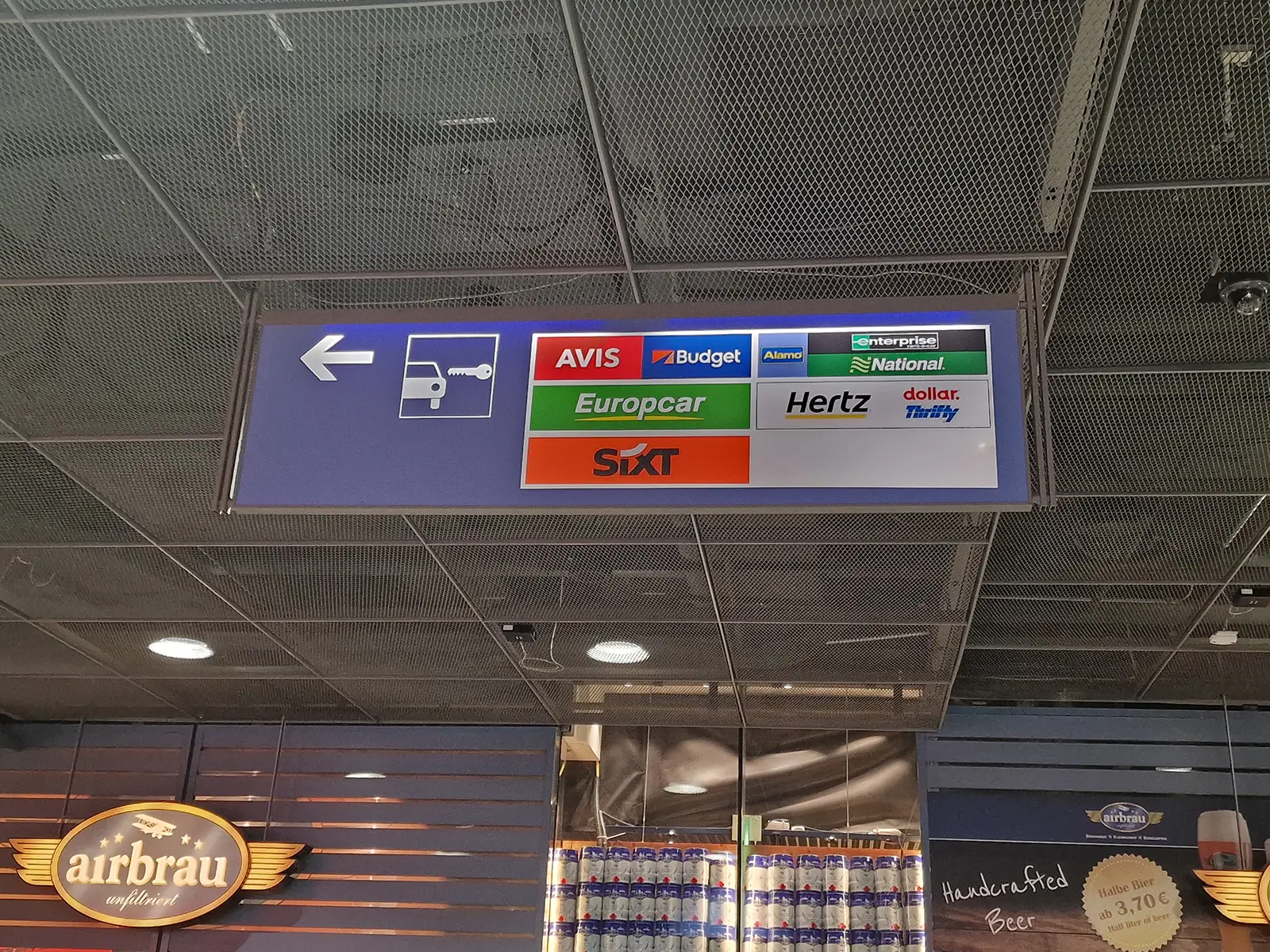
Rental car signs at Munich Airport. Airport pickup works well when the driving part of the trip starts immediately.
01Should you rent a car in Munich?
If your trip is mainly Munich city, you probably do not need a rental car. The old town, Hauptbahnhof, beer halls, museums, shopping streets, Olympiapark, and most central neighborhoods are easier by public transport, walking, taxi, or a mix of all three.
Even the airport trip rarely needs a car if your hotel is central. Before you book a rental just because the counter is close to arrivals, read my note on getting from Munich Airport to the city.
A car becomes useful when Munich is the base for a wider Bavaria trip: lakes, Alpine towns, Legoland, rural hotels, castles, small villages, or several stops in one day.
A car can help with: children, luggage, bad weather, early starts, countryside routes, or plans that need too many train and bus changes.
02When renting a car in Munich is worth considering
A rental car becomes more useful when one day combines several places that are awkward to connect by train and bus.
One Bavarian town or lake may be easy by train. Two villages, a viewpoint, a countryside restaurant, and a rural hotel in one day are much easier by car.
With children and luggage, the advantage is often convenience rather than speed: bags, jackets, snacks, and child seats stay with you between stops.
Weather and departure time matter too. Rain, winter conditions, or an early rural departure can make a car more useful. Rent it for those days instead of paying for days when it will sit in a city garage.
03What makes a rental car less convenient in Munich
Driving in Munich is manageable, but a rental car adds extra work inside the city.
When I first came to Germany, I was more hesitant about driving into city centers than driving between cities. Tram tracks, ring roads, cyclists, one-way streets, bus lanes, and older street layouts all appeared at the same time.
After years in Munich, I find the driving itself manageable. For a first-time visitor, parking and keeping track of the car are often the bigger problems.
You need to ask whether your hotel has parking, what it costs per night, whether you must reserve a space, and whether your car fits the height limit. If the hotel has no parking, you need a nearby garage or a street parking plan. This is one reason where you stay in Munich matters more once a car is involved.
If your day is the old town, lunch, shopping, beer halls, and a museum, the car will probably stay parked while you pay for the rental and parking. In that case, renting later may make more sense.
04Munich Airport pickup or city pickup: decide before you book
Munich Airport rental providers are located in the Munich Airport Center on Level 03. For return, follow the airport signs for Rental Car Return rather than entering a normal public car park.
Airport pickup makes sense if you are driving out of Munich right away or if your first night is outside the city. It can also work well for families when moving children, bags, and a stroller across train platforms after a long flight feels difficult.
If your first days are only in Munich city, airport pickup may start the rental too early. You may drive into town, look for hotel parking, pay for the rental and insurance, and then leave the car unused while you walk or take the U-Bahn.
In that case, city pickup can be better. Enter Munich by train, airport bus, or taxi, spend the city days without a car, and rent only when you leave for Bavaria. City branches can have shorter opening hours, fewer vehicle choices, or less flexible return options, so compare those details before booking.
05Before you book, decide when you actually need the car
Before comparing prices, decide which part of the itinerary needs the car. This affects the pickup location, number of rental days, car size, insurance, and parking.
For example, one Legoland day may call for a one-day rental, while a rural hotel and several Bavaria stops may justify keeping the car longer.
Before you book, check the basics:
- Is the car for Munich city, or for Bavaria outside the city?
- Will you pick it up at the airport, or after your Munich city days?
- Does your hotel have parking, and what does it cost?
- Is the payment card in the main driver’s name?
- How much deposit will be blocked?
- What is the excess if the car is damaged?
- Is it zero excess at the counter, or reimbursement after you pay first?
- Do you need an automatic car, a child seat, or an additional driver?
- Do you need unlimited mileage for a longer Bavaria route?
- If you choose an electric car, do you already have a clear charging and return battery plan?
- Will you leave Germany, and does the contract allow it?
06Licence, payment card, and deposit
Many rental problems start at the counter because the document, payment-card, or deposit rules were not checked before pickup.
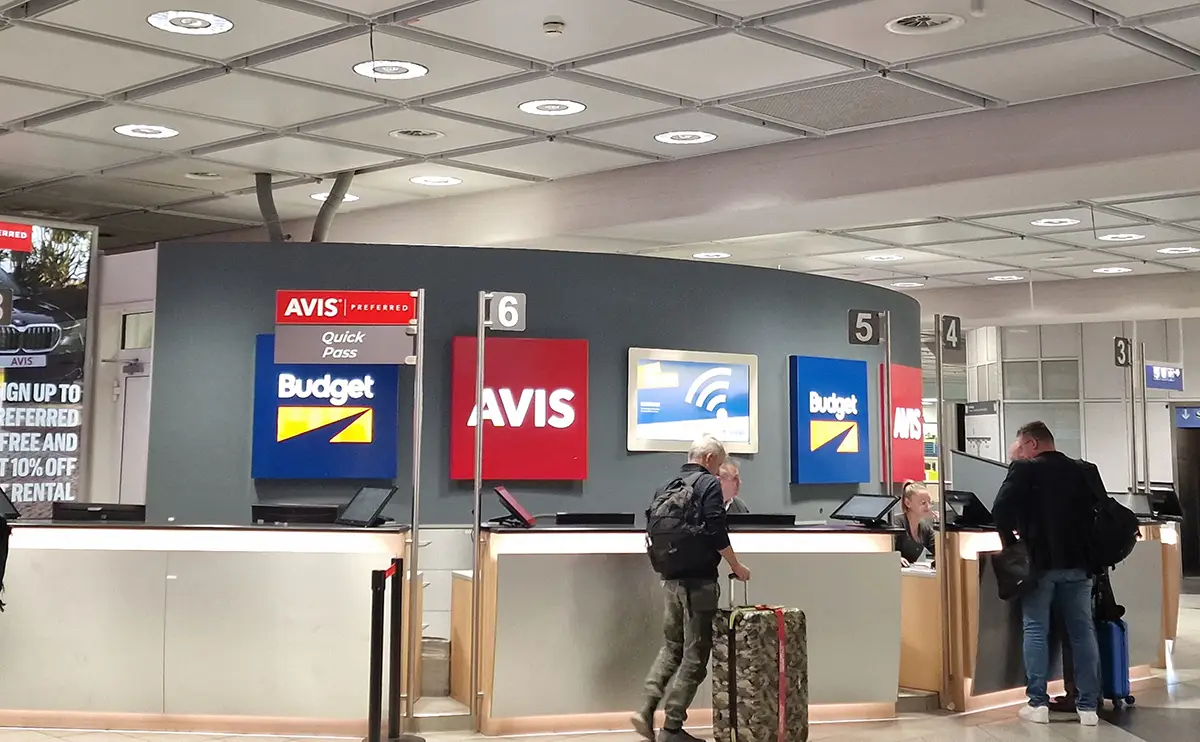
Rental car counters at Munich Airport. Documents, payment card, deposit, and driver details matter before the key is handed over.
You need to carry a valid driving licence. Germany’s Federal Ministry of Transport says a valid national or international licence can be recognized for a temporary stay, subject to the licence class and German minimum-age rules. An International Driving Permit does not replace the domestic licence it is based on.
For some non-EU / non-EEA licences, a German translation may also be required unless the licence meets the relevant international format or you carry an International Driving Permit. Check the rule for the country that issued your licence before travel.
Rental companies can impose stricter document rules than the legal minimum. A physical licence may be required, and digital copies or screenshots may not be accepted. Make sure the names on the booking, licence, passport, and payment method are consistent.
Payment-card rules vary by company, location, and vehicle class. Some providers require a physical card in the main driver’s name for the security deposit, while acceptance of debit, prepaid, or virtual cards can differ. Check the exact pickup-location terms before booking.
The deposit is separate from the rental price. It is usually blocked on your card. Make sure your card has enough available credit or balance for the hold.
Additional driver, automatic car, and mileage
If more than one person will drive, register the additional driver. An unregistered driver can create insurance problems after an accident. For a long trip, I would register the second driver from the start. Sharing the driving also helps with fatigue and late returns.
Check the provider’s minimum-age, young-driver-fee, and vehicle-category rules for every driver. If a second driver is part of the plan, register that person under the rental agreement before driving.
Check the transmission before booking. Many rental cars in Europe are still manual. If you only drive automatic, book an automatic car specifically.
Check the mileage limit too. It may not matter for a short airport-to-hotel rental, but limited mileage can make a road trip more expensive. Unlimited mileage is easier for a longer route.
An electric rental car can work well, but you also need to think about charging access, payment methods, overnight charging, route planning, and the required battery level at return. If those points are unclear, a petrol or diesel car may be easier for the trip.
If you do choose an EV, check whether a charging card or app is included, what charging networks fit your route, whether your hotel offers charging, and what battery level the provider expects when the car is returned.
Also confirm the fuel type and cross-border permission before pickup: petrol or diesel, and whether the contract allows the countries in your plan. Fuel stops, motorway driving, border rules, and return-day driving are covered in the companion driving guide.
07Rental car insurance in Germany: understand excess before you sign
When insurance is listed as “included,” still check how much you may have to pay after damage.
Rental insurance language can be confusing: CDW, theft protection, full protection, zero excess, deductible, excess, glass and tyre cover, reimbursement. The deposit is the money held on your card when you collect the car. The excess, or deductible, is the amount you may still owe if the car is damaged or stolen, depending on the contract.
A high excess can leave you responsible for a large amount even when basic damage cover is included. Decide before pickup whether that level of risk is acceptable to you and whether reducing the excess is worth the added price.
A lower excess reduces your possible damage cost, but it does not cover every situation. Wrong fuel, lost keys, unregistered drivers, forbidden cross-border travel, alcohol, serious negligence, or excluded parts such as tyres and glass can still create extra costs.
Zero excess and excess reimbursement are not the same thing. With zero excess from the rental company, covered damage may mean you pay little or nothing at the counter if you followed the rules. With excess reimbursement, the company may still charge your card first, and you claim the money back from a broker, insurer, or booking platform later.
A reimbursement claim may require photos, invoices, rental documents, damage reports, and sometimes a police report. Read the claim requirements before choosing this type of cover.
Comparison sites, brokers, credit-card cover, and rental-company products can handle damage claims differently. Check whether covered damage is settled directly with the rental company or whether your card can be charged first and you must claim the money back later.
ADAC advises travelers to check the scope carefully because tyres, rims, underside damage, and stone-chip damage are often excluded.
08Plan parking before the rental starts
If the route really needs a car, parking should be part of the booking plan. Check it before the car becomes your responsibility.
If your hotel has parking, start there. Ask whether it is included, whether reservation is needed, the nightly cost, and whether your vehicle fits the height limit.
If your hotel has no parking, P+R may help when you plan to leave the car outside the city and use public transport. It is less convenient when you need the car again early the next morning, especially with children or suitcases.
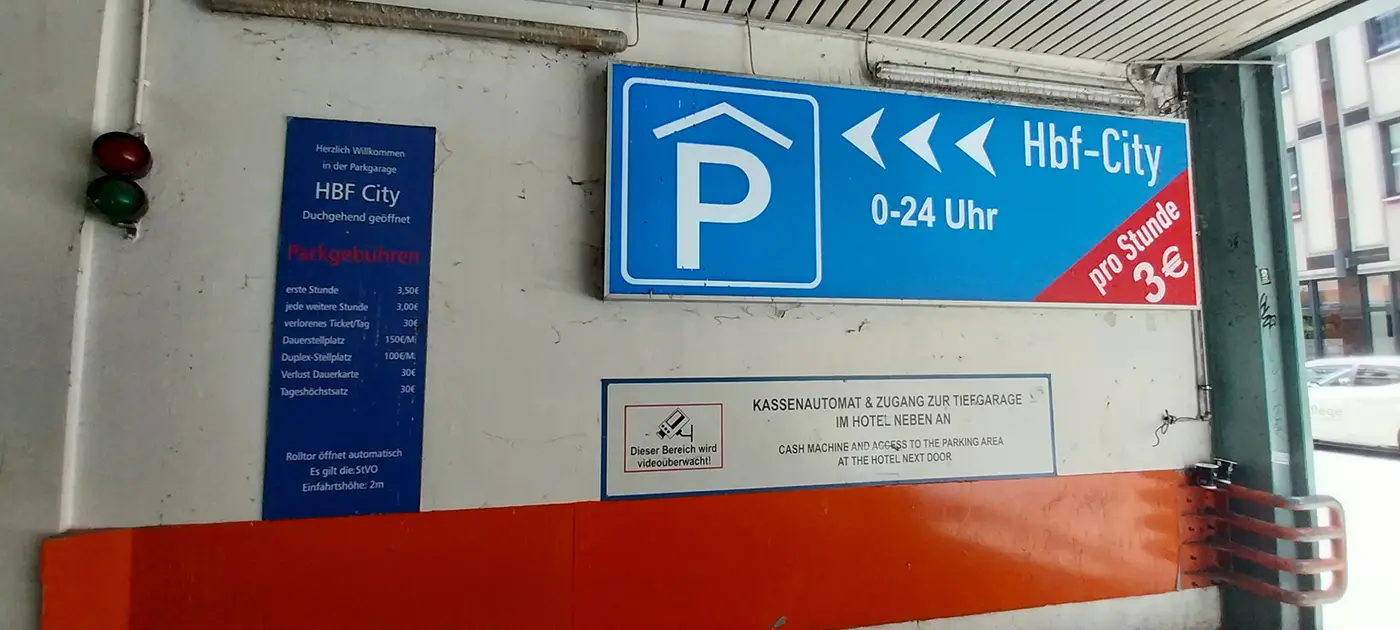
A central parking garage near Munich Hauptbahnhof. A garage can cost more, but it may save time and stress when street parking is unclear.
A city garage costs more, but it can be simpler around Hauptbahnhof, the old town, and central Munich. Street parking may be cheaper, but the signs and restrictions are harder for first-time visitors.
Munich also has digital parking payment. With HandyParken München, you can buy a digital ticket for paid street parking without coins. The app handles payment, but you still need to read the parking signs.
For city turns, cyclists, Umweltzone rules, parking signs, Autobahn habits, winter roads, tolls, border trips, and return-day driving, continue with Driving from Munich: City Rules, Bavaria Roads, and Border Trips.
09Example: when a city garage may be worth the cost
Consider this example.
You arrive in Munich on Friday afternoon. Your hotel is near Hauptbahnhof, with no parking. On Saturday you want to drive out for a family day trip. On Sunday afternoon you leave Munich.
A P+R outside the city may save money, but on Saturday morning you would need to travel back out, collect the car, and then drive to Legoland. With children or luggage, that extra trip may not be worth the saving.
In this case, a paid garage near Hauptbahnhof may be more realistic. It costs more, but the next morning becomes much easier. Or you may enter Munich without a car, spend Friday in the city, and pick up the rental only on Saturday morning if the branch hours and location work.
If luggage is the main reason you are keeping a car in the city, check whether luggage storage in Munich solves part of the problem without renting earlier than necessary.
Compare the full plan, not only the daily rental price: pickup timing, garage cost, and any extra trip needed to reach the car.
| Trip type | Rental car fit | Planning point |
|---|---|---|
| Munich city only | Usually unnecessary | Use public transport, walking, taxi, or airport transfer options first. |
| Munich plus one easy suburb | Usually not needed | Check MVV or regional train options before renting. |
| Family day trip with luggage | Worth considering | Compare comfort, parking, pickup time, child seats, and total cost. |
| Legoland, lakes, villages, alpine towns | Often useful | Rent for the outside-Munich days, not automatically for the whole stay. |
| Rural hotel or multi-stop Bavaria route | Strong option | Check mileage, insurance excess, additional driver, and parking before booking. |
If the trip is mostly Munich, start without a car. If the itinerary moves into Bavaria, rent the car for the days when it makes travel easier.
Before pickup, make sure the licence, payment method, deposit, excess, additional drivers, parking plan, and cross-border permission are clear. After pickup, use the companion driving guide for road rules, parking signs, Autobahn driving, winter roads, and border trips.
Related Munich Notes
Payment cards, deposits, driver ages, insurance excess, additional drivers, cross-border permissions, EV return rules, and other rental terms vary by provider, pickup location, vehicle class, and date. Check the exact rental conditions before booking and again before pickup.