
Cafés in Munich: Historic Coffeehouses, Local Stops, and When to Go
Munich cafés are useful for different reasons: cake and coffeehouse history, a terrace, a local pastry, specialty coffee, or simply a seat before your train.
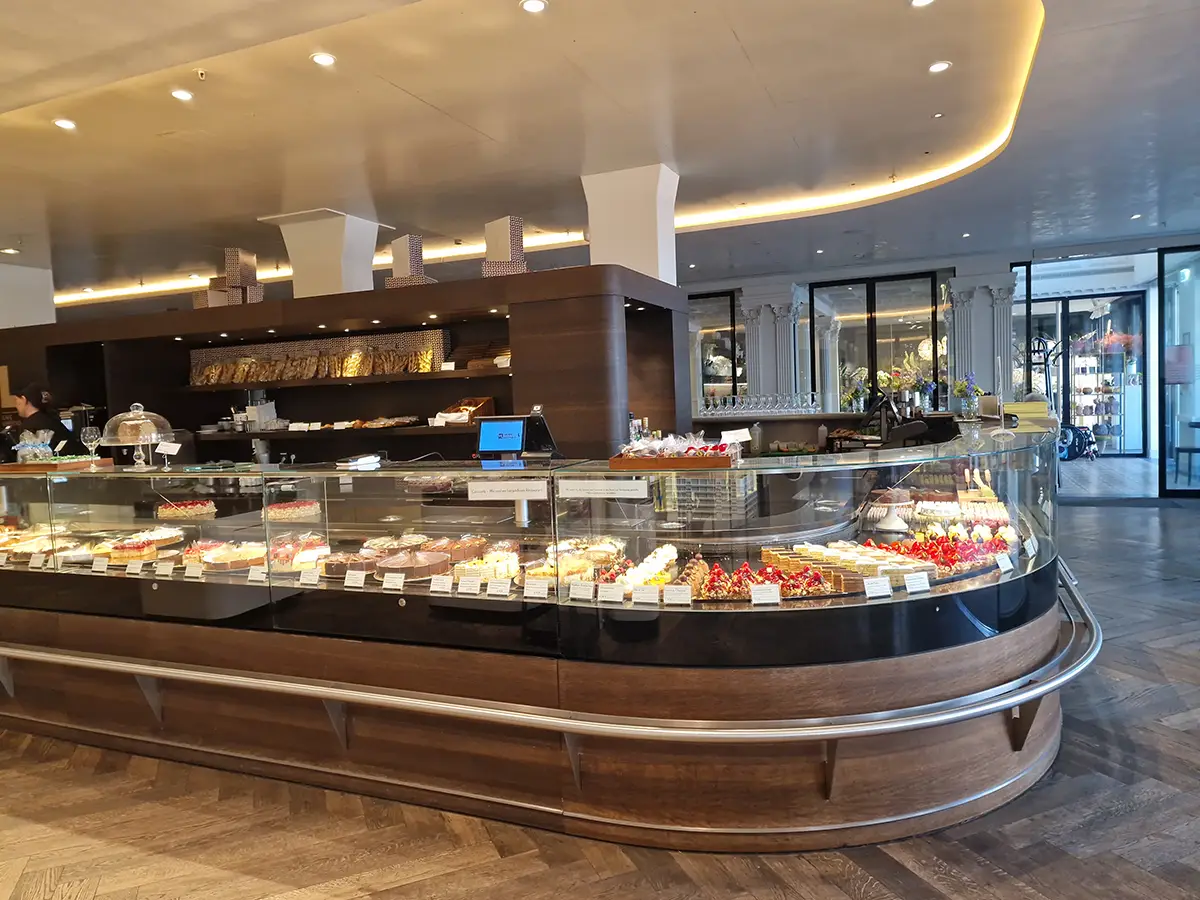
Cakes and pastries at Café Luitpold, one of Munich’s best-known historic coffeehouses.
In central Munich, you can find historic coffeehouses, terraces, pastry cafés, delicatessens, and specialty coffee shops. They suit different kinds of breaks.
If you search for the best cafes in Munich, start with the kind of stop you want. Café Luitpold works well for cake and coffeehouse history. Tambosi is convenient when you are already at Odeonsplatz. Frischhut is a quick local pastry stop. MAN Versus Machine is a good choice if you mainly care about the coffee.
The list below is organized by situation. The first five places cover older Munich café traditions. After that come specialty coffee, student cafés, and practical stops during a sightseeing day.
Choose Café Luitpold for a classic coffeehouse, Tambosi for an Odeonsplatz terrace, Frischhut for Schmalznudel, and MAN Versus Machine for specialty coffee. The table near the end covers the other situations.
01Café Luitpold: cake and coffeehouse history
Café Luitpold on Brienner Straße is a good choice if you want a traditional Munich coffeehouse rather than a quick coffee. The café dates to 1888 and still combines several parts of the old Kaffeehaus tradition under one roof.
Today, the confiserie, restaurant, bar, and Salon Luitpold all share the same venue. The salon hosts talks, readings, and other cultural events. During my visit, the setting felt less formal than I expected, and the staff were friendly and easy to talk to.
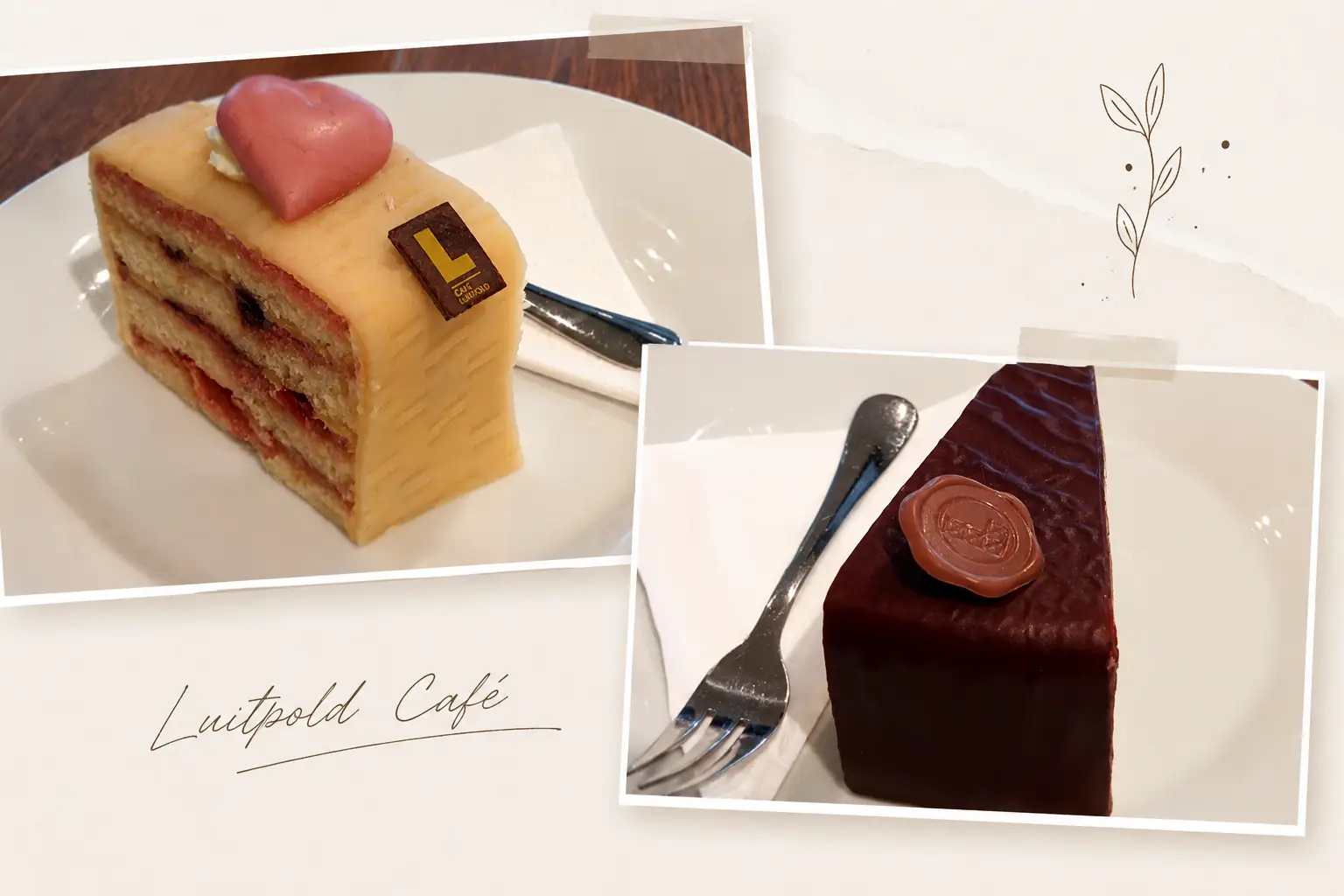
Luitpold-Torte and Prinzessinnen Schnitte at Café Luitpold.
The cake counter includes both older house classics and newer creations. The Luitpold-Torte is one of the classics. The Bayerische Prinzessinnentorte was created for the 20 May 2023 wedding of Prince Ludwig of Bavaria and Sophie-Alexandra, with pistachio cream and a pale Bavarian-blue finish. Luitpold also sells the Prinzessinnen Schnitte as a slice version.
I tried the Prinzessinnen Schnitte after a long old town walk and ordered an iced Americano with it. The slightly bitter coffee worked well with the sweet pistachio cream, especially on a warm afternoon.
Choose Luitpold when you have time to sit down for cake and coffee. It is easy to combine with Odeonsplatz, the Kunstareal, or a walk along Brienner Straße. Café Luitpold currently operates without cash, so card payment is the normal option.
02Tambosi: a historic café at Odeonsplatz
Tambosi has one of Munich’s longest café histories. Coffee was being served by the Hofgarten here in 1775, and Luigi Tambosi took over the business in the early nineteenth century. The current café still carries his name.
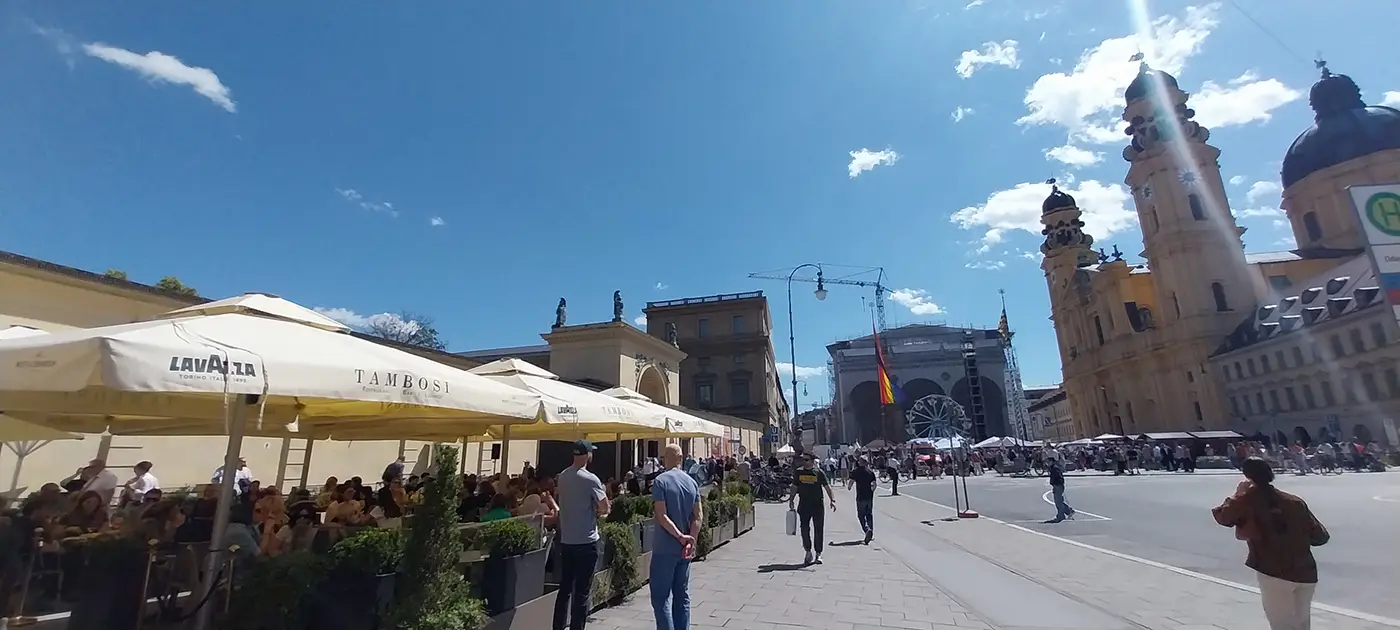
Tambosi beside Odeonsplatz, with a second quieter side toward the Hofgarten.
One side faces Odeonsplatz, the Feldherrnhalle, and the yellow Theatinerkirche. The other side looks toward the quieter Hofgarten. In good weather, choose the square side for people-watching or the garden side for a quieter table.
Tambosi makes sense when your route already includes the Residenz, Hofgarten, Odeonsplatz, or Theatinerkirche. I would choose the Odeonsplatz side for the city view and the Hofgarten side for a quieter break.
03Café Frischhut: come for the Schmalznudel
Café Frischhut is very different from Luitpold or Tambosi. It is a short, local pastry stop near Viktualienmarkt, only a small detour from the old town walk.
The reason to come is the Schmalznudel, also called Auszogne in Bavarian. You can watch the dough being fried at the window, buy it warm, add sugar, and eat it while it is fresh.
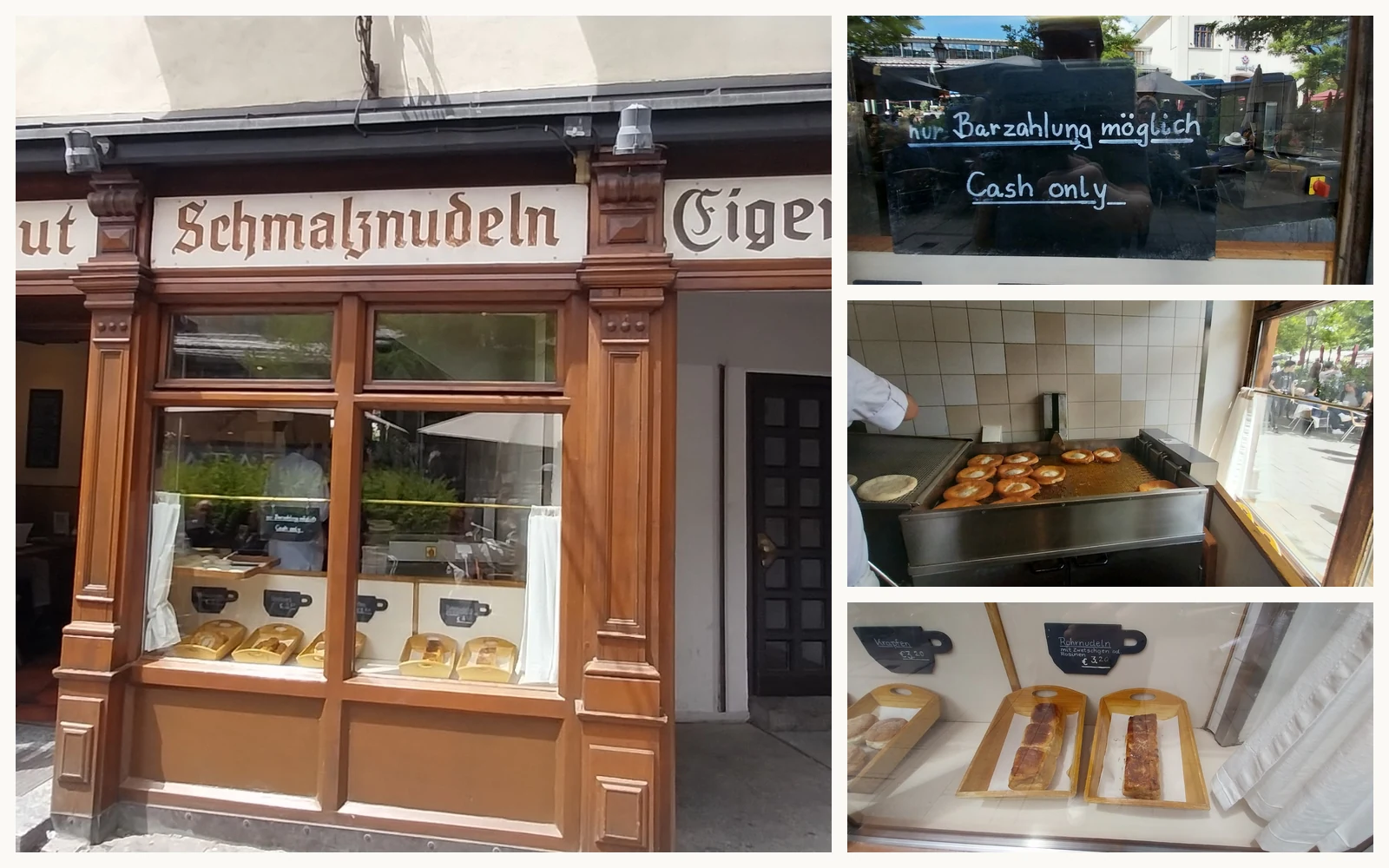
Schmalznudel being fried at Café Frischhut. The cash-only sign was visible during the field visit.
I would use Frischhut as a quick pastry stop before or after Viktualienmarkt rather than planning a long café break here.
During my field check, Frischhut had a clear cash-only sign. Sunday is also commonly a closed day, so check the current opening hours before making a special trip. Our Sunday in Munich guide covers the wider Sunday problem.
04Dallmayr: coffee, gifts, and delicatessen
Dallmayr combines a café with a large delicatessen and specialty food shop. The company’s history reaches back to a Munich trading business recorded around 1700, and the main house on Dienerstraße includes coffee, tea, delicatessen food, gifts, restaurants, and a café-bistro.
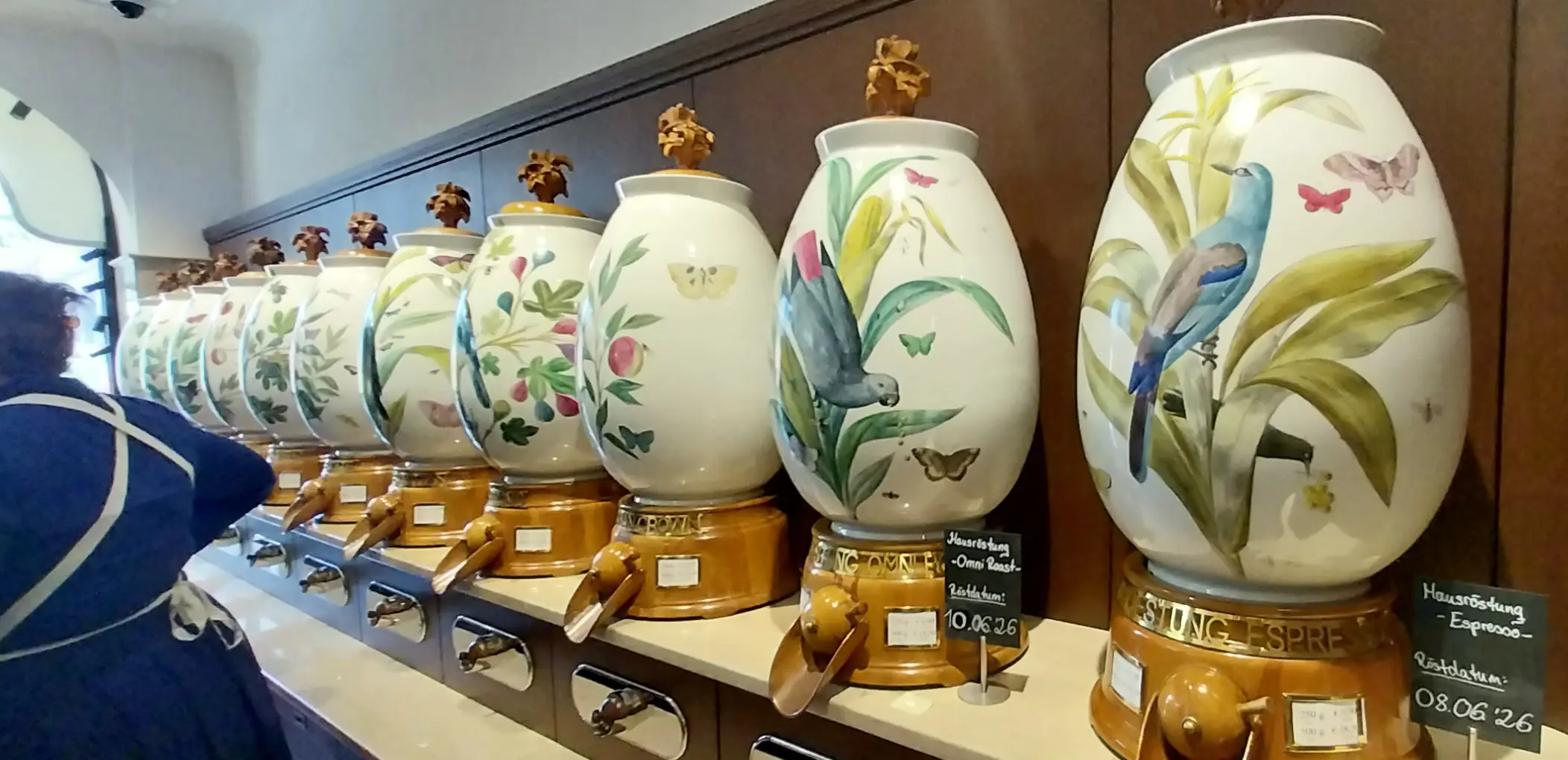
Coffee beans in Dallmayr’s traditional ceramic containers.
During my visit, I spent more time at the coffee section than at the gift shelves. The large ceramic containers, the smell of roasted coffee, and the steady flow of people buying beans and tea were the most interesting parts for me.
Dallmayr is useful when you want both coffee and shopping. Stop for beans, tea, chocolate, or a small gift while you are already near Marienplatz. It is less suitable if you want a long, relaxed laptop session.
05Glockenspiel Cafe: Marienplatz from above
Glockenspiel Cafe is a useful choice if you want a café with a view. The square-facing seats look across Marienplatz toward the New Town Hall and its Glockenspiel.
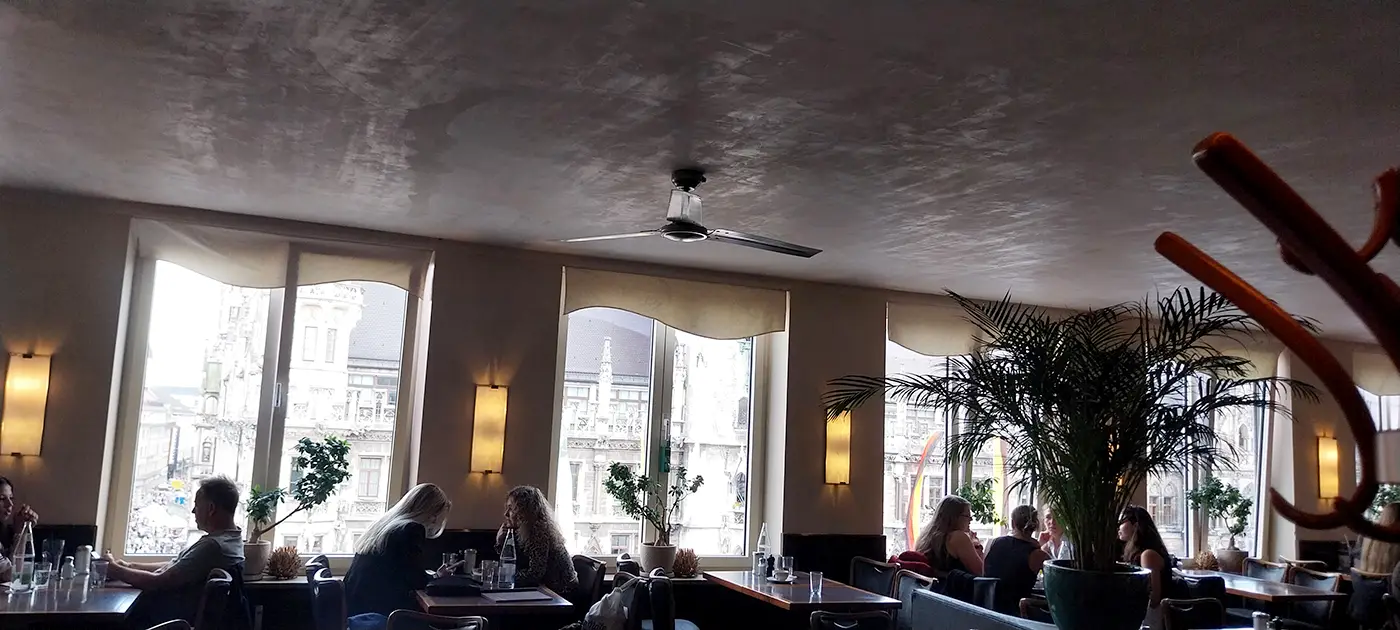
The square-facing window seats are the main reason to visit Glockenspiel Cafe.
The entrance is on Rosenstraße rather than directly on Marienplatz. Take the elevator up, then turn left toward the café area if you want the square-facing seats. The terrace straight ahead from the elevator does not give the same Marienplatz view.
Go when you want a coffee break with a Marienplatz view. If the square-facing seats are full, I would not wait too long unless that view is important to you.
06Specialty coffee and student cafés
Munich also has many newer cafés around Maxvorstadt, the university area, and Schwabing. They are easy to combine with museum, university, and neighborhood routes.
MAN Versus Machine
For a Maxvorstadt day, MAN Versus Machine on Schellingstraße is easy to combine with LMU and the Kunstareal. The independent specialty roaster was founded in 2014 and focuses on espresso, filter coffee, and its own beans.
I stopped by around noon on a Sunday. The café was open and Maxvorstadt still felt active even though many other businesses in Munich were closed.
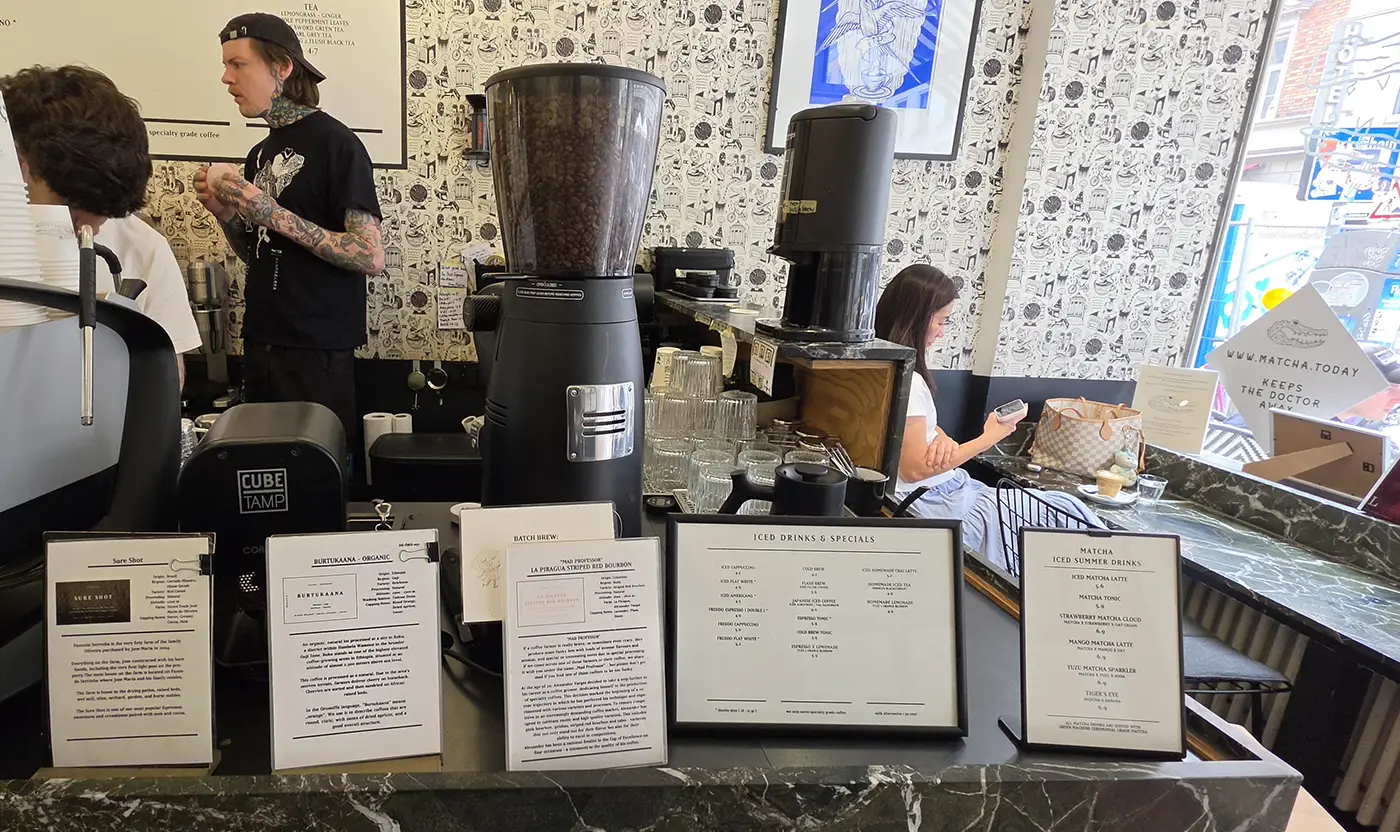
MAN Versus Machine on Schellingstraße in Maxvorstadt.
MACKBEAR
MACKBEAR in Maxvorstadt has more space and works well when you want to sit for a while. It is close to the Pinakotheken and within walking distance of LMU. There is also a branch on Leopoldstraße near Giselastraße U-Bahn.
When I visited on Sunday, it was open and easy to use as a longer break. Students and laptop users were part of the normal mix.
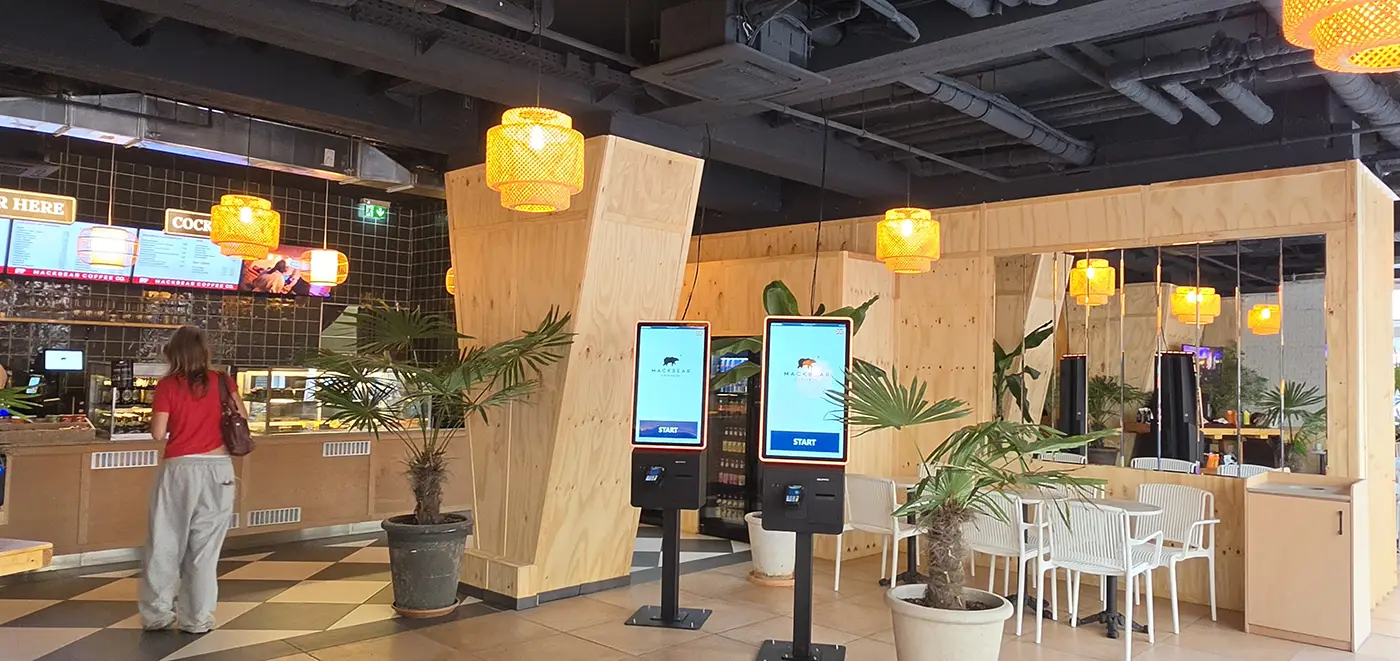
MACKBEAR is useful when you want coffee, space, and a comfortable seat.
Lost Weekend
Lost Weekend combines a café, books, reading, casual work, and vegan-friendly food. It is convenient when your route already includes LMU, Schellingstraße, or the Kunstareal.
I visited on a Sunday and found it busy with students and readers. It can therefore be useful when some smaller cafés are closed.
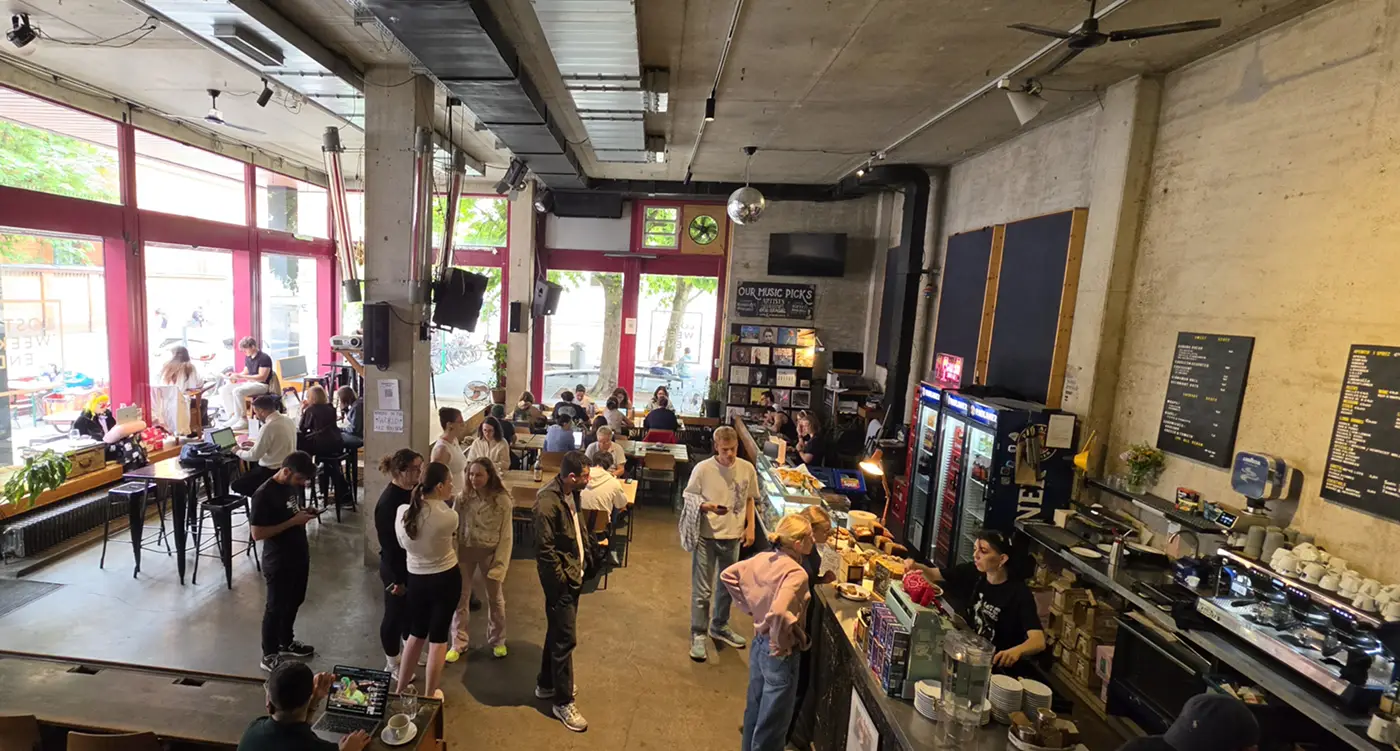
Lost Weekend fits the student and bookish café culture of Maxvorstadt.
Standl 20
Standl 20 sits at Elisabethmarkt in Schwabing. It makes sense when your day already brings you to the neighborhood and you want specialty coffee in a market setting.
I went there on a Sunday and found it closed. Check the current opening hours before making the trip, especially on weekends.
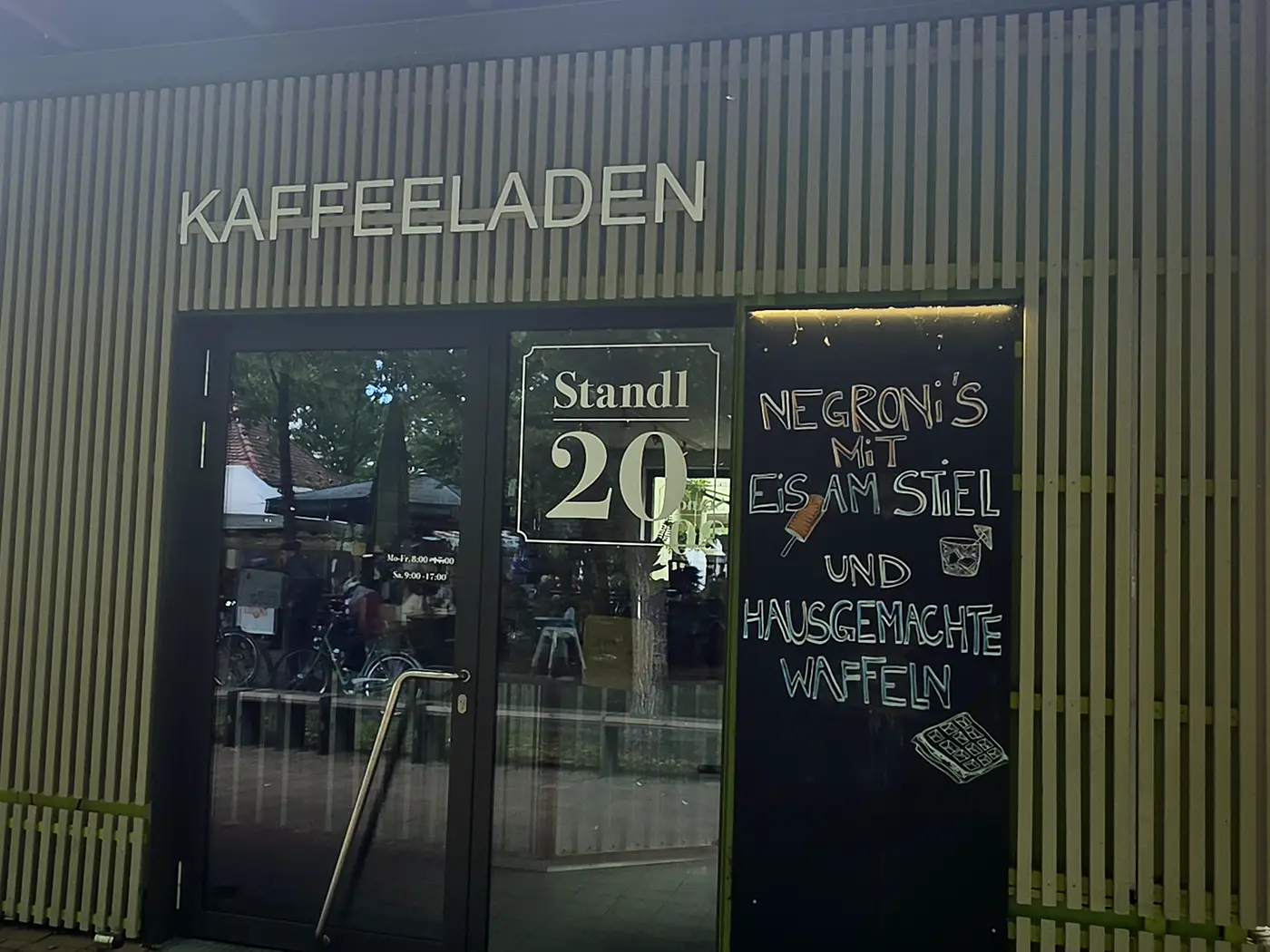
Standl 20 at Elisabethmarkt in Schwabing.
07Practical café stops during shopping or train travel
During a shopping day or before a train, you may only need a convenient seat and a quick coffee.
Oberpollinger: a useful indoor break
Oberpollinger is a department store, and its fifth-floor food area is a practical indoor stop between Karlsplatz and Marienplatz. You get seats, food choices, toilets, and shelter from rain during a shopping walk along Neuhauser Straße and Kaufingerstraße.
When I visited, people were sitting with coffee, shopping bags, phones, and laptops. It works well as a break during the old town shopping route. If shopping is part of your day, see our guide to drugstores and supermarkets in Munich.
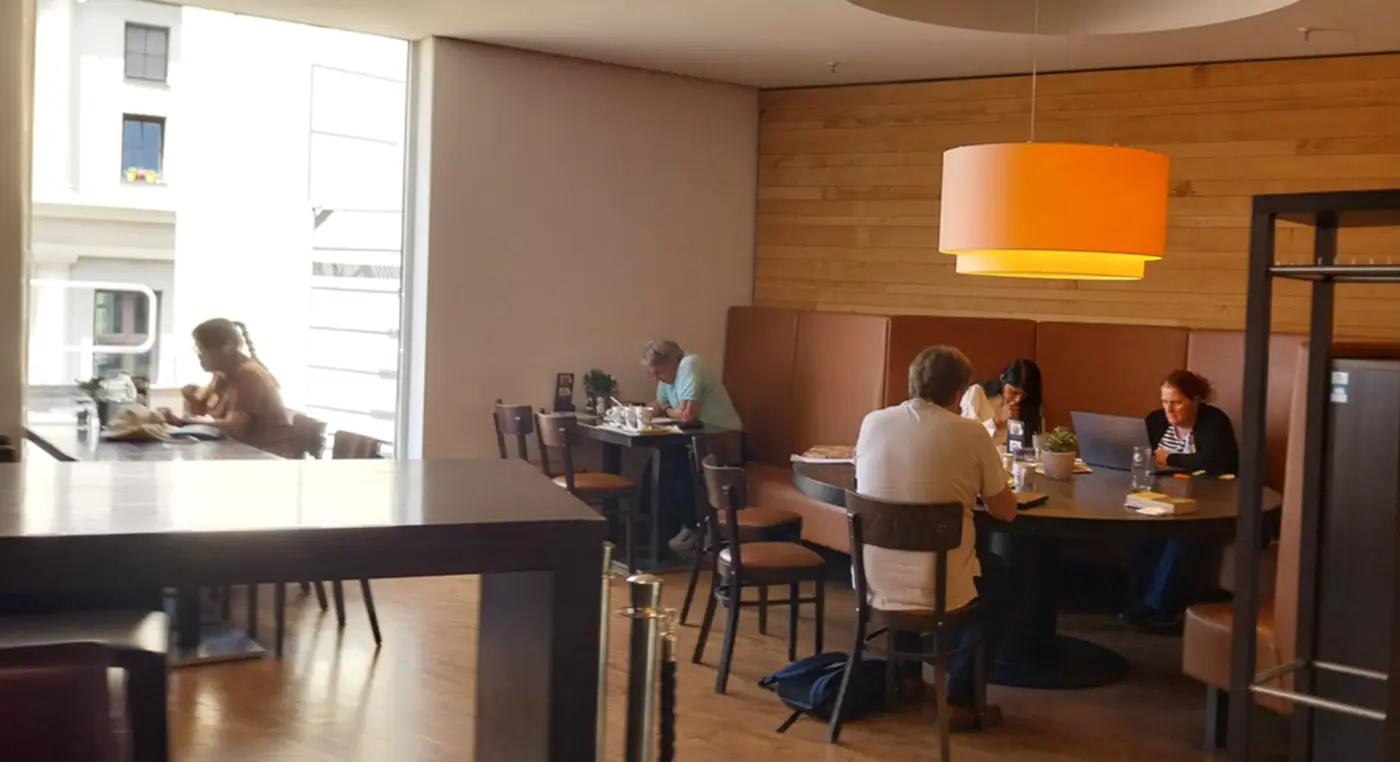
Indoor seating at Oberpollinger during a shopping-day break.
Coffee Fellows and the Hauptbahnhof stops
Coffee Fellows on Bayerstraße is close to Hauptbahnhof, but it is not inside the station. I would use it when I have enough time to sit down rather than when a train is leaving soon.
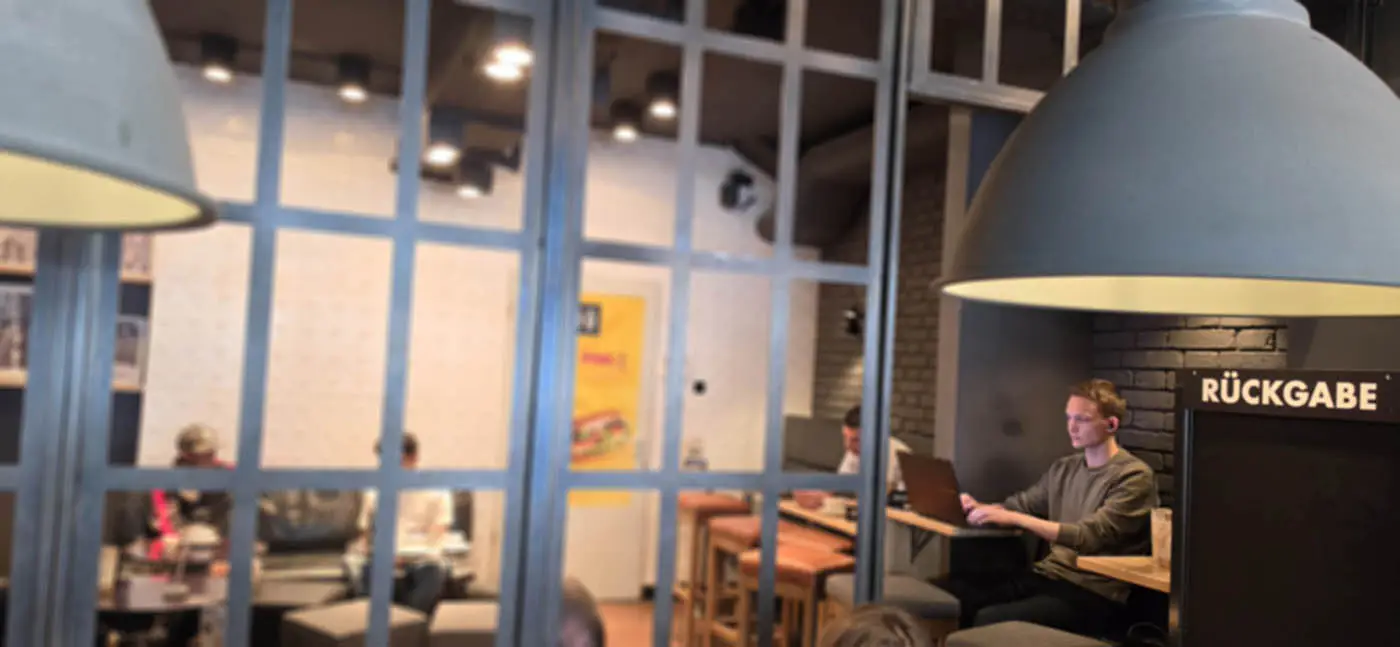
Coffee Fellows on Bayerstraße, a short walk from Hauptbahnhof.
When I visited, the toilet used a free token from the counter. I also ended one Sunday here with a matcha latte that was reasonably priced and better than I expected. It was a comfortable place to sit before continuing my trip.
Inside and around Hauptbahnhof, Rischart, YORMA’S, Starbucks, and McCafé are useful when speed matters. If you only have fifteen minutes before a train, convenience is a good reason to choose one of them.
If you have a suitcase, store it before sitting down when possible. Hauptbahnhof has luggage options, and our luggage storage in Munich article explains the choices in more detail.
Near the station or during a shopping day, choose a café that fits your timing, luggage, and need for a comfortable seat or toilet.
08Small café mistakes to avoid
Carry a little cash. Card acceptance is common, but it is not universal. Frischhut had a cash-only sign during my visit, and some small businesses may accept Girocard without accepting every foreign Visa or Mastercard.
If you see Nur Girocard or EC Karte, a foreign card may not work. A small amount of cash is still useful for cafés and bakeries. Our restaurant etiquette article explains payment and tipping in more detail.
Check Sunday hours. Tourist-area cafés often open on Sunday, while some smaller places do not. Check before crossing the city for one café.
Keep the route in mind. Avoid crossing the city for one café unless that café is an important part of your plan.
Expect smoking on some terraces. If smoke bothers you, look at the tables around you before sitting down.
Dogs are common. You will often see dogs at indoor or outdoor café tables in Munich.
09How to choose a café in Munich
Use this table to match a café to your route and the kind of break you want.
| Situation | Better choice | Why it works |
|---|---|---|
| Classic coffeehouse and cake | Café Luitpold | Historic setting, confiserie, and a slower café break. |
| Terrace at Odeonsplatz | Tambosi | A long café history and a convenient location at Odeonsplatz. |
| Local pastry near Viktualienmarkt | Café Frischhut | Warm Schmalznudel and a quick stop. |
| Coffee and gifts | Dallmayr | Coffee beans, tea, delicatessen food, and Munich tradition. |
| Marienplatz view | Glockenspiel Cafe | The upstairs square-facing seats are the main attraction. |
| Specialty coffee and university area | MAN Versus Machine, MACKBEAR, Lost Weekend, or Standl 20 | Good options when your route already includes Maxvorstadt or Schwabing. |
| Shopping or rain break | Oberpollinger | Indoor seating, food, toilets, and an easy pause. |
| Near Hauptbahnhof | Coffee Fellows or station bakeries | Useful when timing and luggage matter. |
Most visitors only need one or two café stops. Choose Luitpold or Tambosi when atmosphere is part of the plan, Frischhut for a short local pastry stop, and a specialty café when you are already in Maxvorstadt or Schwabing.
Near Hauptbahnhof or during a shopping day, choose a convenient café if it fits the route better. You can still have a good break without making a separate trip across the city.
Opening hours, payment rules, menus, prices, and branch details can change. Check the café’s own page or current map listing before making a special trip.