
Munich Events
Munich City Birthday: What to See and Where to Go
A free old town festival with music, crafts, food, family activities, and local traditions. Choose the area that fits your group instead of trying to see the whole programme.
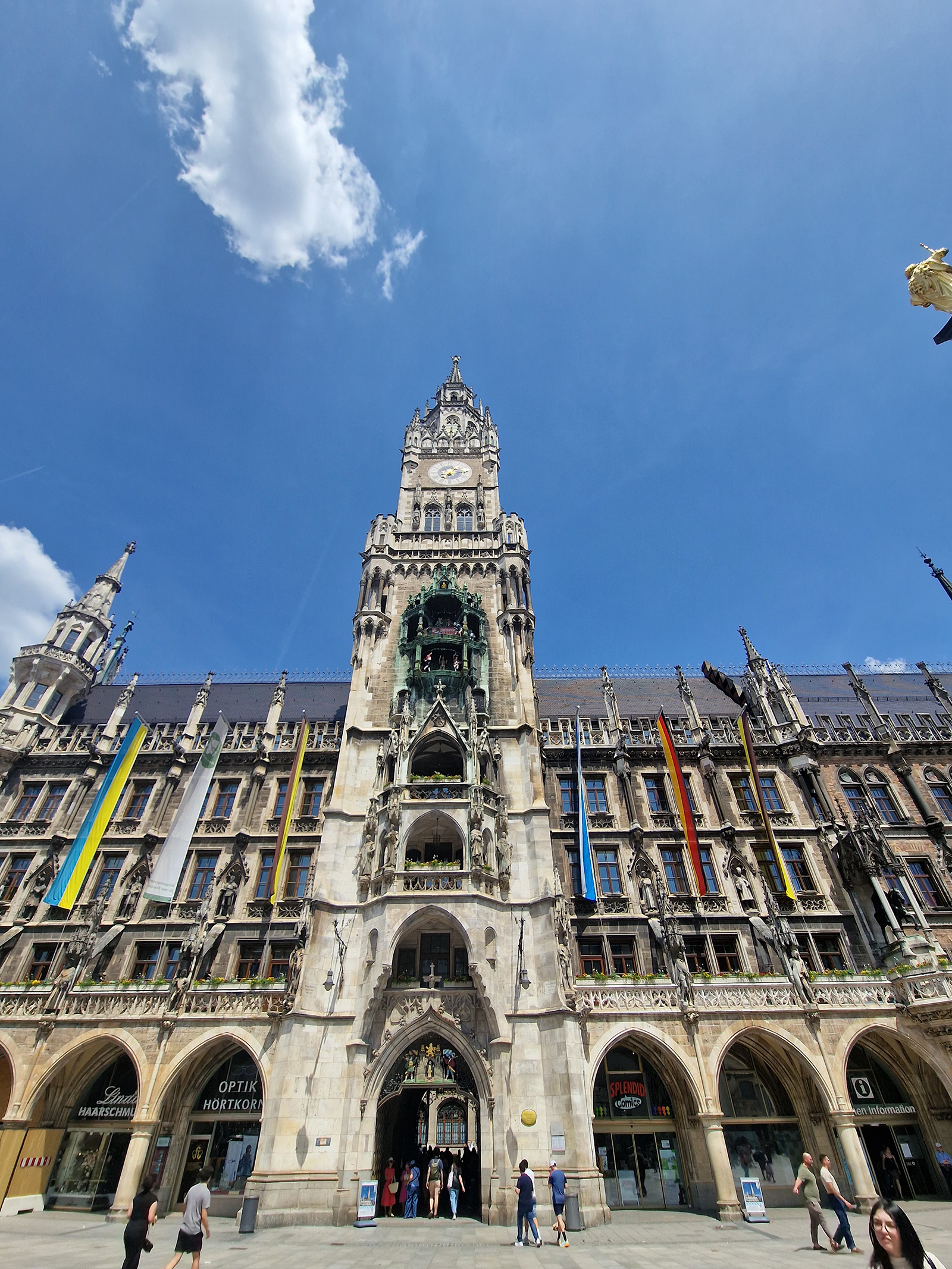
The New Town Hall at Marienplatz, the main meeting point for Munich’s city birthday weekend.
Munich’s city birthday, the Münchner Stadtgeburtstag, turns the old town into a free festival for one weekend. Marienplatz is the main stage, but the event spreads through several nearby streets and squares.
You do not need to follow the whole programme. A first-time visitor may want Marienplatz and one more area. Families often do better around Alter Hof and Odeonsplatz. Rindermarkt and the craft-market streets are useful when you want to keep moving instead of standing in the busiest square.
Dates: June 13 to 14, 2026.
Saturday: brass music from 10:30, official opening at 11:15, Glockenspiel at 12:00, and Tanz der Morisken at 12:15.
Sunday: Glockenspiel, beer-garden opening, live brass music, and Weißwurstfrühschoppen from 11:00.
2026 special price: the official programme lists Weißwürste for 1.50 € from 11:00 to 12:00 on Sunday.
St. Peter tower when checked in 2026: adult admission 5.00 €, summer hours 09:00 to 19:30, last admission 19:00. There is no elevator.
Public toilet when checked in 2026: the New Town Hall courtyard toilet cost 0.60 € and the machine was effectively cash only.
For exact stage times, tours, family activities, prices, and any changes, use the official Munich City Birthday programme.
01Why Munich celebrates June 14
Munich’s official birthday is June 14, 1158. The date comes from the Augsburg arbitration, the first known document in which “Munichen” appears. The early story of Munich is closely connected to salt, tolls, a bridge over the Isar, and a dispute between Henry the Lion and the Bishop of Freising.
The bridge mattered because trade routes brought money and power. That early connection with markets and trade is still easy to recognize in the old town today.
The modern city birthday brings crafts, guilds, music, food, family activities, beer culture, and public squares together for one weekend. Visitors get a free festival across the old town, while many locals come for the traditions, food, music, and familiar meeting places.
02Choose the area that fits your group
| Who you are | Go here first | Why |
|---|---|---|
| First-time Munich visitor | Marienplatz | Main stage, New Town Hall, Glockenspiel, and the official centre of the festival. |
| Meeting friends | Rindermarkt or the craft-market route | Easier for walking, eating, and moving between areas. |
| Travelling with children | Alter Hof, then Odeonsplatz | Hands-on activities and family-friendly programme areas. |
| Interested in crafts and small gifts | Craft-market route | A slower walk through several old-town streets with short stops along the way. |
| Want more historical context | Official guided tour | Useful if you want to understand the old town as well as the festival. |
A simplified old-town orientation map for Munich City Birthday. Tap an area to see its general role, then check the current official programme for exact activities and times.
03Marienplatz: start here, then move on
Marienplatz is the centre of the city birthday. The main stage, New Town Hall, Glockenspiel, and official opening are usually concentrated here. First-time visitors will normally want to begin here. Locals may stop for one part of the programme and then move elsewhere.
When I visited the festival, I understood why so many people started here. The large main stage, the mayor’s greeting, and the official performances brought people back to the square throughout the day. It was an easy place to begin before walking to the other festival areas.
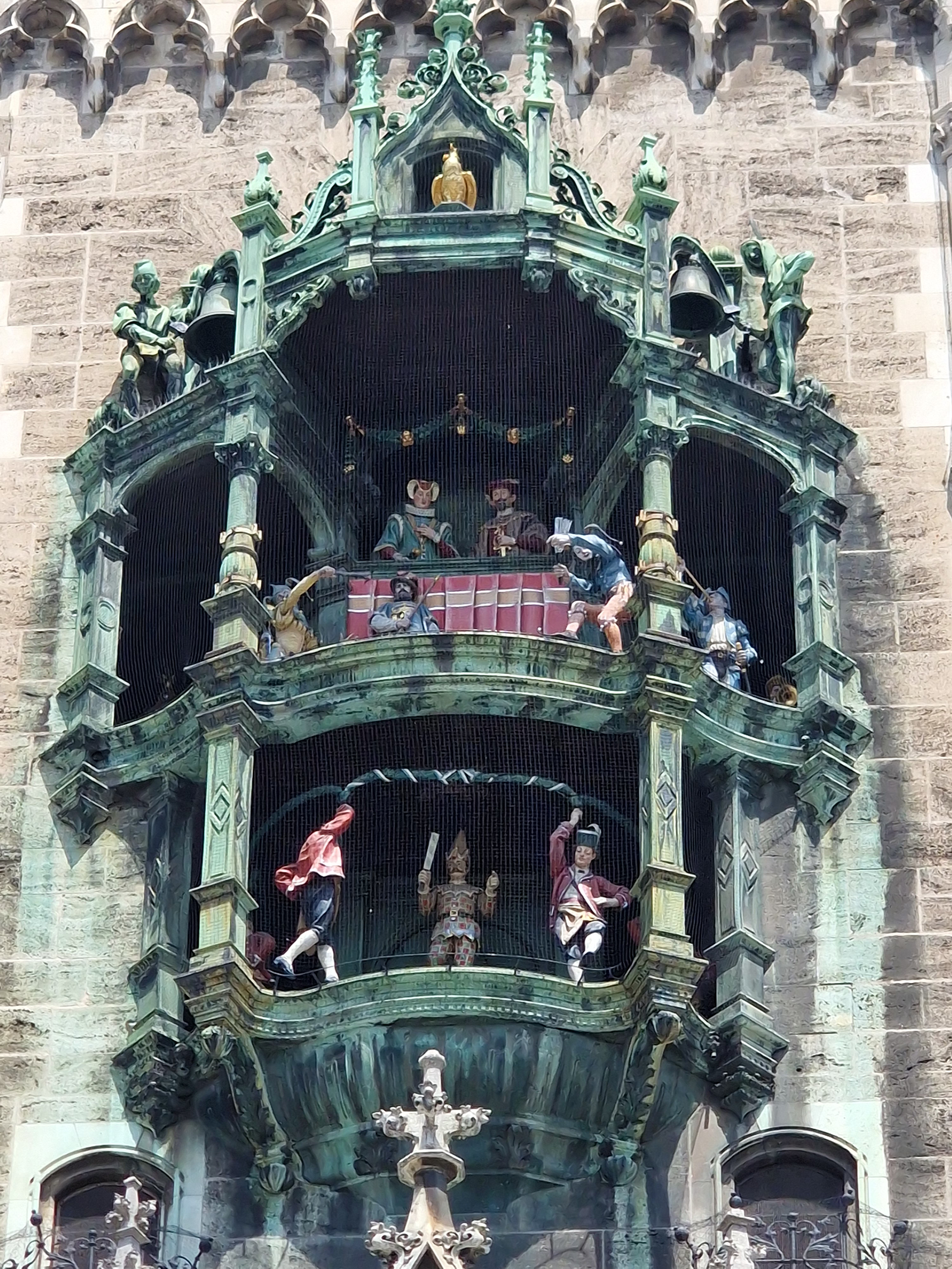
The Glockenspiel on Munich’s New Town Hall. During the city birthday weekend, Marienplatz is the easiest place to begin.
After the ceremony, Glockenspiel, or a short stop at the main stage, there is little reason to stay in Marienplatz for the whole day. Rindermarkt, Alter Hof, Sendlinger Straße, and Odeonsplatz are all close enough to reach on foot when the square gets crowded.
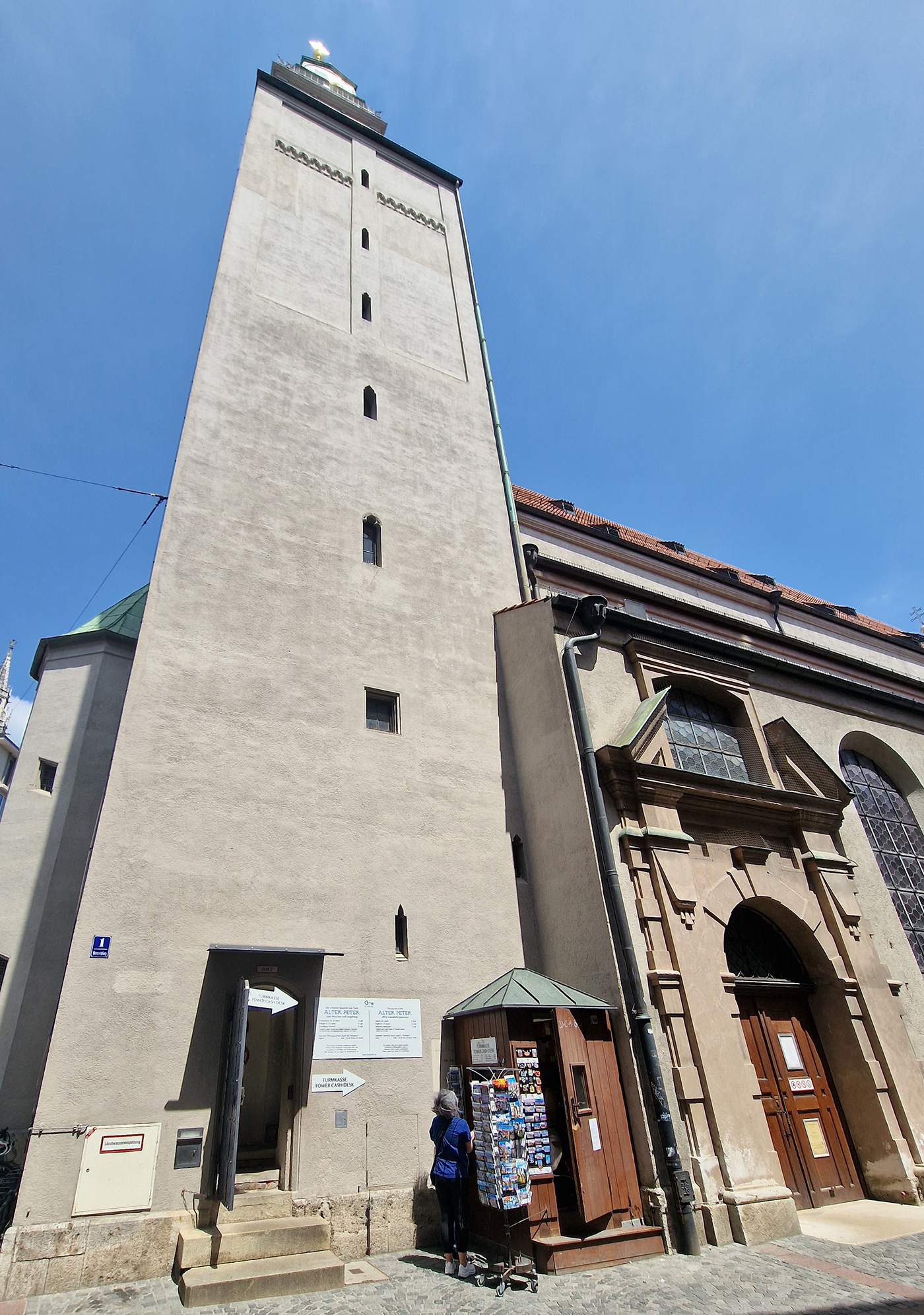
St. Peter’s Church tower near Marienplatz. It is one of the classic old-town viewpoints, but there are many stairs.
04Odeonsplatz and Alter Hof: easier with children
Odeonsplatz is often the better choice if you are travelling with children or want something more active than watching a stage. Family programmes can include fairground-style rides, game stalls, snacks, crafts, and demonstrations, depending on the year’s programme.
Alter Hof, one of Munich’s oldest court locations, is another useful family area. It gives children something to do instead of only watching performances.
What surprised me most during my visit was how many people stayed around the craftsmen rather than simply walking past. Watching traditional skills being demonstrated was one of the busiest parts of the day and gave the area a very different atmosphere from Marienplatz.
05Rindermarkt and the craft-market streets
Rindermarkt is close to Viktualienmarkt and only a short walk from Marienplatz. Its programme can vary from year to year, but it usually works well as a less formal stop for music, food, and meeting friends.
The craft-market route is useful for a slower walk through the festival. Stalls and artists can spread through Sendlinger Straße, Rindermarkt, Weinstraße, Theatinerstraße, Residenzstraße, and nearby streets. It works well for small gifts, short stops, and moving between the busier festival areas.
06Guided old-town tours can add context
The Münchner Gästeführer Verein, the association of official Munich city guides, has offered free old-town tours during the city birthday weekend. Availability, language, registration, and meeting points can change from year to year, so check the current official programme before planning around one.
A guided tour can add some history to a day that might otherwise be mostly music, food, and walking. For a first visit to Munich, one good tour may be more useful than adding another stage to the schedule.
07Practical route plans
Marienplatz, Rindermarkt, Sendlinger Straße
Use this if you only want the main atmosphere: the central square, a little music, and the craft-market streets without backtracking.
Marienplatz, Rindermarkt, craft-market route, Odeonsplatz
An easy route for first-time visitors, with several chances to move away from crowded areas.
Marienplatz quick stop, Alter Hof, Odeonsplatz
Keep the Marienplatz stop short, then move to the areas with more hands-on or family activities.
Odeonsplatz, Theatinerstraße, Weinstraße, Rindermarkt, Sendlinger Straße
It is still busy, but you keep moving instead of standing in the most crowded part of Marienplatz.
08Before you go
For the current programme and final timings, use the official Munich City Birthday programme. For moving around the city, see Getting Around Munich by Public Transport. If you are still choosing a base, see How to Choose Where to Stay in Munich.
09How I would plan it
For a first visit, I would start at Marienplatz and then choose one more area. Families may prefer Alter Hof and Odeonsplatz. Rindermarkt works well for food and a looser atmosphere, while the craft-market streets are better for a slower walk.
There is usually enough happening across the old town that you do not need to see everything. Two or three areas are enough for a good visit.
More from Munich Ajussi
Munich City Birthday changes a little each year. Check the official programme for the current dates, stage times, family activities, prices, access rules, and any weather-related changes before making a fixed schedule.