
Munich Practical Notes
Munich Heatwave: How to Plan a Hot Summer Day
On a very hot day in Munich, I plan the day differently. I walk early, take a longer break after lunch, use public transport for longer distances, and go back outside when it gets cooler.
Visitors often expect Germany to feel cool in summer and pack for mild weather. During a Munich heatwave, that can leave you badly prepared. You can still see a lot if you change the timing of the day.
When I first moved here in 2007, summer often felt mild. Evenings could turn cool enough for a light jacket, and a genuinely hot week felt more unusual. Over the years, I have found myself planning more summer days around heat than I used to.
You can see that change beyond the city too. When I first visited the Zugspitze, the glacier still felt like a permanent part of the mountain. In March 2026, the Schneefernerkopflift on the Nördlicher Schneeferner was dismantled after glacier loss changed the terrain so much that the upper exit had become too steep for the drag lift to operate safely.
June 2026 was a good example. During the heatwave that first prompted this article, forecasts for Munich reached about 35 to 37°C on the hottest afternoon.
A later city climate analysis recorded 17 days above 30°C in June 2026 alone. The city compared that with an average of only three to five hot days in an entire year during the 1960–1990 reference period.
How to plan your day during a Munich heatwave
On very hot days, I do most of my walking in the morning and take a longer break after lunch. I usually go outside again later, when the sun is lower and the streets feel more comfortable.
If you have only one very hot day in Munich, I would still keep the old town in the plan. I would go early, spend the hottest part of the afternoon indoors or in deep shade, and come back out for dinner or a beer garden. If the forecast shows three or four very hot days in a row, I would use one afternoon for a pool, the Isar, or a lake.
Morning. Get outside early. The old town is easier before the heat builds, when the squares are quieter and the stone has not soaked up the afternoon sun. If you only walk the center once, do it in the morning rather than around 2 p.m. The old town walk works well as an early start finished before lunch.
Midday. Go indoors or find good shade. The hottest two or three hours are a good time for a long café break. I would happily spend an hour over an iced coffee and continue sightseeing later. The café notes include places where you can sit for a while. Museums can also be useful, although not every museum has strong air-conditioning.
Getting around. During a Munich heatwave, short trips on the S-Bahn, U-Bahn, or tram can save you from crossing the city on foot in full sun. Dropping luggage before sightseeing also makes a noticeable difference.
Evening. Munich usually feels much better once the strongest sun has gone. Many old beer gardens have large chestnut trees, which give useful shade on warm evenings. The trees were originally planted to help keep the beer cellars cool before refrigeration. The beer garden notes explain the different types.
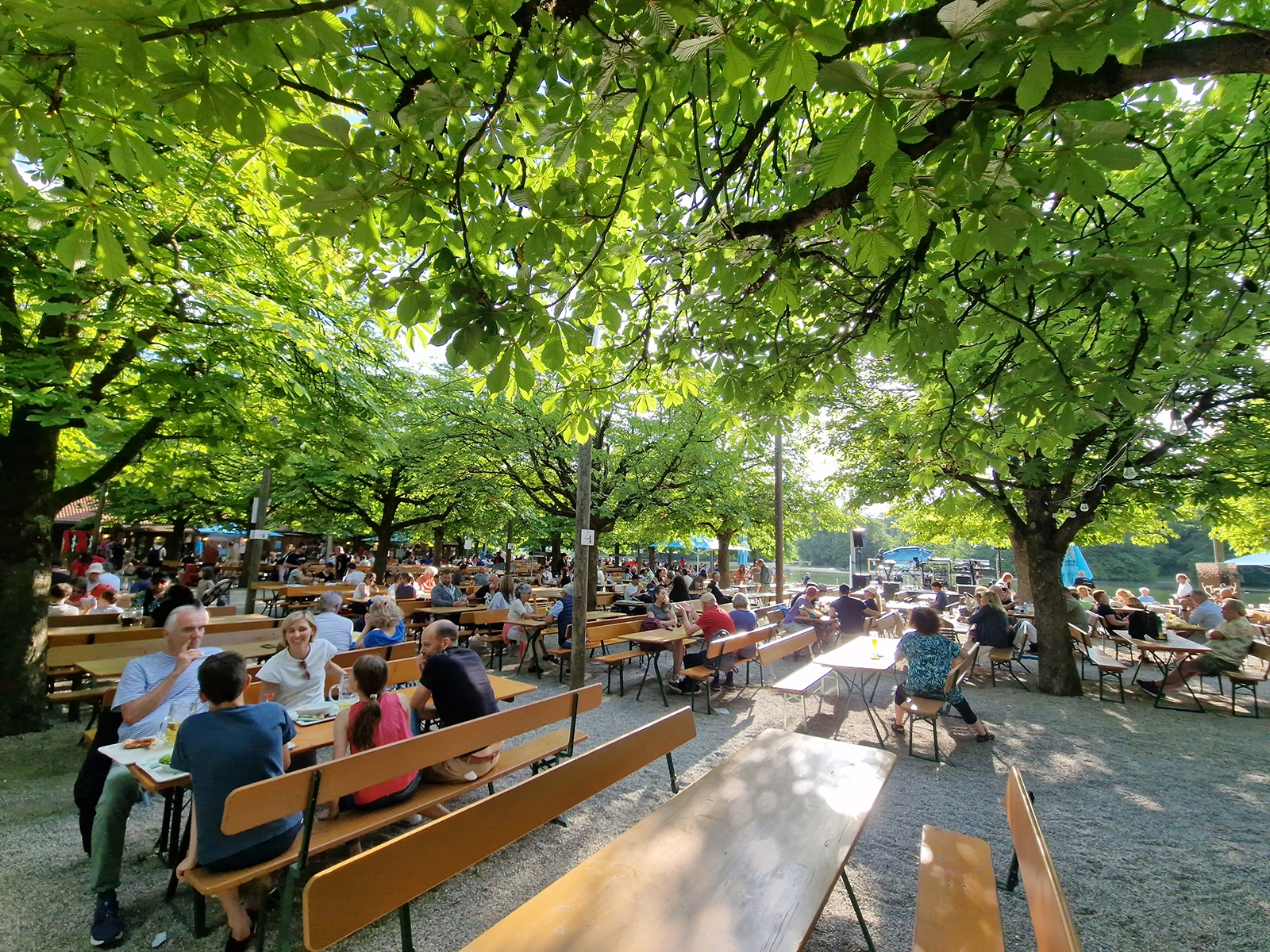
On a very hot day, I look for a beer garden with real tree cover rather than tables in the late afternoon sun.
Use Munich’s map of cool places
Munich has an official map of cool places for hot days. It marks shaded parks and green areas, bathing lakes, public drinking fountains, and cooler indoor places such as churches and U-Bahn stations.
Some map layers and labels are only in German, but I still find the map useful. You do not need to understand every word. The icons and locations make it easy to see what is close to you.
On a hot afternoon, I use the map to find a shaded or indoor stop between two places I already want to visit. Even a 20- or 30-minute break away from direct sun can make the rest of the day easier.
I would not cross Munich just to reach a famous “cool spot.” I would use whatever is close: a church, café, museum, shaded park, or U-Bahn station. If you already feel too hot, sit down somewhere cool and give yourself time before walking again.
Munich’s summer map also shows ice cream shops
The city also has an official Summer Portal. The map includes ice cream shops, outdoor pools, bathing lakes, and public drinking fountains. It is a handy map to open when you are already out in the city and want something nearby.
The Summer Portal is mainly in German. I would still use it. The map icons are easy to understand, and you can quickly see what is close to your current route.
I especially like the ice cream layer on a hot day. I would not travel across Munich just for one famous ice cream shop. But if the map shows one a few streets from where I am already walking, I am happy to stop. It gives me a reason to sit down for a while and get out of the sun.
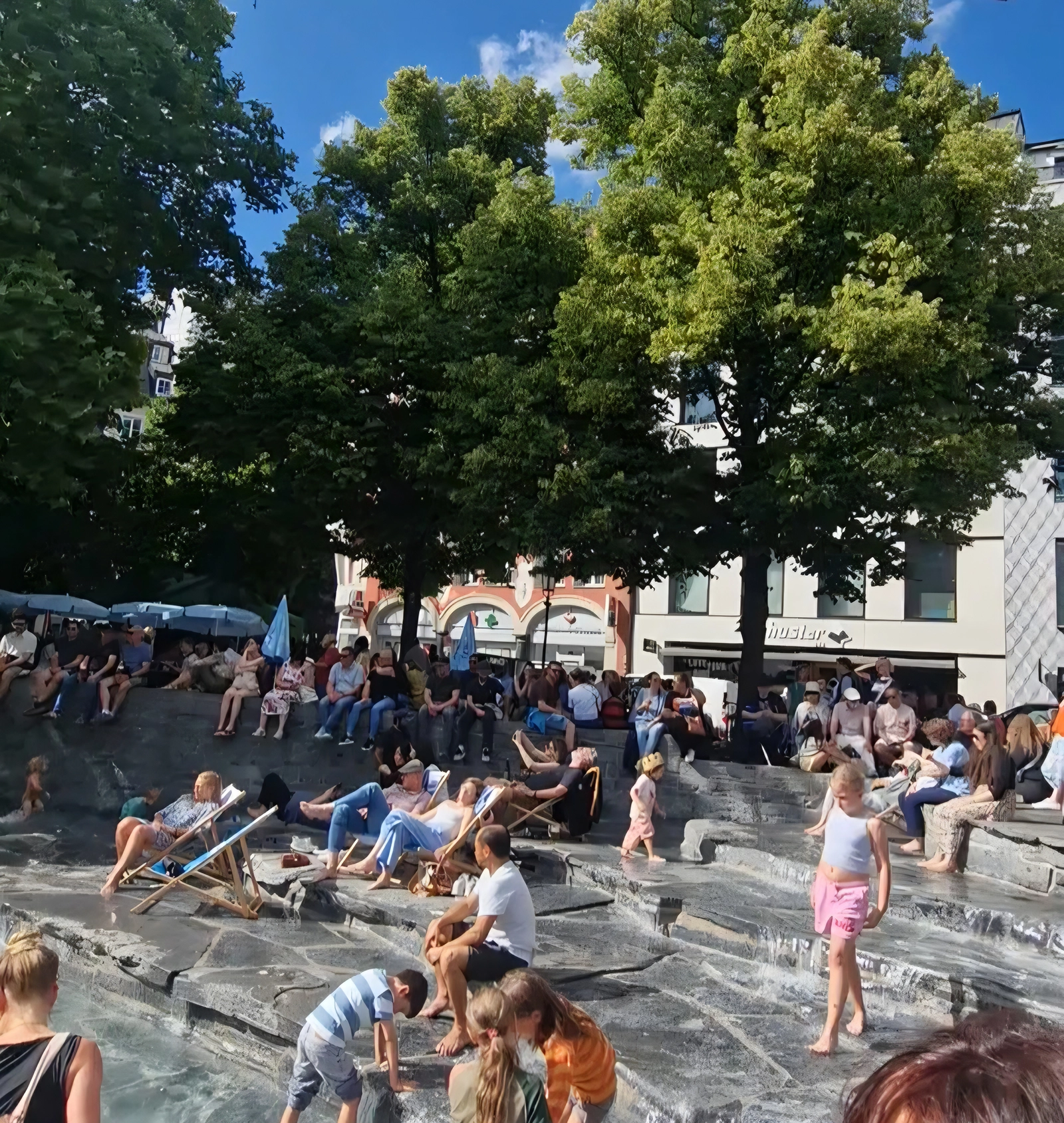
A fountain at the Rindermarkt on a hot afternoon.
Water and the Isar during a Munich heatwave
On a hot afternoon, fountains can be useful places for a short break. At one like the Rindermarkt fountain, an old cattle-market square where animals once drank, you will see people sitting on the stone steps with their feet in the water. It is a normal way to cool off for a few minutes between stops. That water is for cooling off, not for drinking.
For drinking, carry a refillable bottle. Munich’s tap water is good, and public drinking fountains marked Trinkwasser can also be used. The city’s cool-places map includes public drinking fountains and some public toilets with drinking-water dispensers. A fountain marked Kein Trinkwasser is not for drinking.
In restaurants, tap water is not automatically served the way it is in some countries, so order a drink rather than expecting a free glass. On very hot days, beer is not a substitute for water. Munich’s own heat guidance recommends drinking regularly and limiting alcohol during strong heat.
The Isar draws people on hot days too. Walking along the river or sitting on the bank in the shade can be a good break from the old town. Bathing is allowed only in designated stretches of the river, and even there the current can be stronger and colder than it looks. Stay away from weirs, sluices, whirlpools, and other marked danger areas. The city publishes current Isar bathing information.
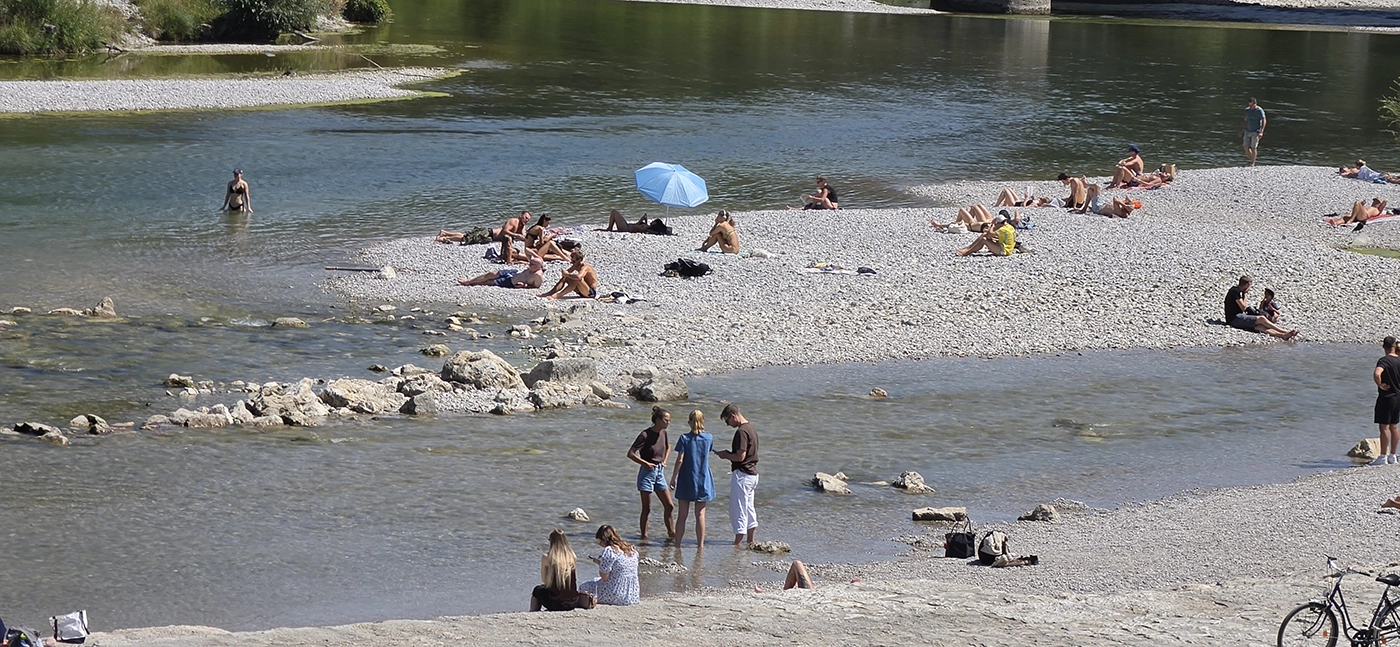
The Isar gets busy quickly on warm days, especially in the afternoon. Sitting by the river is easy; swimming needs more care because currents and safe areas vary.
On very hot afternoons, choose a pool or lake
If a Munich heatwave lasts for several days, I would not force every afternoon into sightseeing. Munich has outdoor pools and bathing lakes, and a swim can be a much better use of the hottest hours than another long walk through the center.
The City of Munich lists its outdoor pools, while the cool-places map also includes bathing lakes and green spaces. For a full summer-day choice between lake, Isar, pool, park, palace, and beer garden, see Munich in Summer: How to Spend a Free Day.
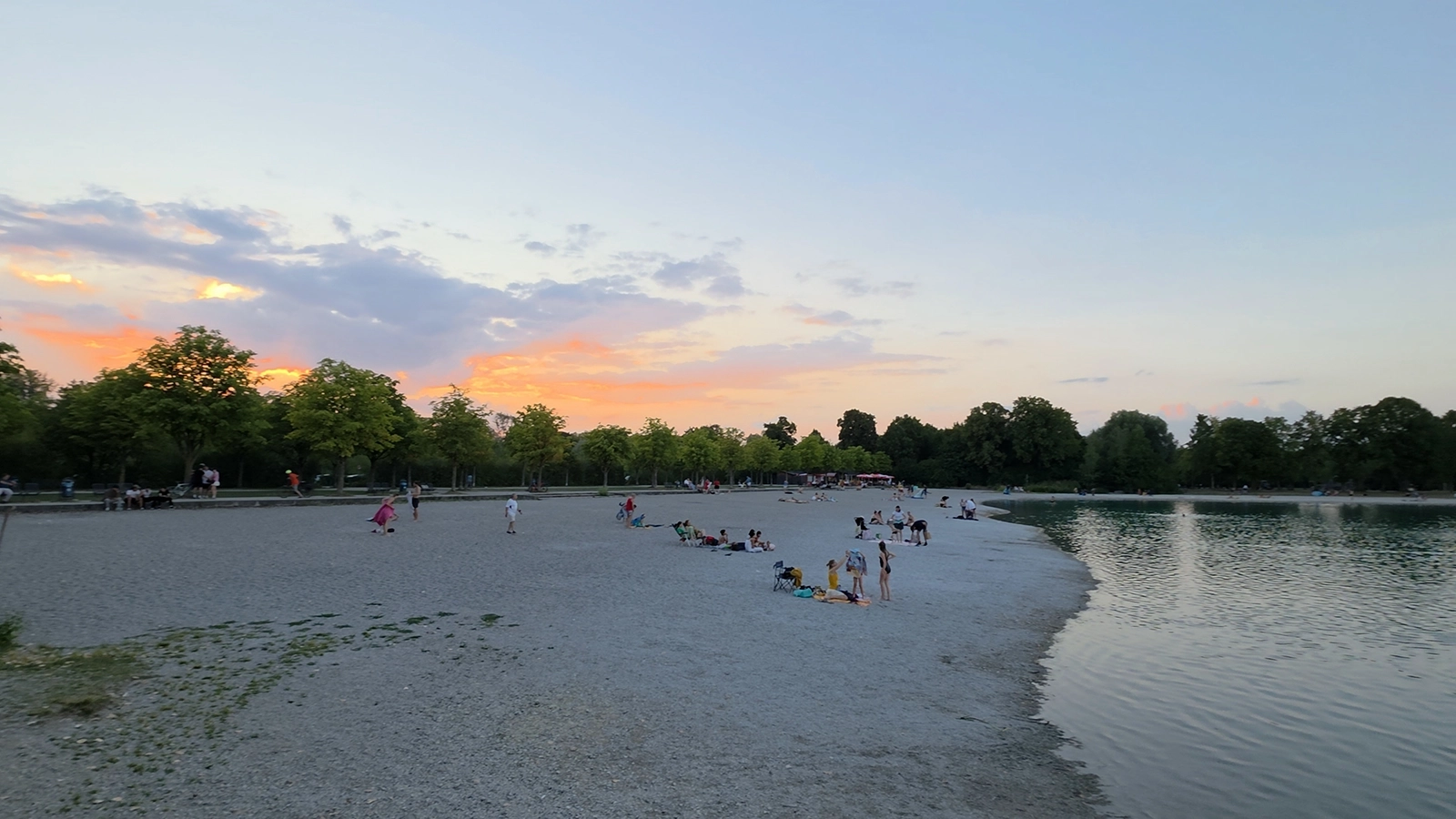
If several hot days come in a row, I am happy to give one afternoon to a lake and return to the city later.
With children, I would make this decision before everyone gets tired. A morning in the old town followed by a pool, lake, or shaded park can work very well on a hot day.
Check DWD heat and UV warnings
A forecast of 32°C does not tell the whole story. Humidity, direct sun, warm nights, and strong UV can make the day feel harder. The German Weather Service (DWD) publishes official heat and UV warnings.
The DWD WarnWetter app is useful if you are travelling around Bavaria. I check the forecast in the morning before deciding how much time I want to spend outside in the afternoon.
UV is easy to underestimate in Munich because the air may not feel tropical. The city recommends strong sun protection when the UV index is high, especially for children and around water. A hat, sunglasses, sunscreen, and proper shade matter even when you are not at a beach.
What I carry during a Munich heatwave
Your hotel room matters too
Do not assume every Munich hotel or apartment has strong air-conditioning. Many buildings were designed for a cooler climate, and older rooms can hold heat after several hot days. If air-conditioning matters to you, check the room description rather than assuming it is standard.
If the room has no air-conditioning, use shutters or curtains during the sunny part of the day and air the room when the outside temperature drops, usually early in the morning or later at night. A hot night also changes the next day’s plan. If you slept badly, give yourself more time in the morning instead of starting a long walking route already tired.
A simple hot-day plan
- Morning: walk the old town early, before the stone heats up.
- Late morning: refill water and decide where your first shaded or indoor stop will be.
- Midday: go indoors or into shade. A café, museum, church, pool, or long lunch can take the place of another open square.
- Getting around: use short transit hops instead of long walks in full sun, and drop your bags first.
- Late afternoon: restart slowly when the sun is lower rather than trying to make up every missed stop.
- Evening: choose a beer garden with real tree cover, not open benches in the late sun.
Know when to stop
Heat can catch up with you even if the day started well. Headache, dizziness, unusual tiredness, nausea, or feeling faint are reasons to stop walking, get out of the sun, cool down, and drink. Children, older travellers, pregnant people, and people with existing medical conditions can be more vulnerable during strong heat.
Munich’s health guidance treats heat illness seriously. If someone becomes confused, loses consciousness, has a seizure, or appears severely unwell, call 112. For official heat-health advice, see the City of Munich heat and health page.
If it is Sunday
A Sunday during a Munich heatwave needs a little more planning because most shops are closed. You cannot rely on shopping stops for air-conditioning or a quick break from the sun. Plan around shade, a long sit-down meal, and a cooler indoor stop rather than errands. The Sunday in Munich notes explain what is open and what is not.
How I plan hot days now
During a Munich heatwave, drink regularly, avoid the strongest midday sun, and do not try to force the same pace you would use on a mild day. A morning walk, a long midday break, and an evening outside usually works better than pushing through the whole afternoon.
Munich is still one of my favorite summer cities. After living here since 2007, I simply plan hot days differently now. I start earlier, take a longer break in the afternoon, and go outside again when it gets cooler.
The hot, dry summer of 2026 also led to temporary water-use restrictions in July. That separate episode is covered in Water Limits, Summer Traditions, and a City Under Pressure.
Useful official sources: City of Munich heat and health guidance; Munich map of cool places; Munich Summer Portal; DWD weather warnings. Heat and river conditions can change quickly, so check current information before heading out.