
Skiing from Munich
Learning to Ski near Munich: What Worked for Our Family
How our family went from a first beginner lesson and a few ski days a year to skiing regularly across Bavaria and Tirol, and what actually made the difference.
Learning to ski near Munich took our family far longer than we expected. We liked it from the first winter, but for years we skied so rarely that each season felt a little like starting again.
My older son took his first lessons in Seefeld in 2011. I came back to skis in 2017, after a break of about twenty years. For years we managed only a handful of ski days each winter. By the end of the 2025/26 season, I had skied 28 days.
My Best Ski Resorts from Munich guide is about where to go. This is the longer story of how we actually got better, and why, in the end, the number of days on snow mattered more than any particular resort.
01It started with a beginner lesson in Seefeld
The first ski lessons in our family were my older son’s, in Seefeld in 2011. He was small, the goals were modest, and a good day meant he could stop when he wanted to and make a few turns without falling over.
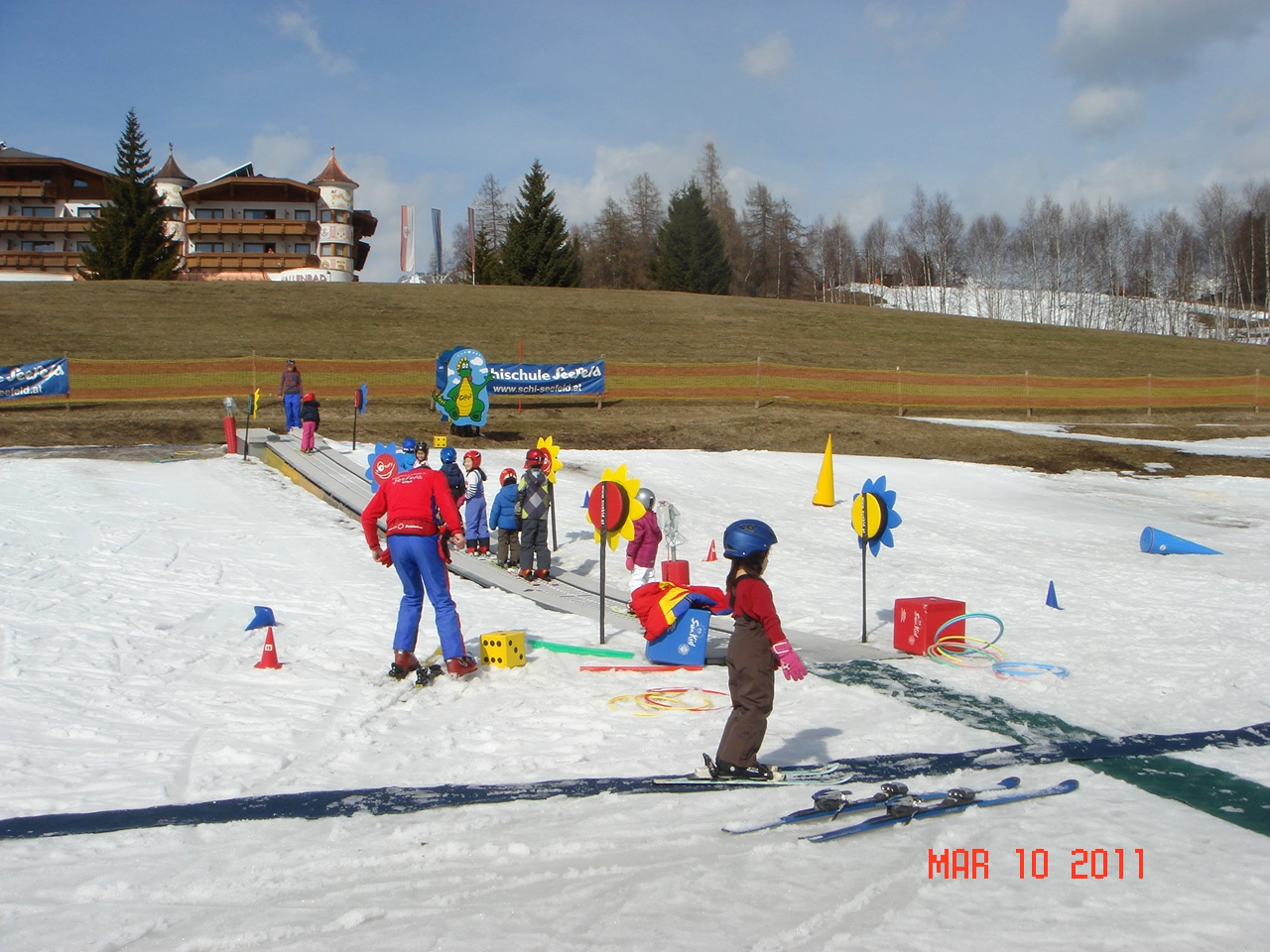
My older son’s first ski lessons in Seefeld in 2011.
At that stage a large ski area would have been wasted on him. What we needed was a small practice slope, a teacher within shouting distance and a short walk back to warm drinks, and Seefeld had all three.
Only my older son was on skis that winter. The rest of us joined the story later.
02Repetition on the small slopes of Oberammergau
By the 2013/14 winter we were driving back to the Kolbensattel area in Oberammergau, and my reconstructed Google Timeline shows several visits around Christmas and New Year. None of those days were about covering distance. They were about doing the same short run again and again.
The setup could hardly have been simpler: a few short slopes and a rope tow. For children who had only just learned to turn, that was an advantage. There were no long chairlift rides to sit through and no steep sections waiting at the bottom, so they could spend the whole day on the part that mattered.
A turn that works once in a lesson is still fragile. It only becomes reliable after it has been repeated often enough that nobody has to think about it anymore, and Oberammergau was a good place to do that repeating.
03Winklmoosalm became our practice ground
If one ski area deserves the credit for our family’s early progress, it is Winklmoosalm. My reconstructed ski history shows 27 days there between the 2013/14 and 2024/25 seasons, more than anywhere else in my record. Not all of them were learning days, but we kept coming back, and after a few winters we knew the area well.
The children took group lessons there, sometimes in fairly large groups, and on other days we simply practised together. The wide, gentle terrain gave them space to get things wrong without every run turning into a struggle.
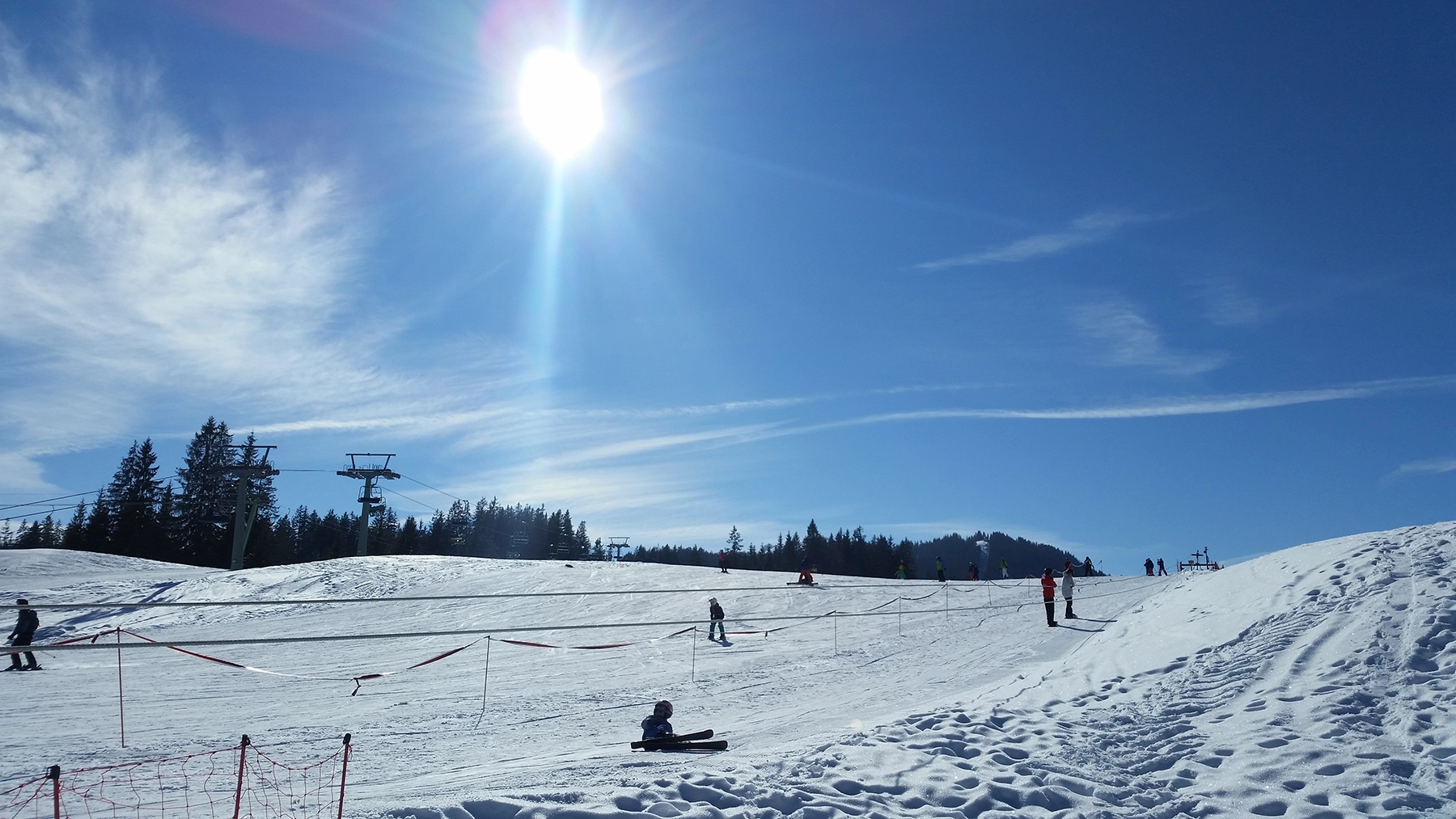
The rope tow at Winklmoosalm was ideal before the children were ready for regular lifts.
Once they were ready to leave the learning area, the easy pistes nearby were the obvious next step. We could finally ski together as a family while the terrain still left plenty of room to practise the basics.
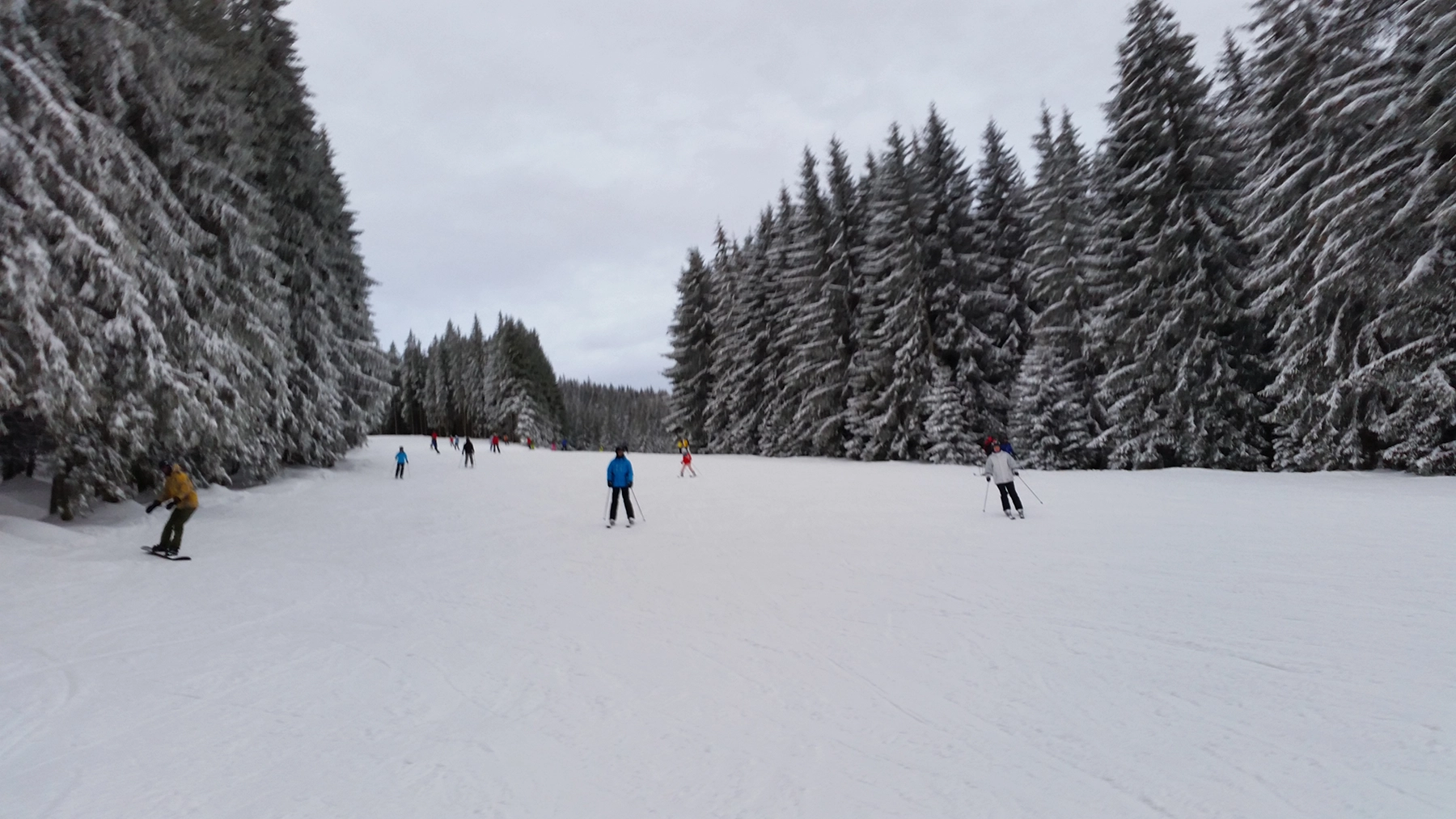
The wide, easy pistes at Winklmoosalm were a comfortable first step onto normal runs.
04More lessons did not always mean more progress
When my younger son started, we booked him group lessons on three consecutive days. He was still very young, and by the third morning he was visibly tired. Whatever he learned that day did not seem to stick.
His older brother responded better to a different setup. He sometimes took lessons together with friends, which meant the day felt less like school and more like skiing with people he actually wanted to be with.
Two children are hardly a representative sample, so I would not turn this into a rule. In our case, though, stacking more lesson hours rarely sped things up. A shorter lesson followed by an unhurried afternoon of practice usually worked better.
05Steinplatte was the natural next step
Winklmoosalm and Steinplatte form one connected ski area, but for children who are still learning, the two sides feel quite different. Winklmoosalm was our easy base. Steinplatte, on the Austrian side, offered more varied and noticeably steeper terrain.
Some of those runs were still marked blue, yet they felt more demanding than the blues we were used to on the German side. It was a good early lesson that piste colours only tell you how a run compares with the rest of the same ski area.
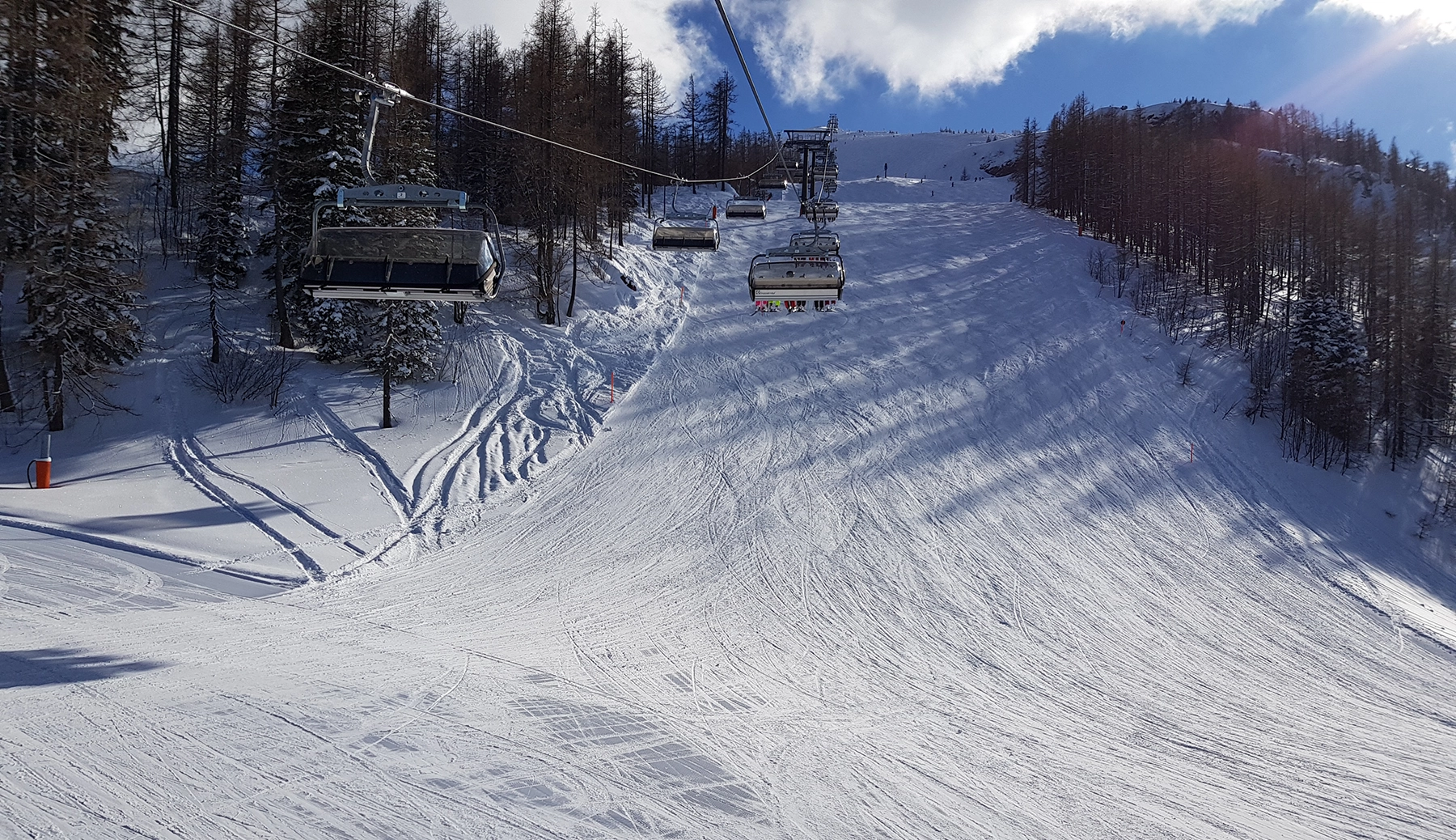
Moving from Winklmoosalm into Steinplatte let the children step into more varied terrain gradually.
The real advantage was flexibility. We could start the day on familiar slopes and cross over to Steinplatte only when everyone felt ready, so the step up never had to happen all at once.
06Two boys, two very different stages
By our Easter holiday in Scheffau in 2016, the gap between the two boys was obvious. My older son had several winters behind him and joined a group lesson on the regular pistes. His younger brother was just starting out and spent his first lessons in KinderKaiserland.
They needed different teachers and different terrain, and SkiWelt could offer both without splitting the family across two ski areas. Each of them learned at his own level, and we all met up again at the end of the day.
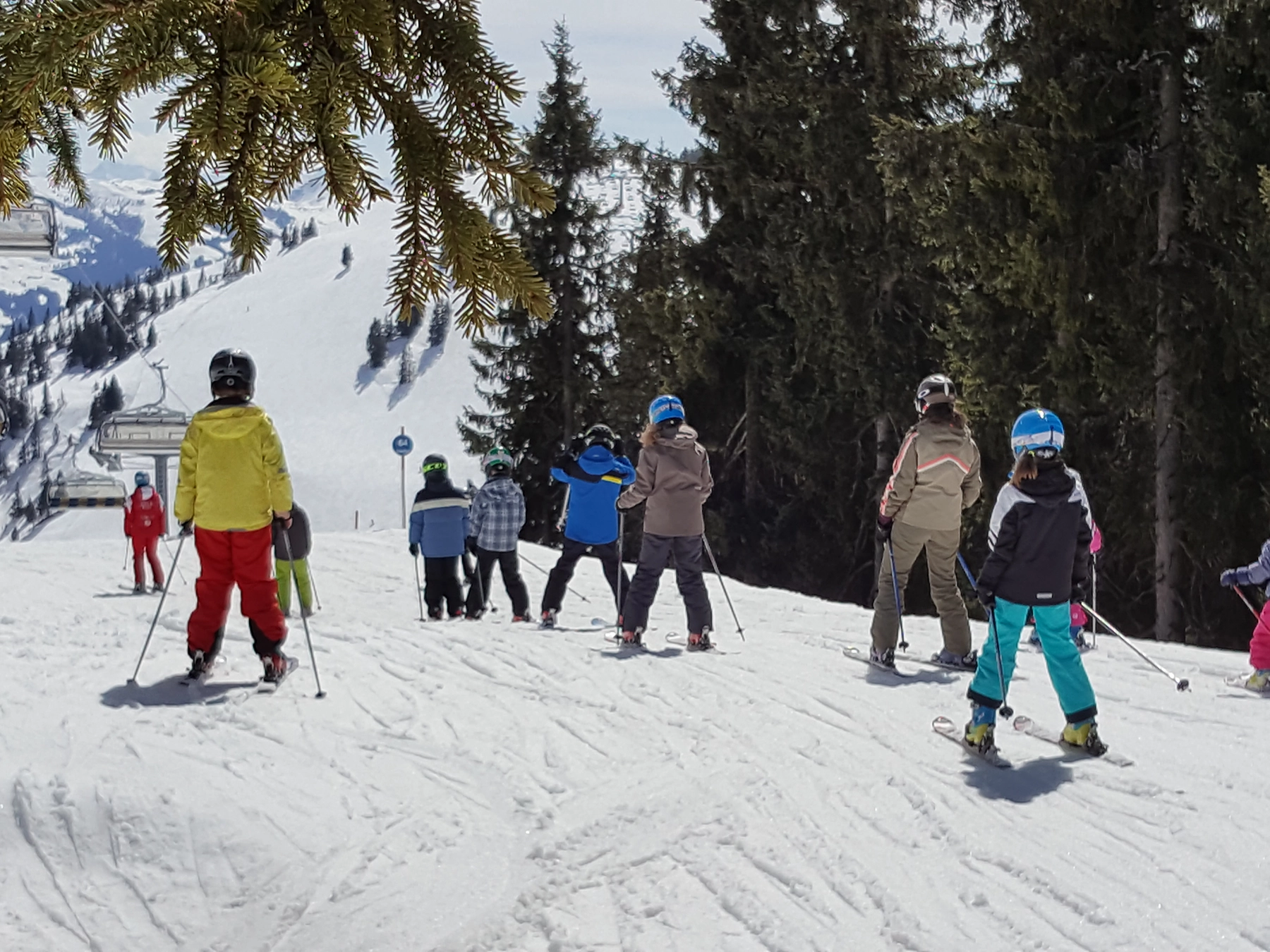
My older son in a group lesson at Scheffau in 2016, already skiing the regular pistes.
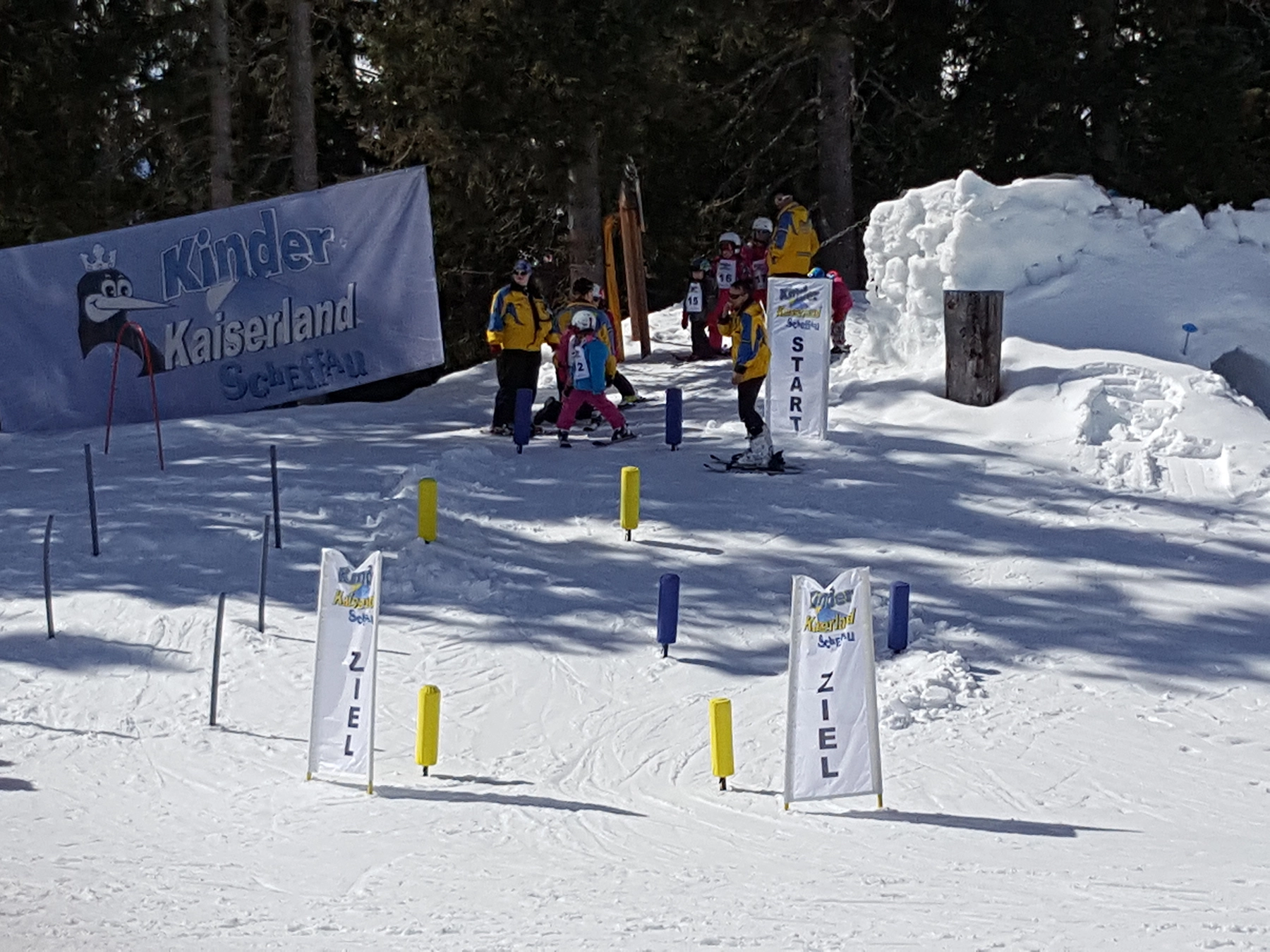
My younger son’s first ski lesson at KinderKaiserland in Scheffau in 2016.
07Coming back to skis after twenty years
When my younger son started lessons in 2016, I began to wonder whether I should be skiing beside him rather than watching from the side. In 2017 I put on skis again for the first time in about twenty years. I had never been more than a beginner before that long break, so in practice I was learning the basics all over again.
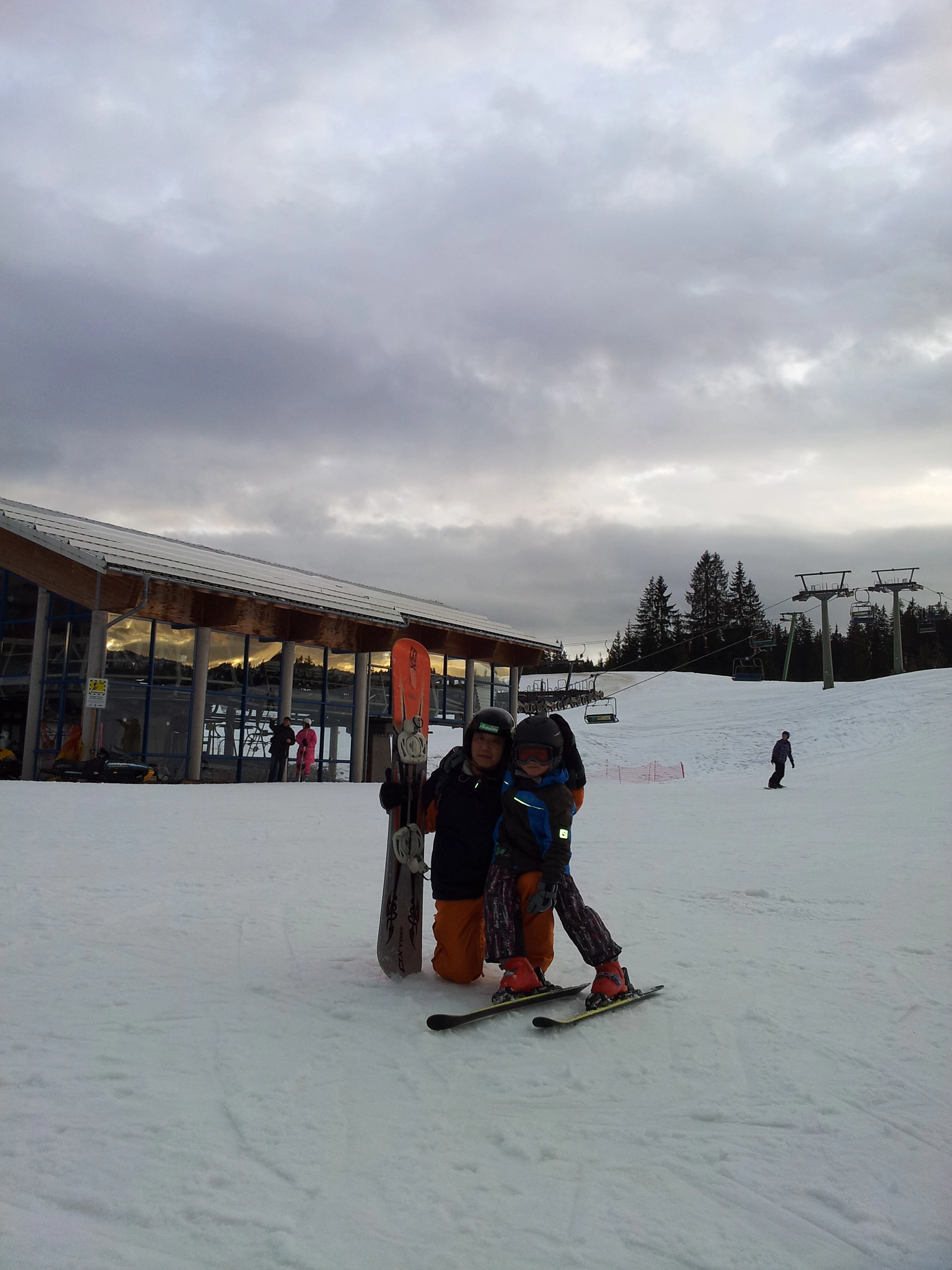
My older son on skis and me on a snowboard in 2014.
Through 2017 I still switched between skis and a snowboard. On family days, though, skis made life easier: I could stay close to my younger son, take the same lifts and follow him down the same easy routes. By early 2018 I was skiing far more often than snowboarding.
08When my older son started skiing with friends
By 2017, my older son was skiing confidently with his friends and no longer needed a parent nearby for most of the day.
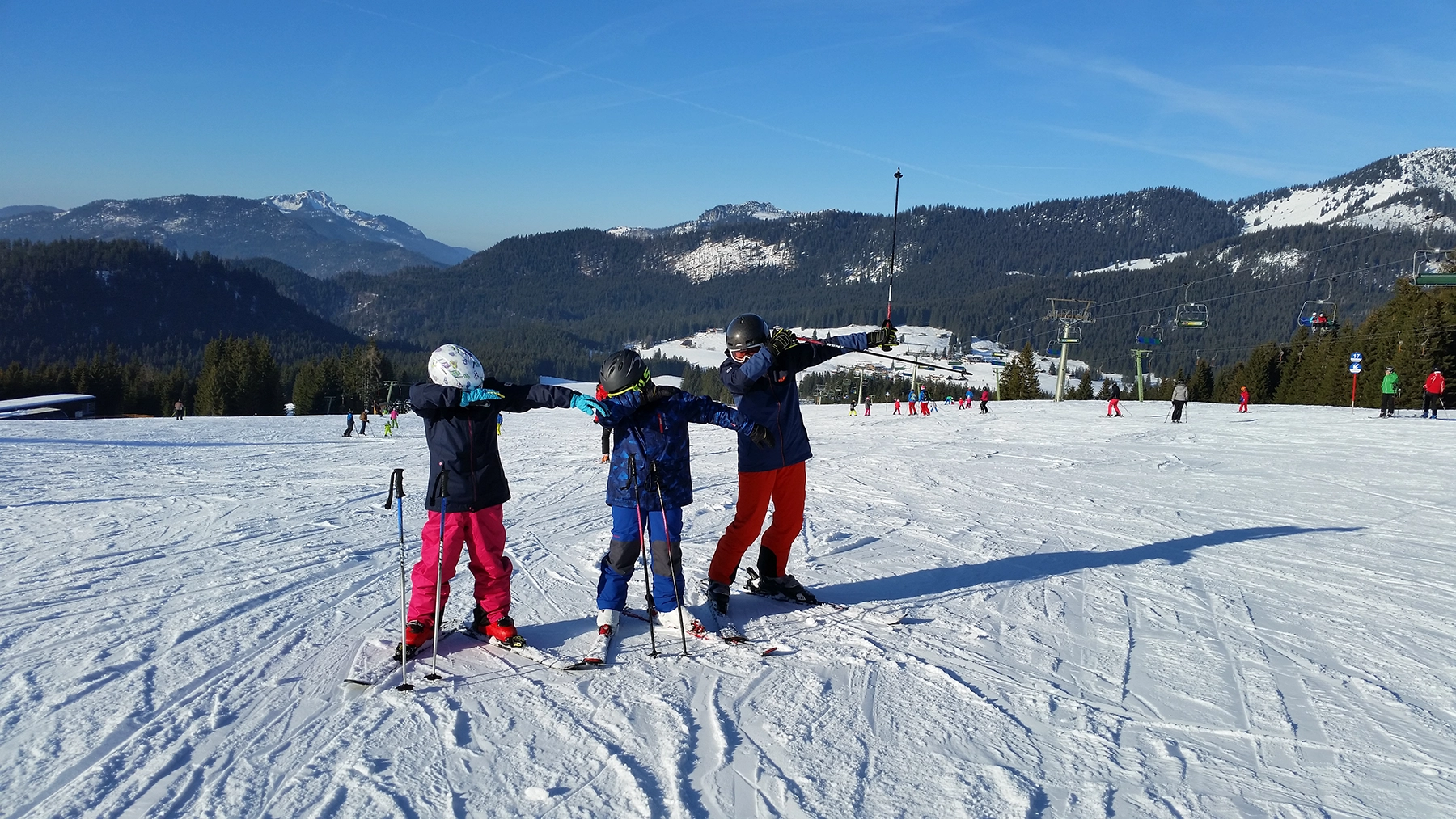
A ski day with friends, 2017.
At Lenggries that season he also began coaching his younger brother. His own skiing was steady enough by then that he could ski a few turns ahead, look back over his shoulder and tell his brother what to do next. The boy who had once struggled to stop on the beginner slope in Seefeld was now the one showing his brother the way down.
At Lenggries, my older son helping his younger brother practise.
Formal lessons still helped my younger son, but they were no longer the centre of every ski day. Skiing together and repeating familiar runs had become just as important.
09Why learning to ski near Munich took us so long
By 2022, skiing had become a normal part of our winters, but the three of us were drifting apart in ability. Over the next year or so, my older son made a real leap. His skiing became confident and stable, and he could handle most of the terrain we skied without a second thought.
His younger brother and I were in a very different place. We still enjoyed every day on the snow, but our skiing had more or less stopped developing. We were making the same turns, in the same way, that we had made a few winters earlier, and on a family day at Steinplatte in December 2024 the gap between the two of us and my older son was still easy to see.
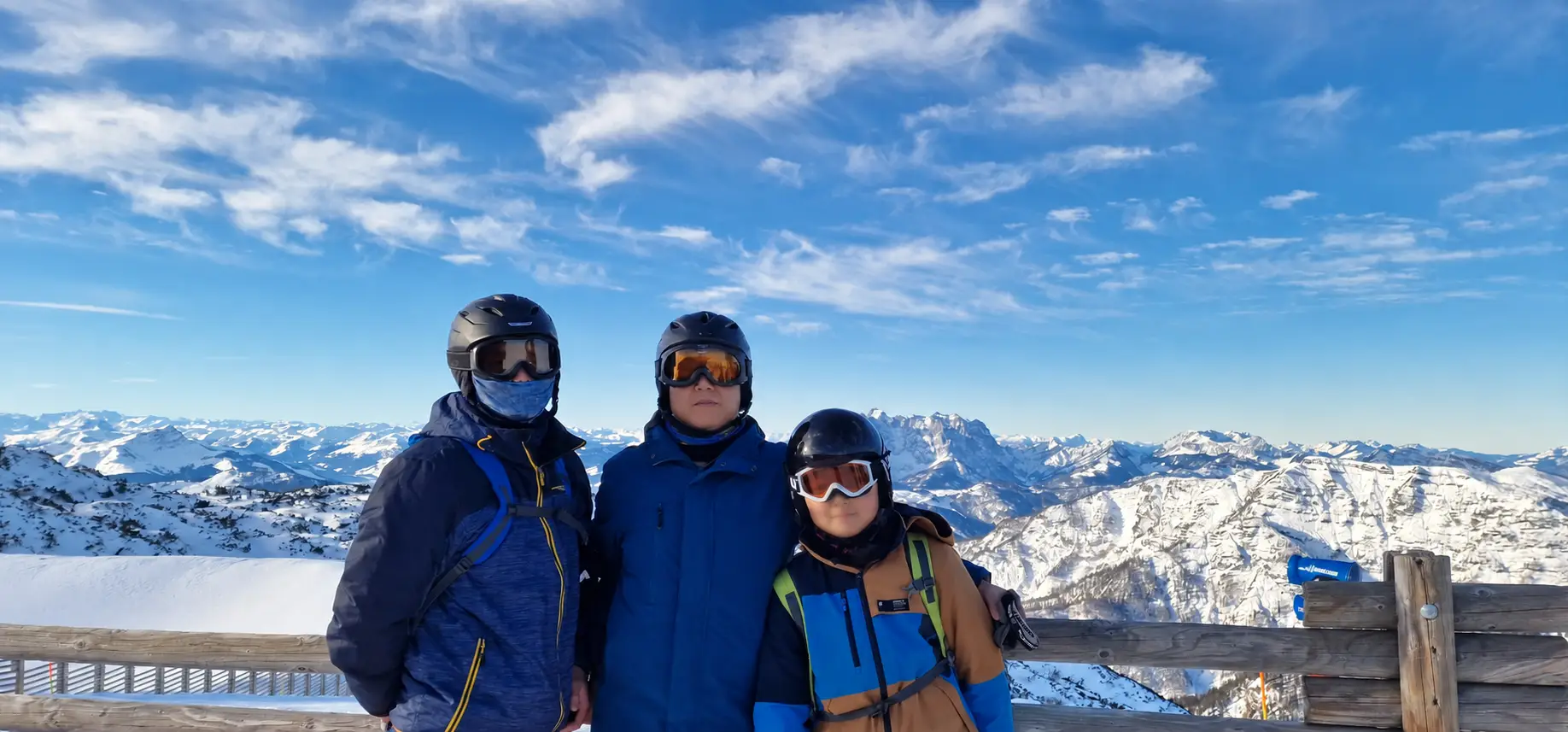
A family ski day at Steinplatte on December 28, 2024.
The reason was not complicated. We went skiing on the odd sunny Saturday and for a few days over Christmas, and in many seasons that added up to only a handful of days. With weeks or months between them, nothing had time to become automatic, and each winter began with the same half-forgotten movements.
10Skiing with another family changed the rhythm
In 2023 we started skiing regularly with another family. They also had two sons, the younger one about the same age as mine, which meant the children suddenly had friends at a similar level to ski with.
Together we visited a long list of ski areas. More importantly, there was usually someone keen to go, so ski days stopped depending on a perfect forecast and simply happened more often.
For my younger son and me, those extra days were what had been missing. Nothing changed overnight, but we could now repeat a movement before it had faded, and little by little, our skiing started moving forward again.
11Skiing more, and a torn calf muscle
Skiing more often also changed how we chose where to go. I began paying closer attention to snow conditions, grooming and terrain, and a longer drive started to feel worthwhile if the conditions at the other end were clearly better.
In early February 2024 I was night skiing in wet, heavy snow when I tore a muscle in my left calf. It kept me off skis for a while.
It did not put me off skiing, though. By then I already knew I wanted more than a few sunny Saturdays each winter.
122024/25: 16 ski days across 12 ski areas
The 2024/25 winter was the first in which I made a deliberate effort to ski whenever time and conditions allowed. My reconstructed Google Timeline confirms 16 ski days that season.
I also travelled farther and tried more places. The record shows 12 different ski areas in 2024/25 and 14 in 2025/26, compared with an average of only three or four per season from 2013/14 to 2023/24.
The season was not without setbacks. In December 2024 I fell and injured my shoulder, and the pain stayed with me for about three months. Even so, I kept skiing whenever I was able to.
By the end of that winter the change was noticeable. With ski days coming every week or two instead of every few months, my younger son and I were both skiing more steadily and with more confidence than we had in years.
132025/26: the Snow Card Tirol and 28 ski days
By the start of the 2025/26 season, a Tirol season pass had started to make sense for the way I was skiing. The previous winter had already reached 16 days, and I was happy to drive farther for better snow, weather or terrain.
I bought the Snow Card Tirol and ended the season with 28 ski days across Bavaria and Tirol, from the glaciers at Hintertux and Stubai to old favourites like Steinplatte and SkiWelt.
By then the habit was already there. The pass simply made it cheaper and easier to keep going.
14Looking back: what actually worked
If I were starting again with small children, I would spend far less time looking for the biggest or best-known resort. The places that helped us most were modest: a beginner slope in Seefeld, the rope tow at Oberammergau, the wide easy runs at Winklmoosalm. They fitted the level the children were at, and we moved on only when they had clearly outgrown them.
I would also keep lessons short. Three days in a row wore my younger son out, while a lesson followed by a relaxed afternoon of practice usually stuck. When the next step came, Steinplatte worked because the difficulty went up while everything else stayed familiar.
The people mattered more than I expected. Friends kept my older son interested through the years, his younger brother learned a lot from following him down, and skiing with another family is what finally got the two of us out of our plateau.
Above all, though, frequency was what finally made the other things stick.
15From one beginner slope to 28 days
The first photo in this story is of a small boy on a beginner slope in Seefeld in 2011. Fifteen winters later, that boy skis with his own friends, his younger brother and I are finally improving again after years on a plateau, and I spent 28 days on skis in a single season.
None of it needed a perfect resort. It needed the right slope, people we liked skiing with, and enough days on snow.
These days, if I have the time and the energy, I will happily go skiing on my own, and I would like to keep doing it for as long as my body allows. The injuries have taught me some caution, too. I pay more attention to snow conditions, to how tired I am, and to when it is time to call it a day.
Continue reading
Choosing a ski area now? Read Best Ski Resorts from Munich: My Picks for Beginners, Families and Day Trips.
Skiing often enough to consider a season pass? Read my Snow Card Tirol review after 28 ski days.
Timeline note: The Seefeld 2011 starting point comes from family photos and memory. From the 2013/14 season onward, I cross-checked ski dates against my reconstructed Google Timeline history. The record confirms 16 ski days in 2024/25 and 28 in 2025/26. Older Timeline data can be incomplete, so I use it to confirm the general sequence rather than to claim that every early ski day was recorded.
Disclosure: This article is based on my own family experience. It is not sponsored, and there are no affiliate links.
Comments & Questions
Have a question or an experience to share? Leave a comment below.