
Skiing from Munich
Best Ski Resorts from Munich: My Picks for Beginners, Families and Day Trips
A practical guide to choosing ski areas from Munich by ability, transport, snow conditions and the kind of ski day you want.
Munich is not a ski town, but the Alps are close enough to make skiing part of an ordinary winter weekend rather than something reserved for a holiday.
From Munich, it is realistic to leave in the morning, ski in Bavaria or Tirol, and be home again that evening.
Over the years, my family has used these areas for first lessons, easy practice, full ski days and longer stays. The right choice changed with the people I was skiing with and the purpose of the day.
This guide focuses on that choice: where I would go for a beginner, a family with different ability levels, a full day in Tirol, public transport, night skiing or several days in one larger area.
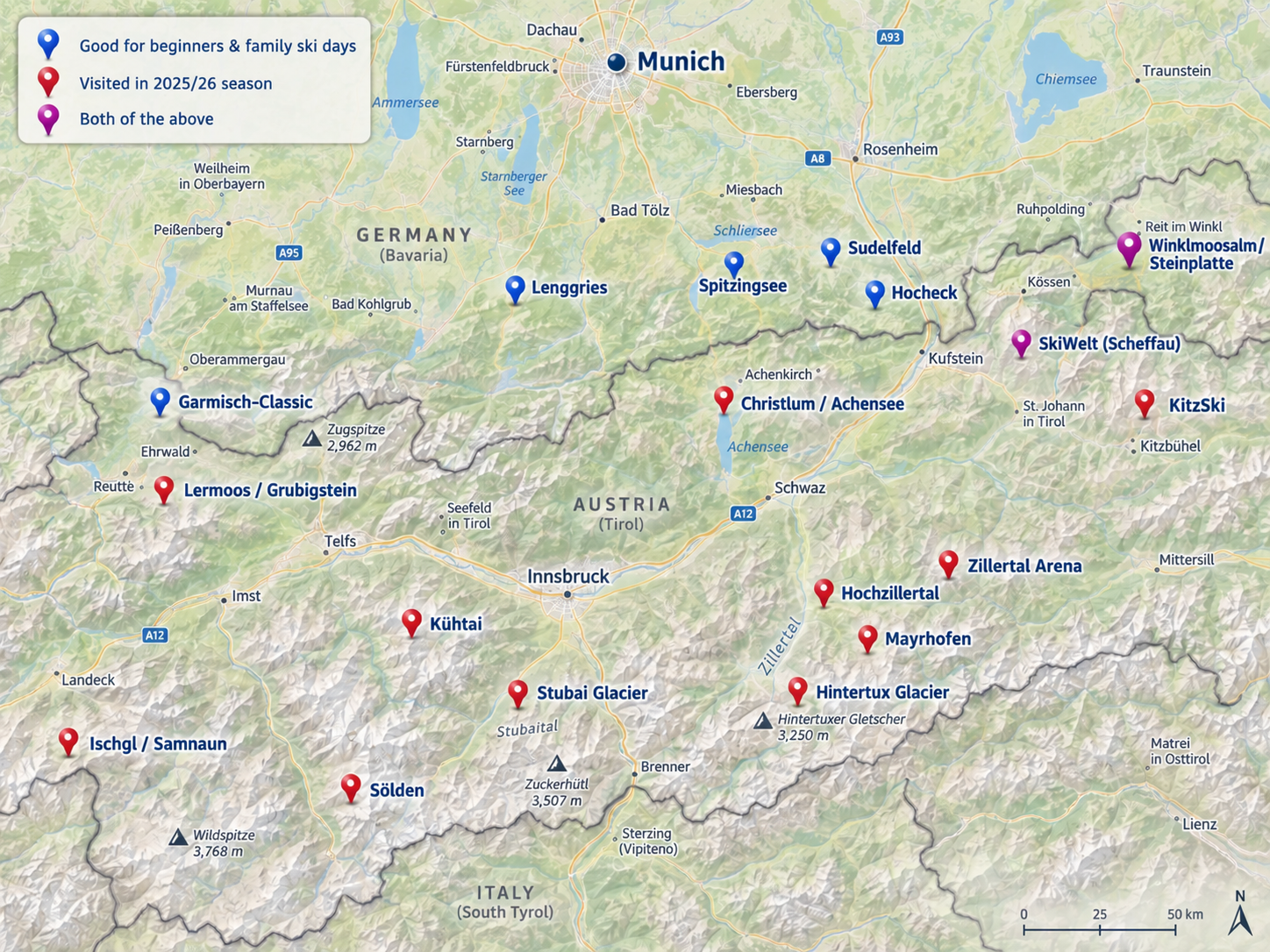
Blue pins mark areas I find especially practical for beginners, returning skiers and family days from Munich. Red pins show where I skied during the 2025/26 season, while purple pins fall into both groups.
01Who is skiing matters more than the size of the resort
I do not choose a ski area by size alone. In a group with different ability levels, the least experienced skier often determines whether the day works for everyone. Three confident skiers and one nervous beginner can still have a difficult day if the beginner already feels uncomfortable on the first run.
When my children were learning, ski schools, easy access and manageable pistes mattered most. For stronger skiers, I pay much more attention to terrain variety, snow quality, grooming and altitude.
Who is coming? How well do they ski? Does anyone need a lesson? How are we getting there?
After that, I look at snow, weather and how much time we have.
02For first lessons, Lenggries and Sudelfeld are easy to manage
All the major ski areas in this guide have ski schools. I mention Lenggries / Brauneck and Sudelfeld / Waldkopf because their beginner areas are especially easy to use with young children.
At Lenggries, beginners can start in the valley without first taking a gondola high onto the mountain. With young children, ski boots, helmets, spare clothing and tired legs, that makes the day easier.
Sudelfeld offers a similar advantage. Around the Waldkopf valley station, the ski school, beginner area, Kinderland and rental facilities are close together. This works well when one child is in a lesson and the rest of the family wants to ski.
We also used the Draxllifte in Lenggries for practice after the lessons.
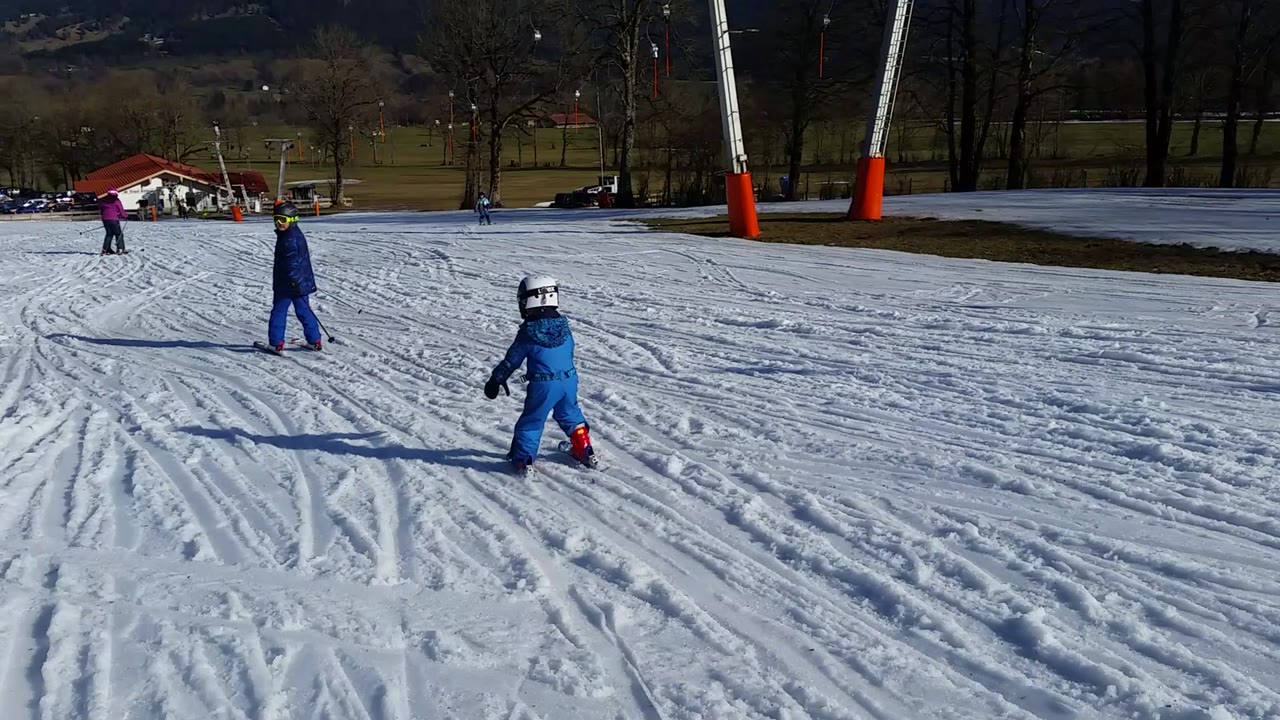
Practising together at Draxllifte in Lenggries after the first lessons. Easy pistes like this are useful when a beginner needs repetition and confidence.
03Winklmoosalm: one of my first choices for beginners
Winklmoosalm lies south east of Munich near Reit im Winkl, directly on the German Austrian border. The Winklmoosalm gondola at Seegatterl is roughly a 90 minute drive from central Munich in normal traffic.
For someone who understands the basics but is still new to normal pistes, Winklmoosalm is one of my first choices. It also works well for a skier returning after a long break. Many of the pistes are wide and gentle, which can help a nervous skier feel more comfortable.
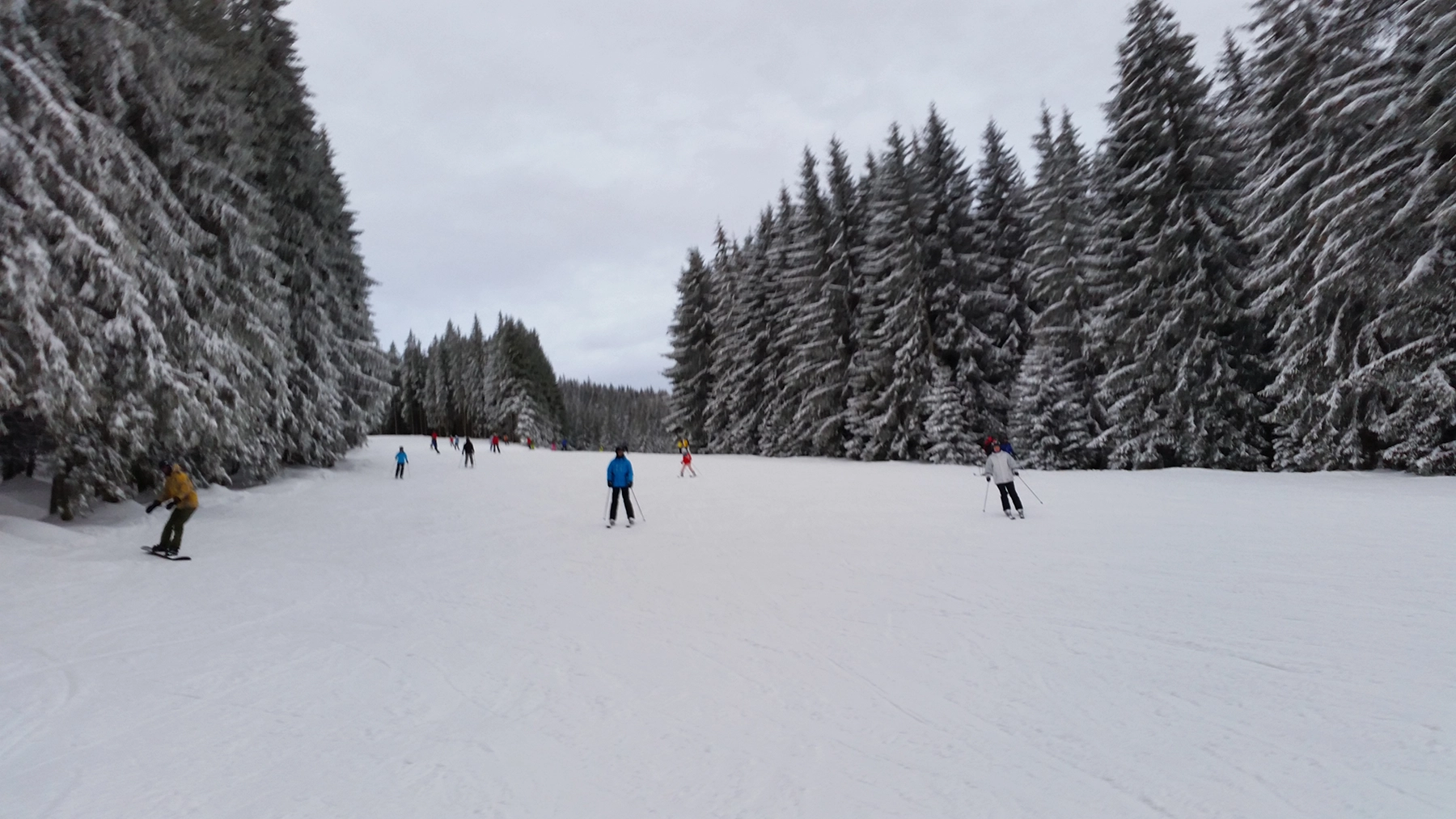
Wide, gentle terrain is one of the main reasons I like the Winklmoosalm side for beginners and returning skiers.
In my experience, some of the blue runs feel gentler than blue pistes at many other Alpine resorts. This is a personal impression rather than an official comparison, since piste colours are relative to each ski area.
The German side also offers a cheaper Winklmoosalm only ticket. If the family plans to stay on the easier German side terrain, the full area ticket may not be necessary.
If you expect to stay on the German side, the Winklmoosalm only ticket can make sense. If you expect to ski across into Steinplatte, buy the full area ticket from the start.
The published ticket rules state that tickets cannot be exchanged after purchase.
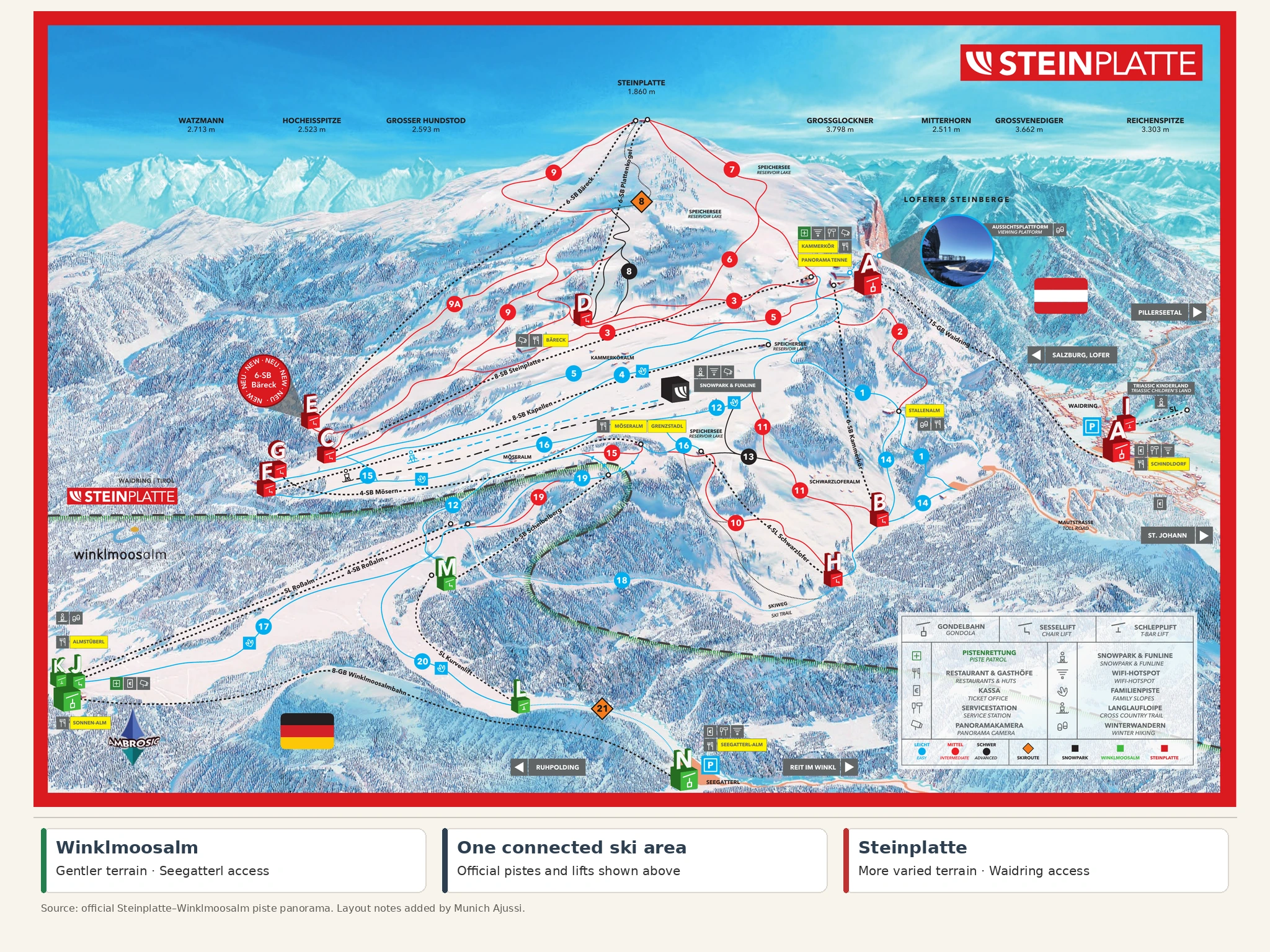
Winklmoosalm and Steinplatte form one connected ski area across the German Austrian border. Seegatterl is the practical starting point from the German side, while Waidring gives direct access from Austria. Source: official Steinplatte and Winklmoosalm piste panorama.
04Steinplatte: when the group wants more terrain
Steinplatte is the natural extension of the same connected ski area. Compared with the gentler Winklmoosalm side, the terrain is more varied and some blue runs feel noticeably steeper in my experience.
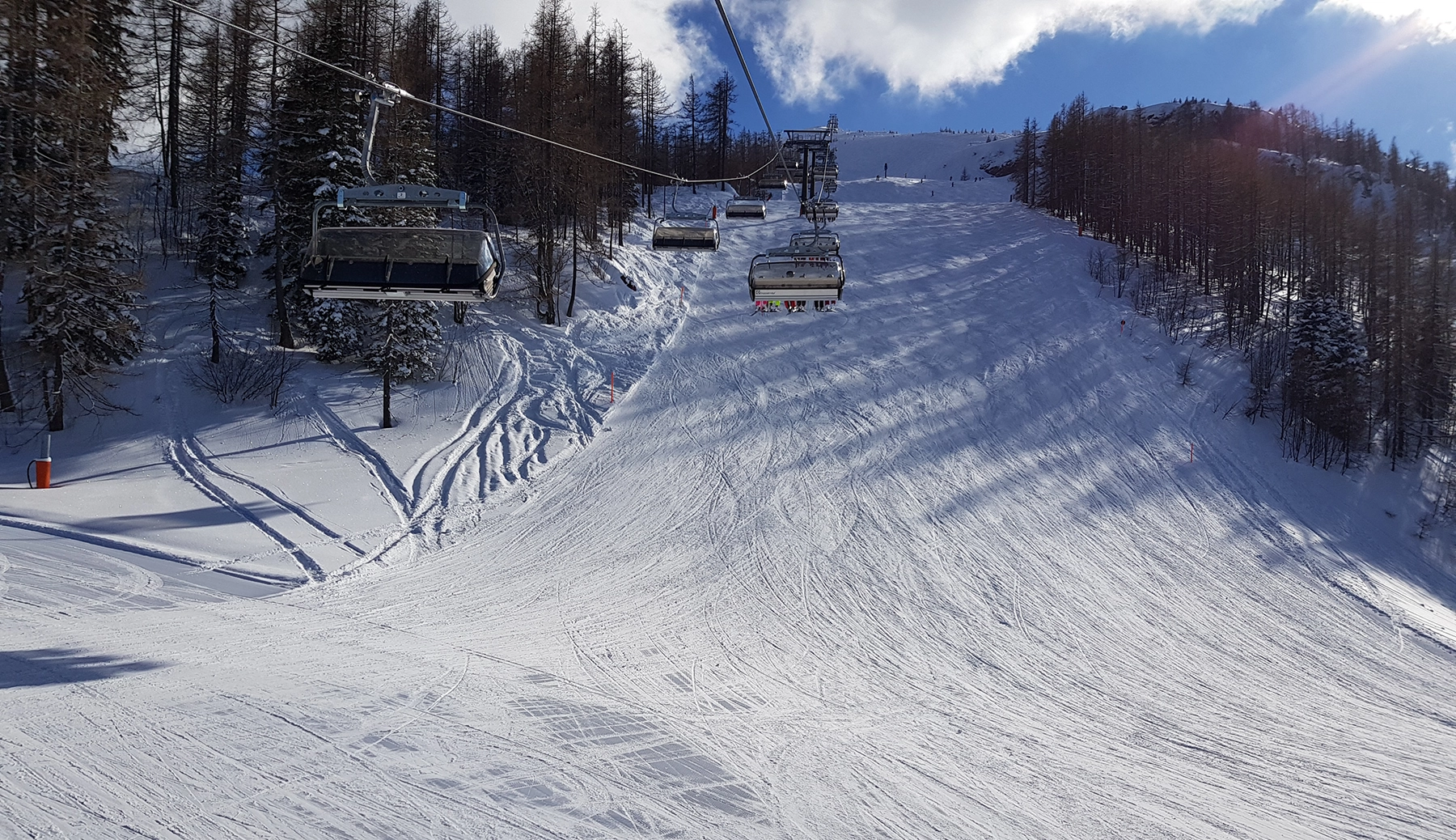
Steinplatte offers more varied terrain than the gentler Winklmoosalm side.
Winklmoosalm
Gentler terrain, an easier start for beginners and a smaller ticket option.
Steinplatte
More varied terrain and the better choice when the group wants a fuller ski day.
There are two main access points. From Munich, I usually use the Winklmoosalm gondola at Seegatterl. From Waidring in Austria, the gondola takes you directly into the main Steinplatte terrain.
For a family with different ability levels, I prefer starting from the German side. The group can stay on Winklmoosalm if easier terrain is enough, or use the full area ticket and continue into Austria.
05Garmisch-Classic: close to Munich, but a real Alpine ski day
Garmisch-Classic is close enough for a day trip from Munich, but it still offers a much larger and more varied ski area than the smaller local hills.
From the south of Munich, I can often reach Garmisch in about an hour when traffic is light. The B2 bypass and Oberau tunnel, opened in 2022, improved the final approach, although weekend and holiday traffic can still add considerable time.
Garmisch-Classic stretches across Hausberg, Kreuzeck and Alpspitze, with around 40 kilometres of pistes and four valley runs. Hausberg is the easiest place to start, while Kreuzeck and Alpspitze have steeper and more open terrain.
Hausberg is also practical when a child needs lessons. Ixis Kinderland has a practice slope, a magic carpet and three beginner lifts, while stronger family members can continue into the wider Garmisch-Classic area.
The only extra step is the Hausbergbahn gondola, which takes about eight minutes from the valley station to the ski area. I return to the public transport options later in the article.
For stronger skiers, the Kandahar above Kreuzeck is one of the main attractions. It is a World Cup downhill, and black run No. 5 is open to experienced recreational skiers when conditions allow. The steepest section reaches a 92 percent gradient.
Garmisch gives me varied Alpine terrain without a long drive into Tirol, which is why it remains a regular day trip option for me.
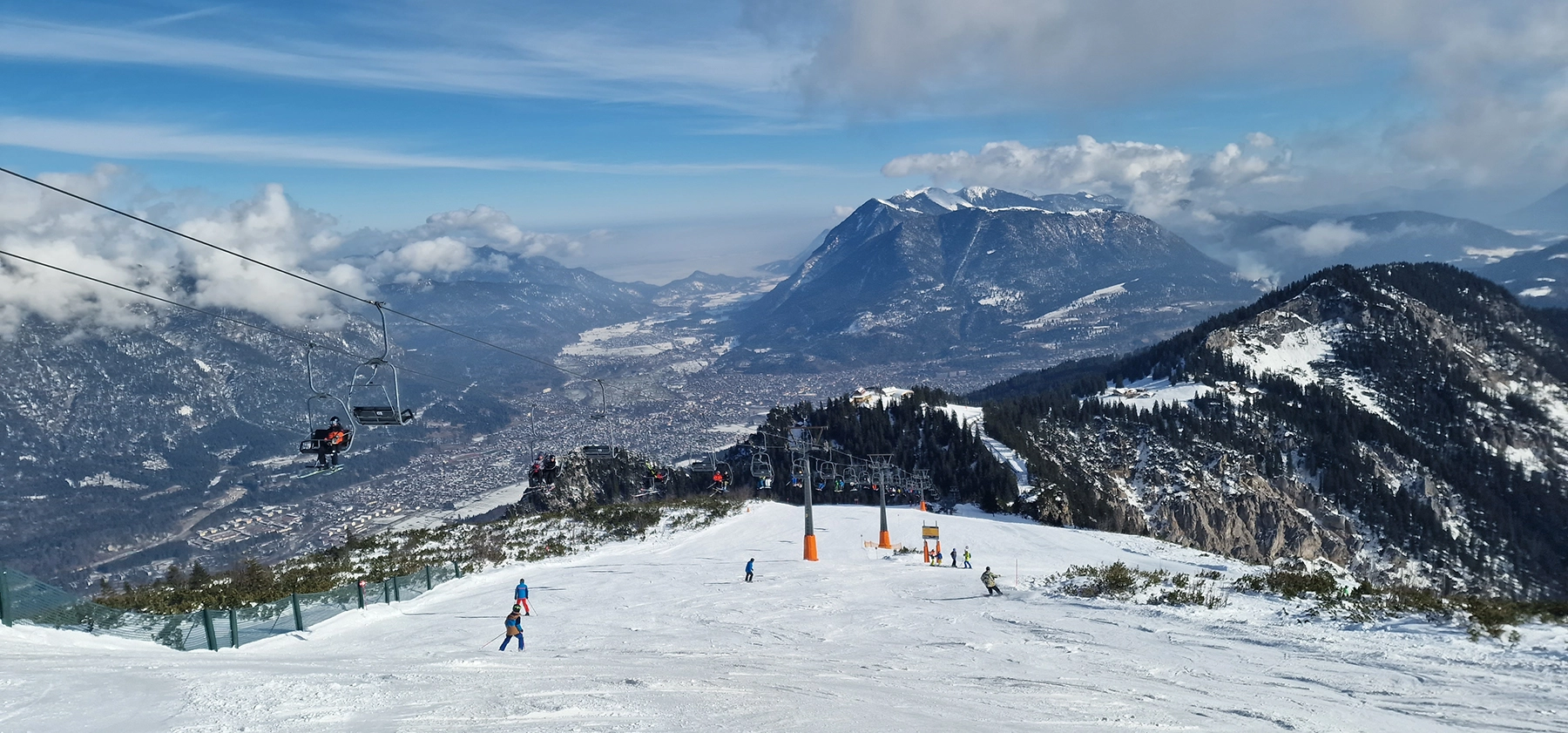
At Garmisch-Classic, the open Alpine view is part of the attraction, but it can also make a piste feel steeper to a nervous skier.
Some lifts and facilities have been modernised, but the overall infrastructure still feels older to me than at many large Austrian resorts. In my experience, the piste preparation is also less consistent than at the Tirol areas I ski most often.
Parking is another detail worth checking. Unlike Seegatterl or SkiWelt Scheffau, where skier parking is generally free under the published rules, parking at Garmisch-Classic is chargeable. I learned that the hard way at the Kreuzeck car park a few years ago, when I failed to notice the payment requirement and later received a fine.
06Why I often drive farther into Tirol
I am willing to drive farther into Tirol when snow quality and piste preparation matter more than travel time. Hochzillertal, Zillertal Arena and Hochfügen are among the areas I return to most often.
In my experience, the morning pistes there are prepared to a consistently high standard. Those first runs on untouched corduroy are one of the main reasons I am willing to make the longer drive.
For lessons or easy family practice, I am happy to stay closer to Munich. For a full ski day, I often prefer the higher Tirol areas. Natural snow remains important in the middle of winter, while higher altitude and snowmaking help maintain coverage when snowfall is limited. What I value most is reliable coverage and consistently good grooming.
07A good family ski area needs more than good pistes
With children or a group with different ability levels, I also look at what happens off the piste. A good meeting point, somewhere warm to sit, and a restaurant that people who are not skiing can reach can make the day much easier.
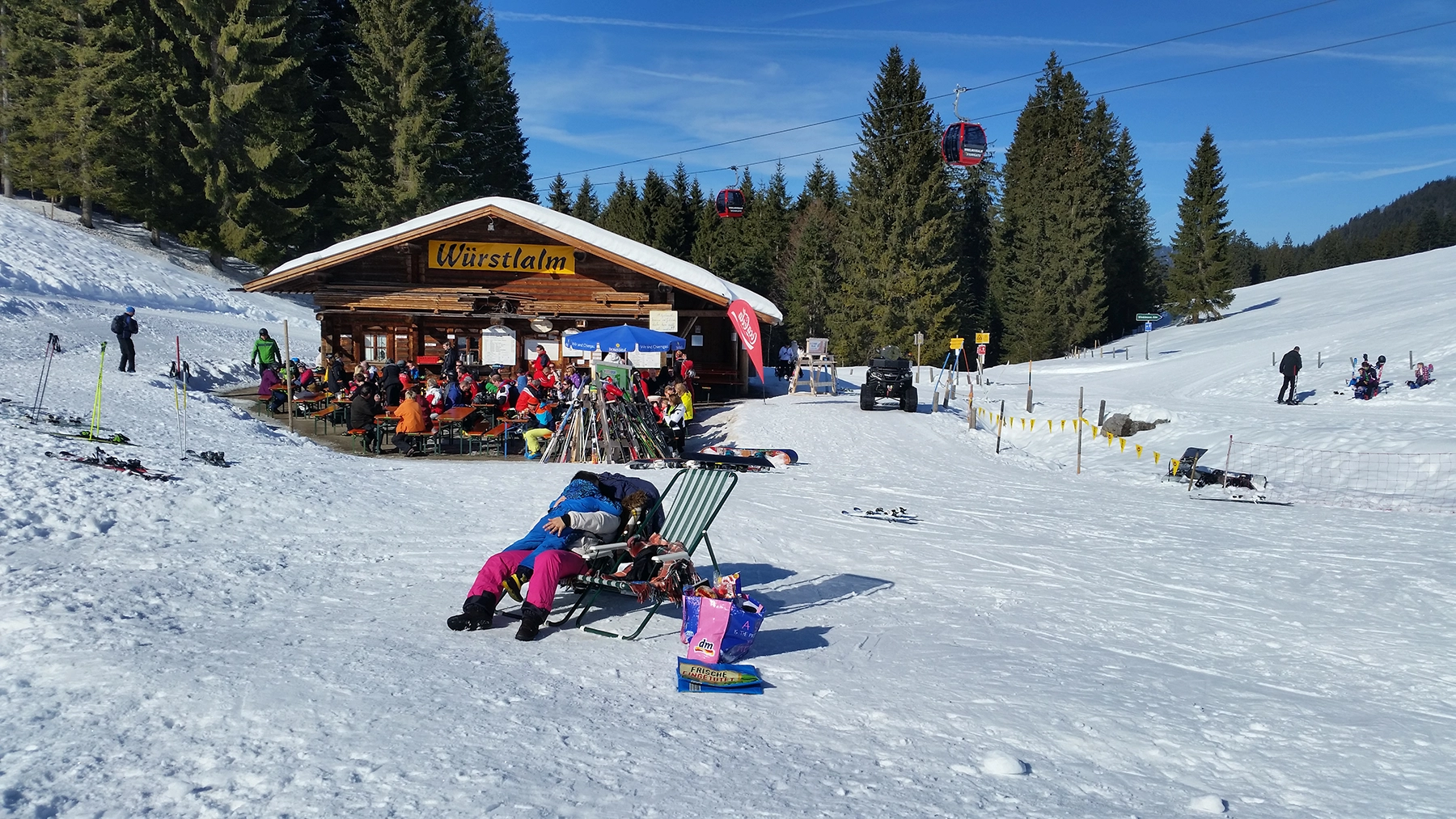
On a good weather day, the outdoor seating at Winklmoosalm is a simple place to meet, rest and wait close to the slopes.
On a sunny day, an outdoor meeting point can be enough. When the weather turns cold, cloudy or windy, an indoor mountain restaurant becomes much more useful, especially for children or anyone who is not skiing. Many large Tirol ski areas have restaurants that work well for this. I particularly like the restaurants around Tiefenbach in Sölden, around Ellmau in SkiWelt, and the panorama restaurant on Steinplatte.
Are there suitable pistes, but also somewhere for a tired child to rest and somewhere comfortable for a person who is not skiing?
08Car, train or Ski Bus?
By car: still the easiest option for most families
Most of our family ski days were by car. With children, skis, boots, helmets, spare clothes and food, it remained the simplest and most flexible option.
At Winklmoosalm and Steinplatte, the entrance itself can be part of the decision. Winklmoosalm gondola at Seegatterl gives families the option to start on the gentler German side, while Waidring puts you directly into the Austrian Steinplatte terrain.
By public transport: why Hausberg stands out for families
Lenggries and Sudelfeld are also possible without a car, but both require a final connection from the railway station to the ski area. In Garmisch-Partenkirchen, the Bayerische Zugspitzbahn and local winter connections make Hausberg practical for families.
A child can take lessons or use the beginner area while stronger skiers continue into Garmisch-Classic. The Hausbergbahn gondola is still required to reach the ski area, so the journey is not completely direct, but the overall arrangement works well without a car.
Families interested mainly in the children’s area should also check the official Ixis Kinderland and Kinderland ticket information before travelling. Deutsche Bahn also lists the seasonal Garmischer Ski-Ticket, which returns when the ski season begins.
Ski Bus: transport and ski pass in one package
Another option is Skibus München. I have not used the service myself, so this section is based on the operator’s published information and what I have observed around Munich.
The standard day trip package combines the coach journey from Munich with a ski pass. More importantly, the service goes directly to larger ski areas that are awkward to reach by train without additional bus connections. If you only need transport, check the options for the individual trip.
For a group of friends, nobody has to drive, look for parking or drive home after a full ski day. The journey can be used to talk, rest or sleep instead.
I have often seen younger skiers and university students around Munich use this kind of service. During the 2025/26 season, the operator listed destinations including Hochzillertal, SkiWelt Wilder Kaiser-Brixental, St. Johann in Tirol, Axamer Lizum, Sudelfeld and Kitzbühel. The new season schedule, package details and prices should always be checked before booking.
The disadvantage is the fixed timetable. The destination and return time are set in advance, so it is difficult to change plans because of weather, tired legs or a late start. With young children I still prefer a car, but for students, younger skiers or a small group of friends, the Ski Bus can be a practical alternative.
09Equipment, cost and one safety rule I would not compromise on
The lift pass is only one part of the cost, and prices change frequently. For a family ski day, I also factor in rental equipment, lessons, food, transport and parking.
Ski pass
The obvious starting point, but not the whole cost.
Rental & helmet
Important if you do not own your equipment.
Lessons
Often the biggest extra cost for a beginner family day.
Food & transport
These can change the total considerably for a family.
One thing I would not compromise on is a helmet.
Whether you are a beginner, returning after a long break or skiing regularly, I regard a helmet as basic equipment. Additional protection can also make sense for freeriding, park skiing or jumps.
Rent or buy?
If you ski only once or twice, renting usually makes more sense. For a one day trip, I would rent skis and boots close to the lift rather than lose time collecting equipment elsewhere.
If you live in Munich and ski regularly, owning your equipment becomes much more convenient. Equipment choice deserves a separate article, though.
10For several ski days, larger connected areas make more sense
For one lesson or a short practice day, a huge piste map is not necessary. For several consecutive ski days, however, larger connected areas such as SkiWelt, KitzSki and Zillertal Arena become much more useful.
They combine ski schools and beginner areas with enough terrain for stronger skiers. That makes them a good fit for families or groups with different ability levels who want to stay in the same region for several days.
Scheffau in SkiWelt is one example I know well. KinderKaiserland at the Brandstadl top station provides a dedicated learning area, while the wider SkiWelt gives stronger skiers access to a much larger network. SkiWelt currently lists 275 kilometres of pistes and 81 lifts.
For a normal Saturday lesson from Munich, easy access can matter more than size. For three, four or five ski days, the larger network becomes much more useful.
11Other nearby options: Hocheck and Spitzingsee
I have also skied at Hocheck in Oberaudorf and Spitzingsee. Both can work well in the middle of winter, but I usually choose them only in specific situations rather than for a full day at a larger ski area.
Hocheck: not my first daytime choice, but excellent for night skiing
Hocheck in Oberaudorf is easy to reach, the pistes are usually well prepared in my experience, and the ticket has often been cheaper than at larger resorts. The main limitation is scale: one four seater chairlift and a few surface lifts serve roughly 7 kilometres of pistes.
For a full daytime ski trip, the runs are relatively short and the terrain variety limited. From Munich, another 30 minutes or so in the car can open up much larger connected areas such as Steinplatte or SkiWelt, which is why Hocheck gradually became less attractive to us as a daytime destination.
Night skiing is where Hocheck really stands out for me. I went there quite often with my younger son because we could leave Munich later in the day, ski for a few hours and still be home the same evening. In the 2025/26 season, floodlit skiing was listed for Tuesday, Thursday, Friday and Saturday from 18:30 to 21:00, with free parking after 18:00.
For a full daytime trip I usually prefer a larger ski area. For an evening session, Hocheck is one of my most practical choices from Munich.
Spitzingsee: useful in the right conditions, but lower on my list
Spitzingsee / Stümpflingbahn has more lift infrastructure than Hocheck and also offers night skiing on the Stümpfling run. It can be a reasonable choice on a good winter day.
Spitzingsee is not usually one of my first choices from Munich. The drive is relatively long for the size of the area, and I do not find the lift and piste combination attractive enough for the price. If I am already travelling that far, I usually prefer a larger ski area.
I would still consider Spitzingsee when the snow is good or the timing suits the trip. In most cases, however, I would choose Hocheck for night skiing or continue to a larger Tirol area for a full day.
Both are more dependent on a proper Bavarian winter
The other limitation is season length. Hocheck is relatively low, and despite snowmaking on the main pistes, it remains more dependent on sustained winter temperatures than the higher Tirol resorts. In the 2025/26 season, March 5 was announced as its final winter operating day.
Spitzingsee sits higher, but its operator still describes winter operations as dependent on weather and snow, with a normal season running from December to March. For me, both areas make the most sense in January or February, or whenever Bavaria has a sustained cold spell and reliable snow.
In early season, late March or spring, I am much more likely to drive farther toward higher Tirol terrain.
12Where I would look first
There is no single best ski resort from Munich for every day. My shortlist changes with the skier, transport, snow conditions and how much time we have.
| Situation | Where I would look first | Why |
|---|---|---|
| First proper ski lessons | Lenggries / Sudelfeld | Practical the practical setup around lessons and learning areas close to the valley. |
| Basics learned, ready to practise | Winklmoosalm side | Gentler German side terrain, confidence building and a smaller ticket option. |
| Ready for more terrain | Continue into Steinplatte | The same connected ski area expands naturally into the Austrian side. |
| Family with different ability levels | Winklmoosalm and Steinplatte | Start on the German side and expand into Austria when the group is ready. |
| Serious terrain without driving deep into Tirol | Garmisch-Classic | Close to Munich, varied Alpine terrain and the Kandahar challenge. |
| Snow quality and a full ski day matter most | Zillertal / Tirol | Longer drive, but in my experience the morning piste preparation is often excellent. |
| Family without a car, child needs lessons | Hausberg / Garmisch-Classic | Public transport access plus Ixis Kinderland, while stronger skiers can use the larger Garmisch-Classic area. |
| Younger group or friends without a car | Ski Bus | Coach and ski pass packages can simplify access to larger ski areas that are inconvenient to reach by train, but the timetable is fixed. |
| Several ski days with lessons and mixed ability levels | Large connected Tirol ski areas | SkiWelt, KitzSki and Zillertal Arena can combine lessons and beginner areas with much larger terrain for stronger skiers. Scheffau is one example from my own family trips. |
| Night skiing from Munich | Hocheck | This is where Hocheck stands out for me: practical evening access, a simple setup and a good way to ski for a few hours when a full day is not possible. |
Continue reading
Ski often enough to consider a season pass? Read my Snow Card Tirol review after 28 ski days.
Sources and update note: Practical information was checked in September 2026 against official sources from the ski areas and transport operators.
Official references: Winklmoosalm ticket options, Winklmoosalm ticket conditions, official Steinplatte and Winklmoosalm piste panorama, Garmisch-Classic, Ixis Kinderland and Kinderland ticket, Kandahar, DB rail access to Garmisch-Partenkirchen, Skibus München, Brauneck / Draxllifte access, Sudelfeld ski schools, SkiWelt parking, SkiWelt size and lift network, KinderKaiserland Scheffau, Hocheck winter information, Hocheck elevation information, Spitzingsee winter operating times, Zillertal Arena snowmaking, and the Oberau bypass opening.
Ski Bus destinations mentioned above refer to the 2025/26 season; the operator currently says service will resume in November 2026. Ticket prices, parking rules, snow conditions and operating dates can change, so check current information before travelling.