
Skiing from Munich
Munich Ski Equipment: Where to Find Used and New, and What to Check First
Used skis for beginners and children, new gear once you know how you like to ski, and the boot and binding checks that apply wherever you buy.
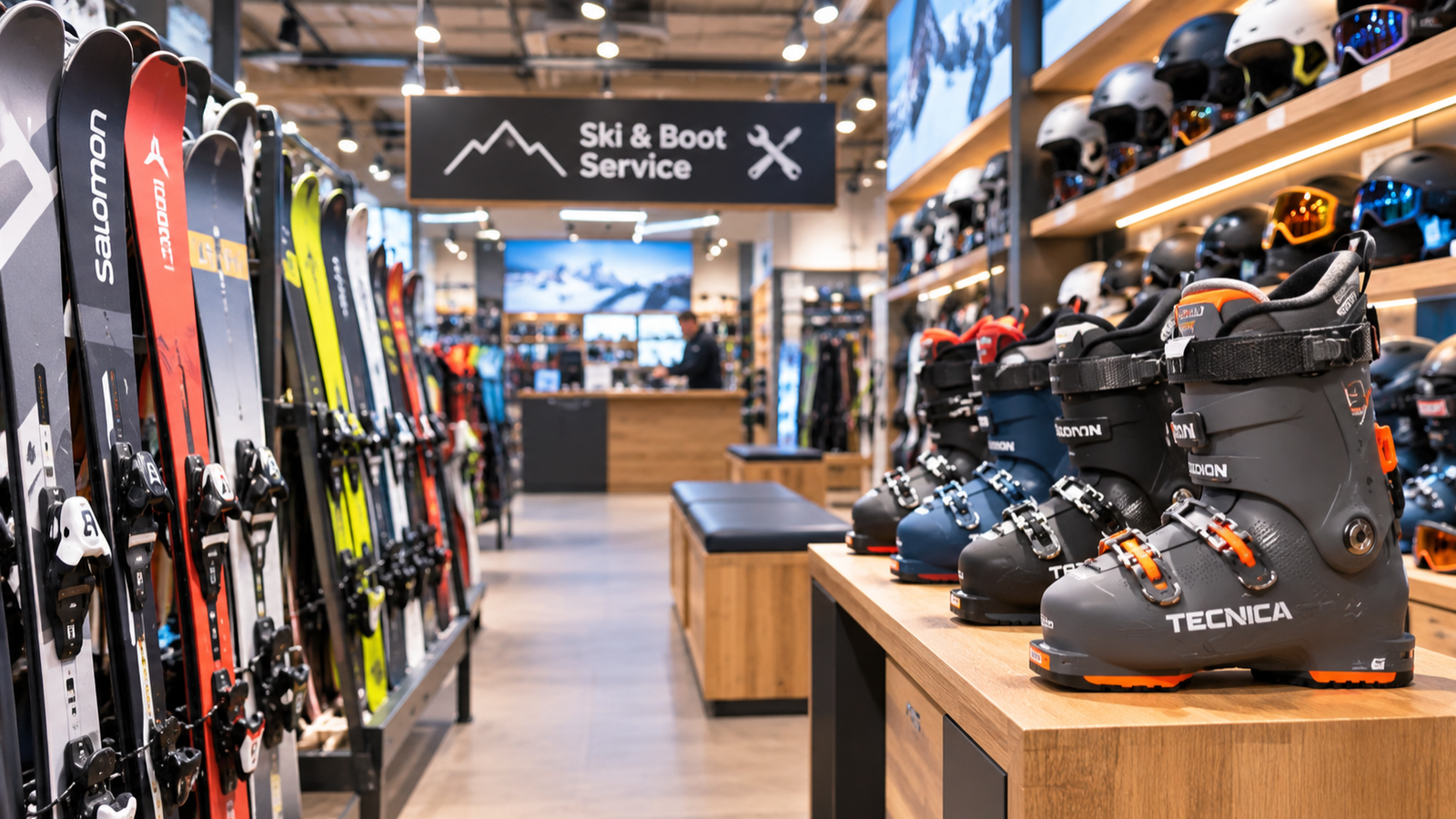
A specialist shop that sells skis and boots together.
Munich ski equipment is hard to buy well, because you rarely know which skis suit you until you have spent a few days on snow. Skis, boots and poles add up quickly, and children outgrow all of it.
When our sons were small, most of their skis and boots came from Kleinanzeigen, secondhand. Their feet kept growing, so we swapped gear every season or two, and used equipment in good shape did the job.
- Beginners and children: start with used skis and boots.
- Regular skiers with a style of their own: compare new gear at Sport Bittl and Decathlon.
- Wherever you buy: get your feet measured for boots, and have a shop check the bindings.
01Used gear works for beginners and children
Used gear suits adults who are just starting out as much as it suits children. There are three places to look, and at each of them condition and size matter more than price.
Top Ski Service
Worth a visit when you are shopping used. Some of the stock can be on the older side, but children rarely use the same skis and boots two winters in a row, so being able to exchange them can work out cheaper. Ask before you go what can be exchanged, what it costs and on what terms.
Sport Kaindl
A shop for used skis and boots for children and teenagers. It sells gear on consignment, which helps parents who want to pass on what a child has outgrown and find the next size. A particular length or size is not always in stock, so go early and look in person.
Kleinanzeigen
The used market I know best. We bought our sons’ skis and boots there several times. Listings cover Munich and the surrounding area, and when the seller lives nearby you can meet and inspect the gear yourself. Once the season ends, parents often list what their children have outgrown.
In a private sale, checking the condition is up to you. The binding needs the most care: a shop may refuse to test or adjust an old binding even when it looks fine, so ask how old it is before you pay.
- The base and edges of the skis: no deep gouges or damage
- The boot buckles and soles: no heavy wear
- The binding model and its age
02Compare new gear at Sport Bittl and Decathlon
Used gear can carry you through the early seasons. Once you ski often, a ski’s length, stiffness and turning behavior start to change how it feels, and a boot that fits your foot properly matters more. That is when buying new, and servicing it regularly, starts to pay off.
Sport Bittl
My pick for specialist new gear in Munich. Sport Bittl has a flagship store in Allach and another in Fürstenfeldbruck, and you can compare many brands of skis and boots side by side. If you already ski with some confidence, describe how you like to turn and how well you ski, and ask which models fit.
The company states that mounting bindings on new skis bought there is free. The safety adjustment is a separate service, so ask about it when you buy.
Decathlon
Decathlon is worth a look if you are just starting or want to keep costs down. Besides beginner skis and boots, you can compare helmets, gloves and ski clothing in one place. At the Elisenhof store next to the main station (Hauptbahnhof), I had my feet measured and received boot models matched to the result, which was useful.
Services differ by store. According to Decathlon, only some stores measure foot width, and the Karlsplatz store does not offer ski service. If you are going for a gear check or a foot measurement, confirm with the store first.
03Start boot shopping with a foot measurement
Boots are the part of the kit to choose with the most care. Going by your sneaker size is a mistake. Two feet of the same length can differ in width and instep height, and boots with the same listed size fit very differently depending on brand and model.
Besides regular European shoe sizes, ski boots use Mondopoint, a sizing system based on foot length. A 26.5, for example, fits a foot of about 265 mm. That number alone does not pick the boot.
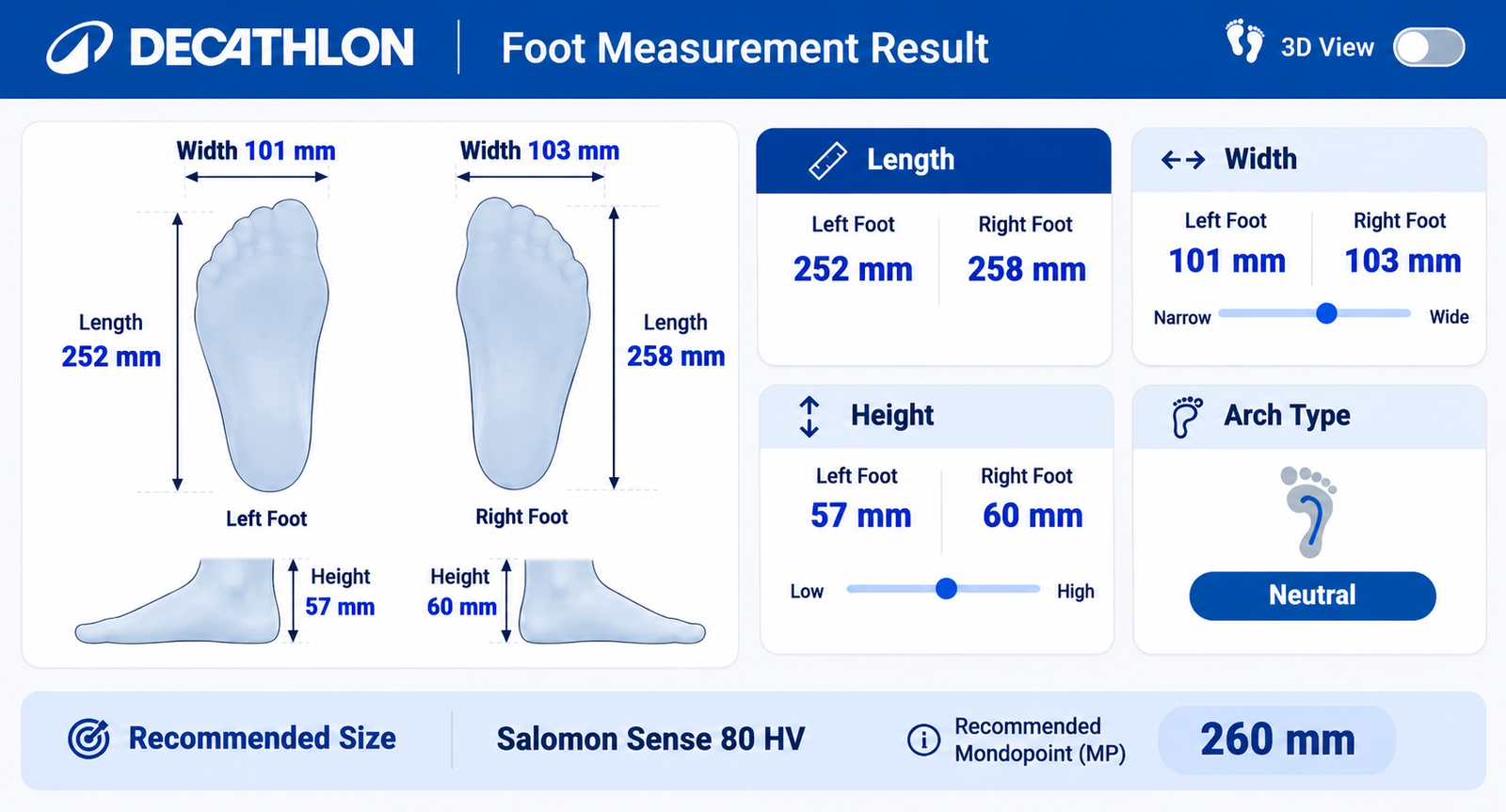
The Decathlon foot measurement result, emailed to me after the visit.
That result came by email after I was measured at the Elisenhof store. My left foot measured 252 mm and my right 258 mm, so the two differed, and for the Salomon Sense 80 HV the recommended size was 260, which is Mondopoint 26.0.
With a measurement and a recommended model in hand, you do not have to start by trying on every boot on the wall. The machine’s size is still not the final answer.
Try the boots on with the ski socks you will actually ski in. Ski socks come up to just below the knee, which protects your shins and keeps your lower legs warm.
Buckle up and stand in a skiing stance. Check the room in front of your toes, whether your heel lifts, and whether the boot squeezes the width of your forefoot.
The measurement and boot recommendation were free when I used them.
04The 26.5 and the 305 mm on a boot are different numbers
Besides Mondopoint, a boot carries a second length, such as 305 mm. That one is the boot sole length, or BSL.
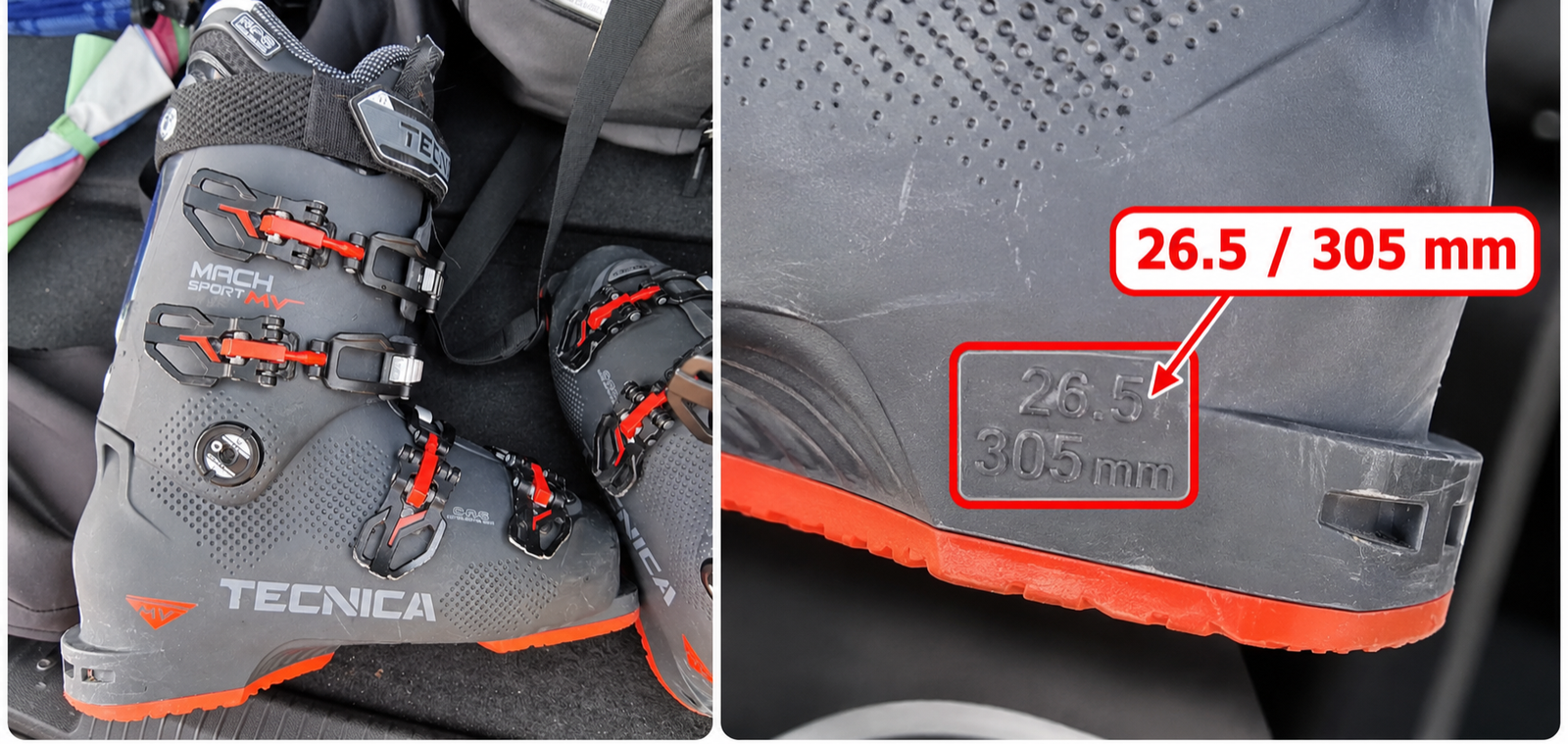
One of my old Tecnica boots, with the sizes stamped near the heel.
The heel of this Tecnica boot carries two numbers that look related but measure different things.
Mondopoint
The size you use to pick a boot for your foot. It corresponds to a foot about 265 mm long.
BSL (Boot Sole Length)
The full front to back length of the boot sole. Binding adjustment uses this value.
The same Mondopoint size can come with a different BSL depending on brand and model. If you buy new boots, have the binding checked against them, even when the size matches your old pair.
05Do not ski on used bindings before a shop has checked them
If you buy used skis, have a shop check the bindings before you ski on them. A binding does more than hold the boot to the ski. It is a safety device designed to release the boot when enough force acts on it in a fall. Looking intact and gripping a boot are not proof that it works.
The BSL scale only sets the position
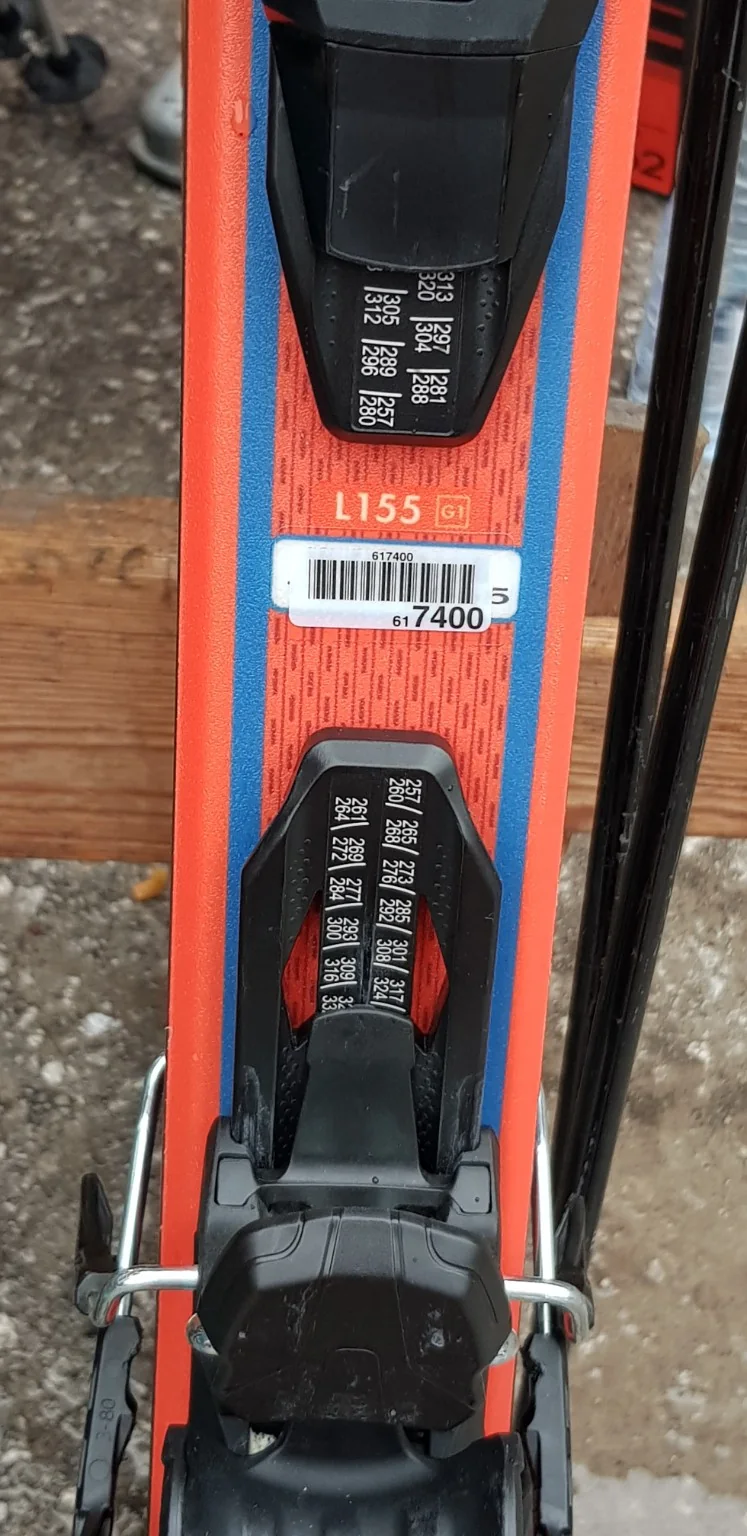
The boot sole length scale printed on a binding.
The photo shows the BSL scale on a binding. You use it to set the binding position to your boot’s BSL, so if you change boots and the sole length changes, the position needs checking again. The scale is not the same thing as the binding’s DIN value, which sets how much force releases the boot.
A calculated DIN value is not the end of it
The release setting depends on your weight, height, age, boot sole length, and your ability and skiing type. I know how to look up the values in the tables and set a binding myself. But dialing in a calculated number is one thing, and knowing that the binding really releases is another.
Used gear adds binding wear and boot compatibility to the list. Have a shop run a release test to confirm the boot actually comes out.
- Whether the boot and binding are compatible
- The forward pressure setting
- Wear on the boot soles
- Whether the binding releases the boot in a test
Sport Bittl lists binding adjustment under DIN ISO 11088 among its services. If you do not know how a binding is built or adjusted, leave it to a shop. A used set is cheap enough that I would not save money on this check.
06New skis: compare the sales at both ends of the season
If you plan to buy new, timing helps. I usually watch for sales in October and November, when the season starts, and again in March and April, as it ends. Before the season, shops sometimes discount last season’s models and leftover stock. At the end they clear what remains, and prices can drop a lot.
The catch is that popular models and common ski lengths and boot sizes are often gone by then. If you know the model you want, compare stock and price together instead of waiting for a discount.
07Get a wax and edge tune before the season starts
Sport Bittl and Decathlon do more than sell gear. Both run ski service, though not at every Decathlon store. Used or new, a wax and edge tune before the season starts is the basic preparation for skiing safely.
I recommend doing it at least once before each season, not once every few years. Dull edges let a ski slide on hard, icy slopes, and the state of the wax changes how the ski glides in different snow.
If you buy used from a private seller, book a service once before you ski on it. If you buy from a used specialist, ask whether the gear has already been serviced.
If I were starting from scratch, I would put my money into a boot that fits and a binding a shop has tested, and buy the skis used. You may weigh it differently depending on how often you ski.
Have a good season.
Sources and dates: Checked in November 2026 against Sport Bittl ski service, Decathlon ski service and Decathlon’s ski boot guide. Stock, exchange and consignment terms at Top Ski Service and Sport Kaindl come from my own experience, so confirm them in person. Store services, foot measurement, prices and sale timing can change.
Disclosure: This article is an independent practical note by Munich Ajussi. It contains no affiliate links.
Comments & Questions
Have a question or an experience to share? Leave a comment below.